




DaimlerChrysler's Post-Merger Fleet Marketing Strategy
Christine Cortez, vice president of DaimlerChrysler Fleet Operations, discusses the company's strategies in the large and small commercial fleet markets, its efforts to enhance residual values, and to shorten the order-to-delivery cycle.
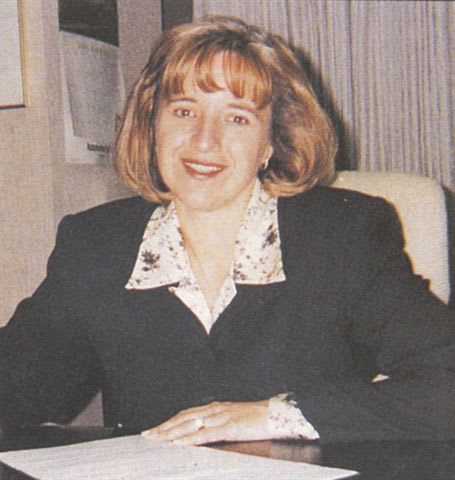
There will be no major changes in fleet field organization as a result of the merger between Chrysler and Daimler, says Christine Cortez, vice president of DaimlerChrysler Fleet Operations.
Shortly after the merger agreement was reached between Daimler-Ben and Chrysler, then-Chrysler Fleet Operations General Manager Tom Marinelli accepted a new position as president: of Chrysler Europe. Succeeding Marinelli was Christine Cortez, who previously was director of finance for sides and marketing for Chrysler. It is under Cortez's helm that fleet operations will begin its new role as DaimlerChrysler Fleet Operations. AF's Mike Antich recently interviewed Cortez to learn more about DaimlerChrysler's post-merger fleet strategy.
AF: What are your strategies to increase DaimlerChrysler's share of the commercial fleet market in North America?
Cortez: We arc currently capturing about 25 percent of the business that comes through the major leasing companies, which we consider to be good performance in that large commercial segment of the world. We never stop trying to grow, but at least feel that we are on the right track through continuous improvement of our products and services.
AF: What factors do you believe have contributed to Chrysler capturing 25 percent of the large commercial fleet market?
Cortez: It starts with product. No matter how good we are at servicing customers and marketing, if we don't have the product, we don't have the sale. It's that plain and simple. Beyond product, our market share is based on how we service, and build relationships. Product is first and foremost, but we also spend a lot of time on services and developing relationships.
AF: How is DaimlerChrysler seeking to meet the commercial vehicle needs of small businesses?
Cortez: The tough part of the business has always been the smaller fleets because it is so labor-intensive to get to those customers. Within the last year we've put together several programs to expand our reach. First, in conjunction with our retail marketing group, we have developed the "On the Job" program, which is a major effort to market specifically to the small local commercial customers. We're working with our dealer body to lay out what the small commercial customer needs with regard to services and product. Together we're developing a cohesive approach so that a customer can build a relationship with us and with our dealers. We talk with our dealers as to how we can help train their people to better deal with fleet companies. This discussion includes dealer facilities so they know that a part of the service side of their business needs to be dedicated to commercial customers. "On the Job" also includes product issues in determining the right packaging for commercial customers. This includes incentive and pricing issues. As a result of the "On the Job" program, we are working hand-in-hand with our retail marketing folks.
AF: Are there other things Daimler-Chrysler is doing to help its fleet dealers better serve the commercial vehicle market?
Cortez: We are just now finishing development of some dealer training that will assist the dealer who wants to build the commercial side of the business. When complete, it will be a great tool where we can have some good discussions with the sales and service teams at the retail outlets to condition them for the needs of the commercial customer.
[PAGEBREAK]
AF: What other programs have been developed specifically for commercial fleets
Cortez: In spring 1998, our Chrysler Financial team launched the Commercial Financing Options (CFO) program, which provides financing for commercial customers that is tailored to their needs. It offers one-stop financing, consolidated invoicing, and other financial services the customer needs. The CFO program is growing as more customers become aware of what it can do for them.
AF: What is DaimlerChrysler doing to enhance the residual value of its fleet vehicles?
Cortez: Residual value is very simply how much the market wants you product. Product distinctiveness, features, and quality are always the first way to increase residuals. We've had such significant year-over-year quality improvements in the last few years that we can foresee getting to the point where quality is no longer discussed as a differentiator. It is simply the price for entry. Our products have achieved a number of awards this year, including the J.D. Power initial Quality award for the Concorde and the Cirrus. The Grand Cherokee won the 1999 4x4 of the Year from Petersen's 4-Wheel & Off-Road Magazine. Our 300M was named Motor Trend's Car of the Year. That kind of external acclaim is really what we strive for all of the time.
Beyond product, marketing or distribution plans can affect the residual. We have regular strategy sessions between the platforms, marketing teams, and our licet group to be sure that no one segment of the business is flooded with any one product. We have a segment strategy for our commercial fleet business, government business, daily rental, and retail business. Each has its own marketing strategy. The old supply and demand laws apply as usual. If you get greedy and flood the market with a product, new prices and resale come down.
AF: What are DaimlerChrysler's plans to improve its order-to-delivery schedule to its commercial fleet customers?
Cortez: The numbers say we have improved 35 percent in the last four model-years and we continue to look for ways lo improve it further. Some of our efforts center around the platform folks to find packages that work for our fleet customers and also reduce plant complexity. If it's easier to build, everything moves faster. We look at the days to delivery and take those days apart. We know how long if takes to receive an order, schedule it and the length of time for the transportation segment of the chain. Each segment of that time frame has action plans associated with it. We break up this time frame into actionable sections and specific people are responsible for each of those sections. For example, we are constantly looking at packaging because if we can reduce complexity in our packages, the product will go through the system quicker.
On the transportation front, railcar capacity has been added and labeling has improved so that the vehicles can get where they're going easier. We also are strongly aligned with the retail side of the company and they understand that a fleet customer is just as important as a retail customer. Remember, both the retail and fleet organizations report in through John MacDonald, who had my job just a few years ago, so he's highly sensitive lo our concerns.
Order to delivery is a constant concern. We have the charts on the wall and we watch them constantly. Real improvement efforts are always underway because we know how important it is to the customer.
More Operations
Here's When You Should Make an Exception to Fleet Policy
Fleet policies are designed to create consistency, but not every driver or situation fits neatly within standard rules.
Read More →
AI-Native or AI-Acquired: What Should Fleet Managers Look for in an AI Platform?
Six questions can help fleet managers look beyond AI marketing claims to evaluate integration, data access, and real-world operational performance.
Read More →
A buyer's guide to fleet management software in 2027
Buying fleet management software in 2027 means looking beyond features and price. As fleet operations, technology and expectations evolve, this guide explores what today’s fleet professionals should consider when choosing a system that can deliver value now and adapt to what comes next.
Read More →

What Will Shape the Next Era of Fleet Management?
EVs, AI, and autonomous vehicles are reshaping fleet management. Discover what’s ahead—and how fleet leaders can prepare for the next era.
Read More →
How Fleets Can Recruit and Train Veterans for Technician Roles
Here's how the technician shortage has affected uptime for fleets, and what to do about it.
Read More →
Avis Budget Group Deploys Neology Toll Management Technology Across Major Brands
Neology’s neoFleet platform will manage toll transactions and toll-authority operations for vehicles across Avis, Budget, Payless, Budget Truck and Zipcar.
Read More →
Fleet Personal-Use Charges Edge Higher in 2026
Nearly eight in 10 surveyed fleets allow personal use of company vehicles, while just over half of respondents report charging employees for the privilege.
Read More →
The Future of Fleet + What’s Changing Right Now | AF News Recap
Could developments overseas offer a preview of what’s coming for U.S. fleets? This week, we’re looking at the future of AI, autonomy, and electrification, plus Ford Pro’s new certified pre-owned program, smarter vehicle offboarding, and a new way for fleets to manage toll expenses.
Read More →
How to Handle Vehicle Offboarding
What do fleet managers need to do when a driver leaves?
Read More →
Fleet Manager’s Ultimate Playbook: Navigating the New Standard in OEM Connectivity
Rising operating costs, driver safety concerns, and unplanned downtime are putting unprecedented pressure on modern fleets. Discover how fleet managers use embedded OEM connectivity and real-time vehicle data to cut TCO, prevent downtime, and protect drivers without aftermarket telematics hardware.
Read More →