Study Forecasts Nearly 20M Self-Driving Cars by 2025
Juniper Research also projects that consumer adoption of self-driving cars will take off in 2021.
by Staff
December 2, 2015
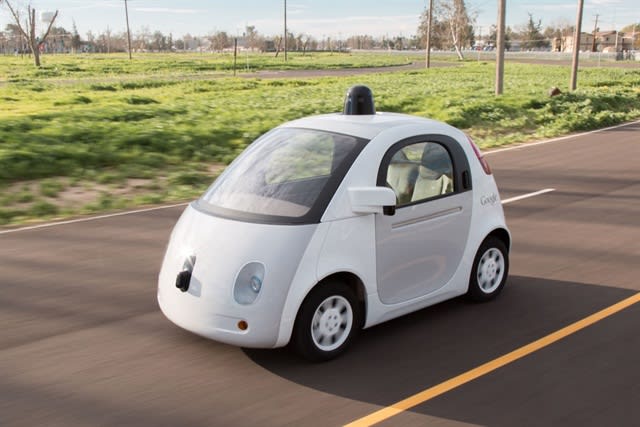
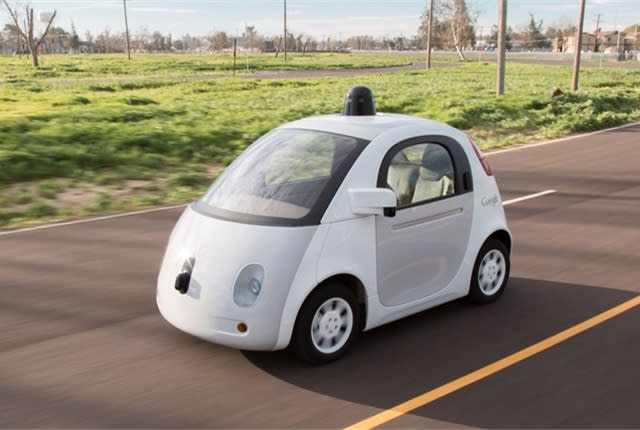
Juniper Research identified Google as the most promising player in the autonomous car sector. Photo of Google self-driving car prototype courtesy of Google.
2 min to read
Juniper Research identified Google as the most promising player in the autonomous car sector. Photo of Google self-driving car prototype courtesy of Google.
A new study from Juniper Research forecasts that almost 20 million fully autonomous vehicles will be on the road by 2025, representing just 1 percent of all vehicles globally.
Consumer adoption of self-driving cars is projected to take off in 2021, according to the study. In the meantime, growing use of advanced driver assistance systems, such as adaptive cruise control and automated emergency braking, will likely help to psychologically prepare drivers for the arrival of autonomous vehicles, researchers noted.
Ad Loading...
The new research, Autonomous Vehicles: Adoption, Regulation & Business Models 2015-2025, finds that although the market has progressed to live trials, a clear-cut monetization strategy hasn’t yet become evident. Stakeholders are currently investigating multiple business models, with manufacturers expected to engage in product licensing, self-production or open sourcing the systems.
The U.K.-based research firm ranked Google, Volvo, Daimler, Tesla and Apple as the most promising players in the autonomous car sector. The companies were scored on a number of key factors including live trials, miles tested on the road, technology development, project scale and scope, future potential and market opportunities.
Juniper ranked Google as the No. 1 most promising player because the technology giant has been engaged in development the longest and has logged the most autonomous miles on public roads. The study acknowledged public concerns over the decision-making capabilities of autonomous vehicle technology, but researchers argued stakeholders will need to collaborate to establish system safety standards.
The report forms part of Juniper’s ongoing analysis of Connected Cars & Telematics and is now available to download from the Juniper Research website.
Fleet drivers face constant visual, cognitive, and environmental interruptions the moment they hit the road. From roadside chaos to mental fatigue and digital overload, today’s biggest driving risks often come from outside the vehicle itself.
FLASH Weather AI has launched a first-of-its-kind hail prediction model capable of forecasting hail size and arrival time at 1-kilometer resolution up to 55 minutes ahead, giving fleets and insurers critical time to prepare for severe storms.
As litigation risk rises, vehicles are increasingly targeted. This Coca-Cola bottler shares how it’s reducing exposure through driver training, technology, and a proactive risk management approach.
From identity management to third-party certifications, the right technology partner should make security easier to manage. Here are the three building blocks that fleet managers need to stay in control as connected systems scale.
Distracted driving remains one of the most persistent risks in fleet operations. New approaches focus on removing mobile device use entirely while adding real-time safety support.
As distraction risks evolve, fleets are turning to smarter, more connected technologies to better understand what’s happening behind the wheel. Part 2 explores how these tools are helping identify risky behaviors and improve visibility across operations.
Distracted driving is often measured by what we can see—phones in hand, eyes off the road. But what about the distractions we can’t? A recent incident raises a bigger question about awareness, attention, and why subtle risks so often go unnoticed.