




Safety Tips: Follow the 4 Principles of Safe Driving
Safety Tip: Managing Driving Space
Here are some safety tips from AAA on how to manage your driving space to avoid collisions. You may want to pass along the advice to fleet drivers.
by Staff
August 3, 2015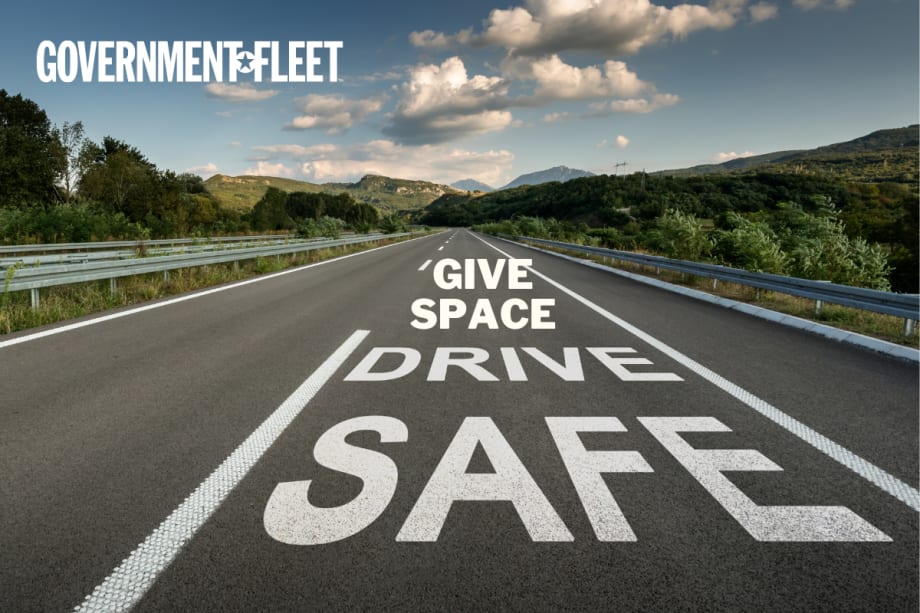
About 30% of crashes involve rear-end collisions. Stay alert!
Photo: Government Fleet
2 min to read
Here are some AAA tips on how to manage your driving space. You may want to pass this advice along to fleet drivers as a friendly reminder.
Pay attention. The primary attribute necessary for safer driving is alertness. This allows you to see, recognize and avoid the unexpected hazards lurking on the road.
Allow enough space ahead. About 30% of crashes involve rear-end collisions. Many of these could be avoided by following at a safe distance. Allow at least three seconds between your vehicle and the car ahead of you. At highway speeds, lengthen the gap to four seconds or more. (The 2-3 second rule of decades past has been updated to the 3-4 second rule.) If you’re driving in the rain or poor weather conditions, lengthen that gap to six or more seconds. Also, you may need to adjust for vehicle weight, a major factor in how long the vehicle takes to stop. The heavier the vehicle, the longer it takes to stop.
Look ahead. Scan the road and surrounding area at least 20 to 30 seconds ahead for potential road hazards, conditions and information that can help you plan a clear path to travel. Look around and keep your eyes open for approaching vehicles, pedestrians or animals that might enter your path.
Have an escape route. The best way to avoid potential dangers is to position your vehicle where you have the best chance of seeing and being seen. Check your mirrors every few seconds to see what is beside you and what is behind you. You need to have an alternate path of travel, taking into consideration the position of the vehicles around you and the road ahead. That’s crucial for deciding where you can maneuver safely to avoid a crash. If the road is narrow and lacking a shoulder, increase your following distance.
All tips provided from “Managing Space and Time for Safe Driving,” a video produced by the AAA Foundation for Traffic Safety.
More Safety
From Silos to Solutions: Relationship Management for Safer Fleets
From telematics adoption and driver accountability to policy consistency and risk mitigation, this episode breaks down what it really takes to build a safer fleet culture without slowing business down.
Read More →
IIHS Launches First Commercial Vehicle Safety Evaluations
The Insurance Institute for Highway Safety has begun evaluating heavy-duty pickups and cargo vans for driver protection. Which models earned top marks?
Read More →
Reducing Risk by Eliminating Phone Use Behind the Wheel
Hosted with the cofounder of Lifesaver Mobile, this episode addresses phone use behind the wheel and how to design a driving environment that actually helps prevents accidents.
Read More →

Sponsored•July 1, 2026
Cameras, Safety and Insurance: From Reactive Claims to Real-Time Prevention (Part 2 of 2)
Part Two: Commercial auto remains one of the most challenging and costly lines of coverage for fleet operators and insurers alike. Continue learning more about how to effectively address these issues from Onur Aksan, Enterprise Business Development Executive, Geotab
Read More →
How 5-Second Telematics Data Is Changing Fleet Safety
This episode connects with Steve Santostasi of Ford Pro and covers how a few seconds of data can make a difference in fleet safety.
Read More →
Managing Road Risk at Scale: Why Fleet Safety Needs a Data-Driven Framework
Insights from the FIA Road and Driver Safety Indexes reveal how to manage road risk on a larger scale.
Read More →
Stellantis Recalls 1.3 Million Jeep Vehicles Worldwide Over Fire Risk
Stellantis is recalling more than 1.3 million Jeep Wrangler and Gladiator models worldwide over a fire risk linked to power steering pump wiring.
Read More →
Coaching Is Not Training, Even When AI Is Doing It
AI-powered safety platforms can detect risky behaviors and deliver immediate feedback. But effective driver development still requires a foundation of training followed by coaching that reinforces those skills.
Read More →
How Emotions Behind the Wheel Can Affect Fleet Safety
During National Safety Month, fleets are encouraged to look beyond distracted driving and recognize how stress, fatigue, and emotional well-being influence driver performance and crash risk.
Read More →
Nominations Open for 2026 Fleet Safety Award
Nominations have officially opened for the 2026 Fleet Safety Award Winner.
Read More →