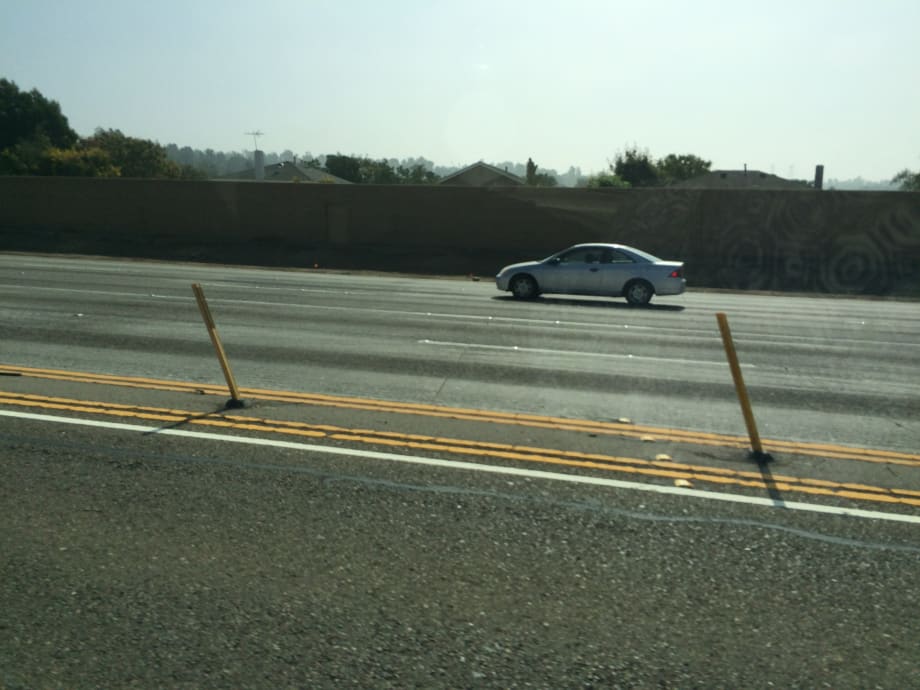
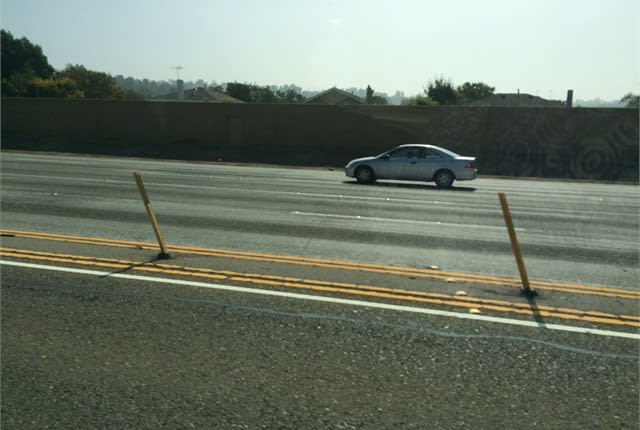
High-occupancy vehicle (HOV) and high-occupancy toll (HOT) lanes provide some attractive benefits, such as encouraging car pooling and easing traffic congestion for qualifying users. Because some low-emission/energy-efficient vehicles are exempt from single-occupancy restrictions – and in some cases tolls – these lanes also help spur sales and use of such vehicles. But HOV/HOT lanes can also pose a unique set of safety issues that fleet drivers need to understand so they can take necessary precautions.
Ad Loading...
Research indicates that after buffer-separated HOV/HOT lanes are installed, injury crash rates rise. Factors contributing to this increase are the speed differential between the HOV/HOT lanes and general-purpose lanes, vehicles illegally crossing the buffer (double solid white or yellow lines), ingress/egress difficulty, and the reduced inside shoulder width.
Back in 2005, a study from the Texas Transportation Institute at Texas A&M University examined these safety issues. To view an NBC News report on the study and the safety concerns it raised, click on the photo or link above.
Based on past studies and advice from law enforcement, here are some tips you might pass along to fleet drivers:
If your vehicle qualifies for travel in HOV/HOT lanes, always enter and exit at the designated areas, where the lines are broken. Never cross double white or yellow lines. Never use an HOV/HOT lane as a passing lane to weave in and out of traffic. It’s both dangerous and illegal.
Keep in mind how near your freeway exit is so you have plenty of time to merge over to the general-purpose lanes safely and legally.
Look ahead but also scan vehicles traveling in an adjacent general-purpose lane, even in areas with double white or yellow lines. HOV/HOT restrictions, like distracted driving laws, are ignored more frequently than most traffic laws.
At points where vehicles can exit the HOV/HOT lanes to merge into general-purpose lanes, be prepared to slow down – particularly if the general-purpose lanes are gridlocked. A car ahead of you might decelerate suddenly, looking for a gap to merge.
Whether you’re traveling in an adjacent general-purpose lane or an HOV/HOT lane, keep the speed differential in mind. It can lead to sudden lane changes, sudden braking or sudden acceleration as drivers attempt to adapt to the different pace of traffic after changing lanes.
Ad Loading...
If you have additional tips, please leave a comment.
Fleet drivers face constant visual, cognitive, and environmental interruptions the moment they hit the road. From roadside chaos to mental fatigue and digital overload, today’s biggest driving risks often come from outside the vehicle itself.
FLASH Weather AI has launched a first-of-its-kind hail prediction model capable of forecasting hail size and arrival time at 1-kilometer resolution up to 55 minutes ahead, giving fleets and insurers critical time to prepare for severe storms.
As litigation risk rises, vehicles are increasingly targeted. This Coca-Cola bottler shares how it’s reducing exposure through driver training, technology, and a proactive risk management approach.
From identity management to third-party certifications, the right technology partner should make security easier to manage. Here are the three building blocks that fleet managers need to stay in control as connected systems scale.
Distracted driving remains one of the most persistent risks in fleet operations. New approaches focus on removing mobile device use entirely while adding real-time safety support.
As distraction risks evolve, fleets are turning to smarter, more connected technologies to better understand what’s happening behind the wheel. Part 2 explores how these tools are helping identify risky behaviors and improve visibility across operations.
Distracted driving is often measured by what we can see—phones in hand, eyes off the road. But what about the distractions we can’t? A recent incident raises a bigger question about awareness, attention, and why subtle risks so often go unnoticed.