




Top 10 Stolen Vehicles Named
Honda's Accord and Civic continue to top the list of most stolen vehicles in the U.S., even as auto thefts have fallen significantly from their peak in the early 1990s following the wider adoption of engine immobolizers.
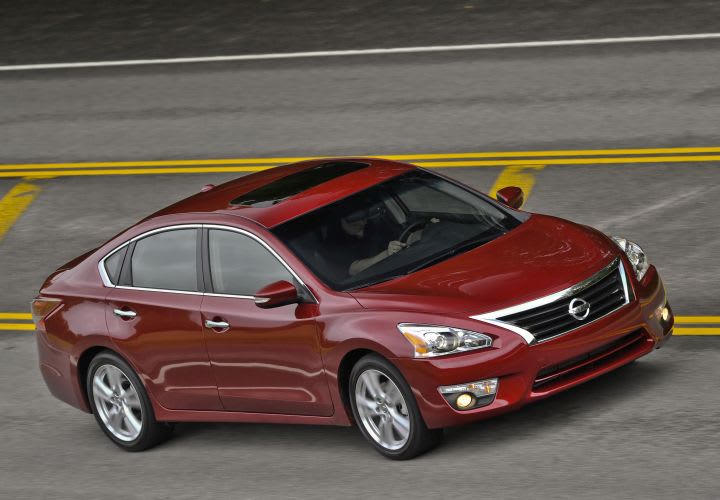
Photo of 2013 Altima courtest of Nissan.
Photo of 2013 Altima courtest of Nissan.
Honda's Accord and Civic continue to top the list of most stolen vehicles in the U.S., even as auto thefts have fallen significantly from their peak in the early 1990s following the wider adoption of engine immobolizers.
Total thefts reported by law enforcement fell 3.2 percent in 2013 to below 700,000, the National Insurance Crime Bureau reported today. During the peak year for vehicle thefts in 1991, 1.66 million vehicles were reported stolen.
"The drop in thefts is good news for all of us," said Joe Wehrle, NICB's president and CEO. "But it still amounts to a vehicle being stolen every 45 seconds and losses of over $4 billion a year."
The NICB is one of two insurance industry trade groups that tracks and reports vehicle thefts. The Highway Loss Data Institute only lists vehicles with theft coverage.
The most stolen vehicles during 2013 were as follows with theft numbers in parentheses:
Honda Accord (53,995)
Honda Civic (45,001)
Chevrolet Silverado (27,809)
Ford F-150 (26,494)
Toyota Camry (14,420)
Dodge full-size pickup (11,347)
Dodge Caravan (10,911)
Jeep Cherokee/Grand Cherokee (9,272)
Toyota Corolla (9,010)
Nissan Altima (8,892)
Here are the top 10 most stolen 2013 model-year vehicles:
Nissan Altima (810)
Ford Fusion (793)
Ford F-150 (775)
Toyota Corolla (669)
Chevrolet Impala (654)
Hyundai Elantra (541)
Dodge Charger (536)
Chevrolet Malibu (529)
Chevrolet Cruze (499)
Ford Focus (483)
To read the full report, click here.
More Safety
IIHS Crash Avoidance Tests Reveal Safety Gaps in Cargo Vans and Work Trucks
New crash-avoidance ratings from the Insurance Institute for Highway Safety reveal inconsistent performance among commercial vehicles, with several popular cargo vans and heavy-duty pickups struggling to avoid collisions with other vehicles and pedestrians.
Read More →
What’s Next for Fleet? Safety, AI & Industry Recognition | AF News Recap
Could your company's culture be encouraging distracted driving? This week, we're exploring how workplace expectations affect driver safety, what AI, EVs, and autonomous vehicles could mean for the future of fleet management, and how fleet professionals can strengthen their award nominations.
Read More →
Does Your Fleet's Culture Encourage Distracted Driving?
What happens when the people responsible for enforcing safety rules are the ones setting the wrong example? The answer may reveal why some of the biggest risks to fleet drivers have little to do with what's written in the employee handbook.
Read More →
Fleet Manager’s Ultimate Playbook: Navigating the New Standard in OEM Connectivity
Rising operating costs, driver safety concerns, and unplanned downtime are putting unprecedented pressure on modern fleets. Discover how fleet managers use embedded OEM connectivity and real-time vehicle data to cut TCO, prevent downtime, and protect drivers without aftermarket telematics hardware.
Read More →
From Driver Well-Being to EV Charging | AF News Recap
Mental health belongs in the fleet safety conversation. This week, we’re looking at five ways fleets can support employee well-being before a crisis, plus Holman’s expansion in Mexico, new one-day Fleet Forward passes, and why EV charging demand is outpacing infrastructure growth.
Read More →
Nexar-Nauto Merger Aims to Give Fleets Better Safety Intelligence Through Larger Driving Dataset
Stefan Heck tells Automotive Fleet that combining more than 10 billion miles of driving history with Nexar's AI models will give fleets deeper insights into driver risk and roadway conditions than either company could provide independently.
Read More →
Don't Wait for a Crisis: 5 Ways to Build Mental Health Into Your Fleet Safety Program
For Suicide Prevention Month, fleet and safety leaders have an opportunity to put mental health where it belongs: at the center of workplace safety.
Read More →
How Camera Data Can Strengthen a Fleet’s Insurance Renewal
Insights from a commercial insurance carrier and a broker show how fleets can turn video telematic data, driver coaching, and improved claims results into a stronger case at insurance renewal.
Read More →
The Safest Fleets Aren’t the Ones with the Most Technology
You’ve made the telematics investment. Here’s how to capture the other half of its value and build the safest fleet on the road.
Read More →
Hidden in Plain Sight: Fleet Compliance Risks
Fleet compliance isn't just about having policies — it's about consistently enforcing them. This practical guide reveals six hidden compliance risks common in public sector and shared fleet operations and outlines proven strategies to improve visibility, accountability, and audit readiness
Read More →