




Ford’s MyKey Technology Promotes Fleet Safety
When enabled, MyKey encourages front-seat occupants to wear safety belts, limits top vehicle speed, and can route incoming calls directly to the voicemail of paired cell phones.
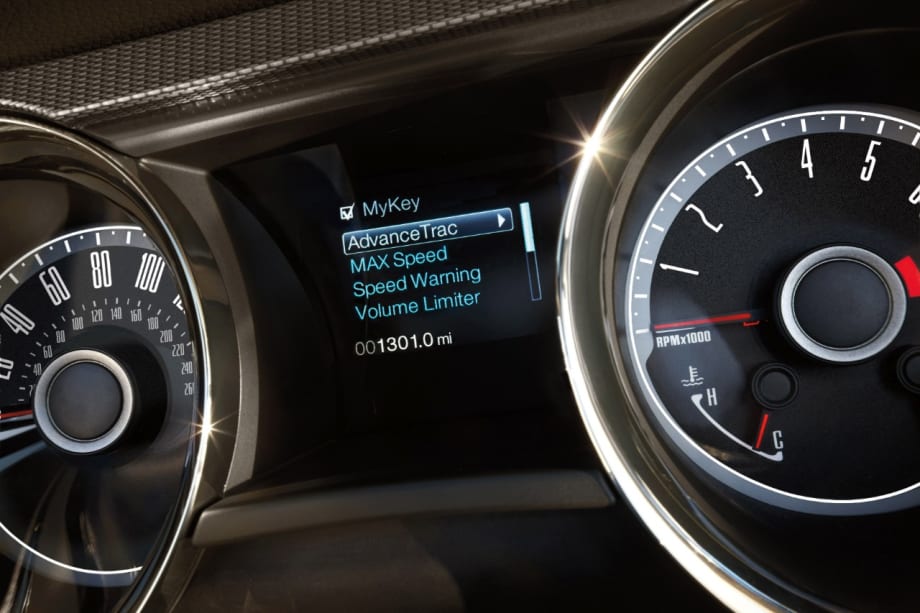
Photo courtesy of Ford Motor Co.
Photo courtesy of Ford Motor Co.
A growing number of fleet managers have discovered that Ford Motor Co.’s MyKey technology is a valuable tool that promotes driver safety -- even though MyKey was originally designed to encourage safe teen driving habits.
MyKey debuted as standard equipment on the 2010 Ford Focus and is now standard on nearly all Ford and Lincoln models.
Joe Dougherty, president of Kentucky-based Louisville Paving Co., said 30 of his company’s vehicles are now equipped with MyKey. The system encourages safer driving practices among employees.
A key can be programmed to limit the vehicle’s top speed and audio volume, and to encourage safety belt use. The technology also routes incoming calls directly to voicemail on paired phones.
Louisville Paving Co., which the Dougherty family launched in 1949, is a full-service contractor involved in highway and heavy construction. Dougherty plans to purchase more Ford vehicles with MyKey because he wants his employees to focus on driving when they're behind the wheel.
“With us, safety is the No. 1 priority,” said Dougherty. “These job sites can be high-risk situations if drivers are distracted by the radio, phone calls or texts.”
One of the most recent applications of MyKey technology is the 2014 Ford Transit Connect, which has become popular with businesses for its fuel efficiency and configuration options.
“MyKey has been a great tool for fleet managers, giving them a technology that encourages good driving habits for their employees,” said Megan Gillam, commercial vehicles brand and fleet communications manager for Ford Motor Co. “Many companies have safe driving guidelines for fleet vehicles, and MyKey serves as a reinforcement of some of those basic rules.”
Louisville Paving Co. leases its fleet vehicles from Enterprise Fleet Management, which markets MyKey as a useful safety tool.
“The versatility of MyKey for fleet owners makes it a great feature for our customers,” said Kevin Kelley, assistant vice president of business development at Enterprise Fleet Management. “The feedback from our customers who select it as a feature has been positive, with several stating they’d like to have it added in future orders.”
Some of the features and settings on MyKey include the ability to:
Limit vehicle top speed to 80 mph, or lower on some models
Issue a warning when the vehicle is at or within 5 mph of reaching the preset maximum speed
Limit the vehicle’s entertainment system audio to 45 percent of maximum volume
Sound a chime and mute the audio system until safety belts are buckled
Route incoming calls directly to voicemail
Issue an additional low-fuel warning when the fuel tank is one-eighth full.
More Safety
IIHS Crash Avoidance Tests Reveal Safety Gaps in Cargo Vans and Work Trucks
New crash-avoidance ratings from the Insurance Institute for Highway Safety reveal inconsistent performance among commercial vehicles, with several popular cargo vans and heavy-duty pickups struggling to avoid collisions with other vehicles and pedestrians.
Read More →
What’s Next for Fleet? Safety, AI & Industry Recognition | AF News Recap
Could your company's culture be encouraging distracted driving? This week, we're exploring how workplace expectations affect driver safety, what AI, EVs, and autonomous vehicles could mean for the future of fleet management, and how fleet professionals can strengthen their award nominations.
Read More →
Does Your Fleet's Culture Encourage Distracted Driving?
What happens when the people responsible for enforcing safety rules are the ones setting the wrong example? The answer may reveal why some of the biggest risks to fleet drivers have little to do with what's written in the employee handbook.
Read More →
Fleet Manager’s Ultimate Playbook: Navigating the New Standard in OEM Connectivity
Rising operating costs, driver safety concerns, and unplanned downtime are putting unprecedented pressure on modern fleets. Discover how fleet managers use embedded OEM connectivity and real-time vehicle data to cut TCO, prevent downtime, and protect drivers without aftermarket telematics hardware.
Read More →
From Driver Well-Being to EV Charging | AF News Recap
Mental health belongs in the fleet safety conversation. This week, we’re looking at five ways fleets can support employee well-being before a crisis, plus Holman’s expansion in Mexico, new one-day Fleet Forward passes, and why EV charging demand is outpacing infrastructure growth.
Read More →
Nexar-Nauto Merger Aims to Give Fleets Better Safety Intelligence Through Larger Driving Dataset
Stefan Heck tells Automotive Fleet that combining more than 10 billion miles of driving history with Nexar's AI models will give fleets deeper insights into driver risk and roadway conditions than either company could provide independently.
Read More →
Don't Wait for a Crisis: 5 Ways to Build Mental Health Into Your Fleet Safety Program
For Suicide Prevention Month, fleet and safety leaders have an opportunity to put mental health where it belongs: at the center of workplace safety.
Read More →
How Camera Data Can Strengthen a Fleet’s Insurance Renewal
Insights from a commercial insurance carrier and a broker show how fleets can turn video telematic data, driver coaching, and improved claims results into a stronger case at insurance renewal.
Read More →
The Safest Fleets Aren’t the Ones with the Most Technology
You’ve made the telematics investment. Here’s how to capture the other half of its value and build the safest fleet on the road.
Read More →
Hidden in Plain Sight: Fleet Compliance Risks
Fleet compliance isn't just about having policies — it's about consistently enforcing them. This practical guide reveals six hidden compliance risks common in public sector and shared fleet operations and outlines proven strategies to improve visibility, accountability, and audit readiness
Read More →