





Take a Look: Study Reveals Trucks That Can Last Over 250,000 Miles
Daimler, Toyota to Merge Mitsubishi Fuso and Hino Motors
Mitsubishi Fuso and Hino will merge on “an equal footing” to collaborate in commercial vehicle development for hydrogen, electric, autonomous, and connected technologies.
May 30, 2023
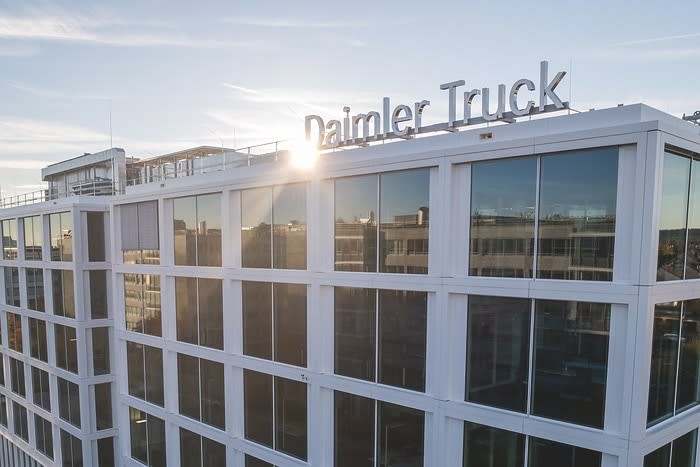
The four truck manufacturers are aiming for transactions by the end of 2024.
Photo: Daimler Truck
2 min to read
Daimler Truck, Toyota Motor Corporation, Mitsubishi Fuso Truck and Bus Corporation (MFTBC), and Hino Motors Ltd. announced they have entered into a Memorandum of Understanding (MoU) on accelerating the development of advanced technologies.
The MoU also has a focus on achieving carbon neutrality and creating a prosperous mobility society.
Details of the Collaboration
MFTBC and Hino will merge to collaborate in the areas of commercial vehicle development, procurement, and production. They will build a globally competitive Japanese commercial vehicle manufacturer.
Meanwhile, Daimler Truck and Toyota will equally invest in the (listed) holding company of the merged MFTBC and Hino.
They will collaborate on the development of hydrogen and other CASE technologies.
By joining forces, MFTBC and Hino would help strengthen the foundation of the Japanese and Asian automotive industries and contribute to their customers, stakeholders, and society.
“This collaboration among our four companies is a partnership for creating the future of commercial vehicles in Japan and the future of mobility society," said Koji Sato, CEO of Toyota Motor Company. "Our four companies will work together with a shared vision of achieving carbon neutrality by strengthening CASE technologies and of changing the future of commercial vehicles and building the future together by solving social issues.”
Details on the scope of the collaboration including the name, location, shareholding ratio, and corporate structure of the new holding company will be decided over the course of the next 18 months.
The parties envisage signing of definitive agreements in the first quarter of 2024 and aim to close the transaction by end of 2024.
Once all parties involved reach an agreement, they will move forward based on the approval of the relevant boards of directors, shareholders, and authorities.
More Operations

Avis Budget Group Deploys Neology Toll Management Technology Across Major Brands
Neology’s neoFleet platform will manage toll transactions and toll-authority operations for vehicles across Avis, Budget, Payless, Budget Truck and Zipcar.
Read More →
Fleet Personal-Use Charges Edge Higher in 2026
Nearly eight in 10 surveyed fleets allow personal use of company vehicles, while just over half of respondents report charging employees for the privilege.
Read More →
The Future of Fleet + What’s Changing Right Now | AF News Recap
Could developments overseas offer a preview of what’s coming for U.S. fleets? This week, we’re looking at the future of AI, autonomy, and electrification, plus Ford Pro’s new certified pre-owned program, smarter vehicle offboarding, and a new way for fleets to manage toll expenses.
Read More →
How to Handle Vehicle Offboarding
What do fleet managers need to do when a driver leaves?
Read More →
Sponsored•October 1, 2026
Fleet Manager’s Ultimate Playbook: Navigating the New Standard in OEM Connectivity
Rising operating costs, driver safety concerns, and unplanned downtime are putting unprecedented pressure on modern fleets. Discover how fleet managers use embedded OEM connectivity and real-time vehicle data to cut TCO, prevent downtime, and protect drivers without aftermarket telematics hardware.
Read More →
U.S. Bank Adds Verra Mobility Toll Management to Voyager Fleet Platform
The integration allows U.S. Bank Voyager fleet customers to manage toll payments and violations alongside fuel, EV charging and maintenance expenses.
Read More →
ADAS Prevents Crashes. But Repairs Cost More | AF News Recap
ADAS-equipped vehicles may crash less often, but they can cost more when they do. This week, we’re breaking down what that tradeoff means for fleets, plus Subaru’s first Forester Wilderness Hybrid, Nissan’s new e-POWER Rogue, and why Calstart has become Catalyst Mobility.
Read More →
Moventum Fleet Management Names Mark Iorillo Head of Sales
Iorillo brings nearly 20 years of fleet management and sales experience to the role, including previous positions at Element Fleet Management, CEI, Donlen and Ryder.
Read More →
Fleet Has a Talent Pipeline Problem. What Comes Next? | AF News Recap
Where will fleet’s next generation of leaders come from? This week, we’re looking at the industry’s talent pipeline, what certification can add to a fleet career, how to build an award-worthy track record, and the return of Automotive Fleet’s Personal Use Survey.
Read More →
Smith System Launches Driver Risk Management Program
Fleets have more driver data than ever, but identifying risky behavior doesn't necessarily correct it. Smith System's new Driver Risk Management program combines monitoring, training, and follow-up coaching to help fleets connect risk signals with driver intervention.
Read More →