





Similar News: 1 in 20 U.S. Adults Drives High on Prescription Drugs
50% of Drivers Use Potentially Impairing RX or OTC Meds
The potential effects of medication while behind the wheel can lead to deadly consequences, yet research finds that healthcare professionals fail to warn up to half of drivers.
July 29, 2022

People who receive a warning from a healthcare professional are 18% less likely to get behind the wheel after taking medication.
Photo: pixabay.com
2 min to read
Approximately 50% of drivers said they used one or more potentially impairing medications in the past 30 days, according to new research from the AAA Foundation for Traffic Safety. Moreover, the proportion of those choosing to drive is higher among those taking multiple medications — a worrisome fact.
Drug use and driving don't mix — even if it’s a prescription medication. A 2020 study of multiple trauma centers found that 56% of drivers involved in serious injury and fatal crashes tested positive for at least one drug, according to the National Highway Traffic Safety Administration (NHTSA).
And, a 2020 traffic safety study from AAA Foundation found that most drivers — some 94% — consider driving after drinking alcohol very or extremely dangerous. But, only 87% feel the same about driving after using potentially impairing medications.
Now, the latest study from AAA Foundation explores drivers’ use of prescription and over-the-counter (OTC) medicines and confirms that motorists lack an understanding of their impact on driving, and healthcare professionals are not helping the problem.
For example, healthcare providers failed to warn many respondents who took prescriptions and over-the-counter medications such as antihistamines, cough medicines, antidepressants, prescription pain medicines, muscle relaxants, sleep aids, and amphetamines about their possible dangerous impact on driving.
In fact, up to half of drivers who were prescribed and took each type of potentially driver impairing (PDI) medication did not report receiving a warning from their medical provider or pharmacist regarding its possible impacts on driving.
Yet the potential effects can be hazardous when mixed with driving. People may experience dizziness, sleepiness, fainting, blurred vision, slowed movement, and attention problems — all of which can lead to deadly consequences if they occur while behind the wheel.
On the upside, those survey respondents who did receive a warning from a healthcare professional were 18% less likely to get behind the wheel after medication use — highlighting the potential benefit of healthcare providers’ counseling to reduce medication-impaired driving.
The AAA Foundation study also examined which types of drugs people were taking and most apt to use before hitting the road. Antihistamines and cough medicines — many available without a prescription — were most commonly used. However, the proportion of drivers that reported driving after use was highest for those who reported amphetamine use, such as Adderall and Dexedrine.
More Safety

The Safest Fleets Aren’t the Ones with the Most Technology
You’ve made the telematics investment. Here’s how to capture the other half of its value and build the safest fleet on the road.
Read More →
Sponsored•August 7, 2026
Hidden in Plain Sight: Fleet Compliance Risks
Fleet compliance isn't just about having policies — it's about consistently enforcing them. This practical guide reveals six hidden compliance risks common in public sector and shared fleet operations and outlines proven strategies to improve visibility, accountability, and audit readiness
Read More →
NETS Sets 2026 Fleet Safety Benchmark Conference for Indianapolis
The Sept. 15–17 program will feature fleet benchmarking data, case studies, emerging technologies, and implementation strategies while running alongside the NSC Safety Congress & Expo.
Read More →
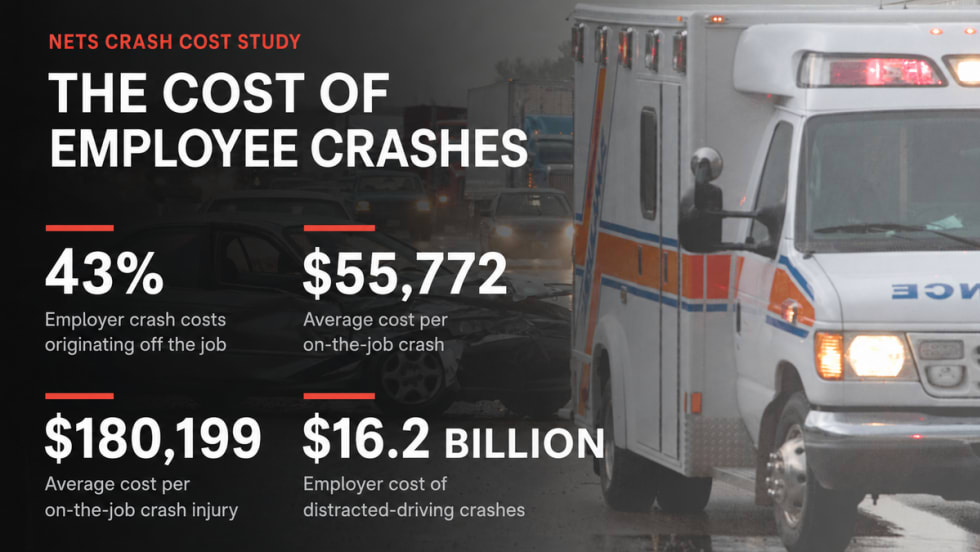
Off-the-Job Crashes Account for 43% of Employers’ $61.7 Billion Crash Burden
NETS quantifies costs dispersed across fleet, risk, HR, and other departments while providing new per-crash benchmarks for employers.
Read More →
Ram Recalls More Than 1.27 Million 1500 Pickups for Seat Belt Anchor Issue
The recall affects certain 2019-2026 Ram 1500 pickups that may have improperly attached second-row seat belt buckle anchors.
Read More →
Sponsored•July 17, 2026
How Better Visibility Cut Speeding Violations by 48%
Fleet leaders don't need more data, they need clearer visibility into what the data is saying. This case study explores how one utility replaced speeding-event counts with a single metric — miles driven in violation — to strengthen safety and significantly reduce speeding violations.
Read More →
Operation Safe Driver Week: Why the Industry's Oldest Safety Campaign Still Matters to Fleets
A look at how a 2007 enforcement initiative became one of the most consequential weeks on the fleet safety calendar, and what it means for your drivers in 2026.
Read More →
Nexar-Nauto Merger Aims to Give Fleets Better Safety Intelligence Through Larger Driving Dataset
Stefan Heck tells Automotive Fleet that combining more than 10 billion miles of driving history with Nexar's AI models will give fleets deeper insights into driver risk and roadway conditions than either company could provide independently.
Read More →
Sponsored•July 2, 2026
From Silos to Solutions: Relationship Management for Safer Fleets
From telematics adoption and driver accountability to policy consistency and risk mitigation, this episode breaks down what it really takes to build a safer fleet culture without slowing business down.
Read More →
IIHS Launches First Commercial Vehicle Safety Evaluations
The Insurance Institute for Highway Safety has begun evaluating heavy-duty pickups and cargo vans for driver protection. Which models earned top marks?
Read More →