Automotive Fleet
MenuMENU
SearchSEARCH

Understanding the Difference Between Light-, Heavy-Duty Towing

Whether you’ll need light-duty or heavy-duty towing will depend on factors such as distance, size and condition of your vehicle, or services required.

by Jeremy Keller, Elite Towing
December 20, 2021
Understanding the Difference Between Light-, Heavy-Duty Towing

Whether you’ll need light-duty or heavy-duty towing will depend on factors such as distance, size and condition of your vehicle, or services required.

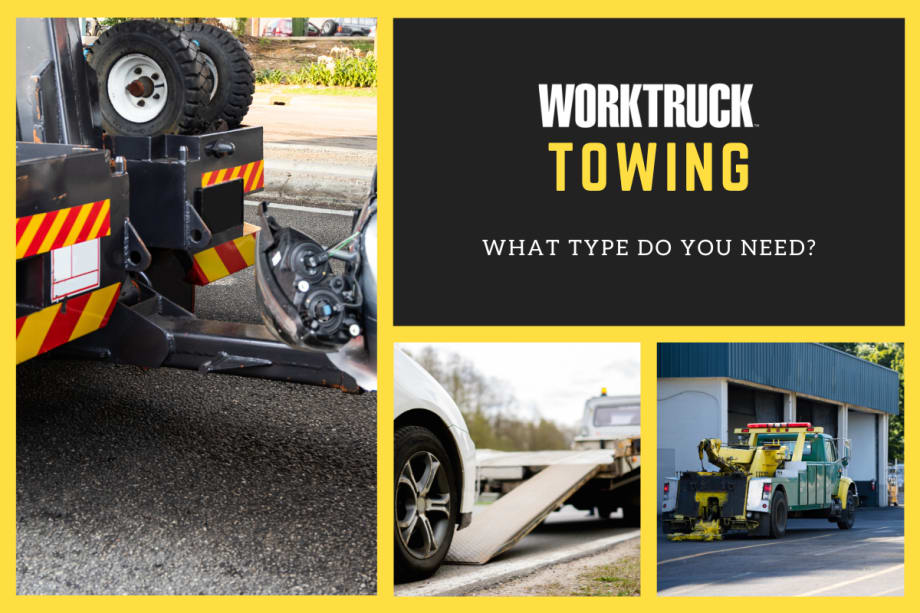
Photo: Work Truck

4 min to read


When in need of a tow, most people would just simply phone a nearby tow truck business. What a lot of drivers don’t know is there are different types of towing services and the towing company has to know what kind of truck to send to your location.

Tow trucks are generally classified as “light-duty” and “heavy-duty,” depending on how much weight they can carry. Whether you’ll need light-duty or heavy-duty towing will depend on factors such as distance, size and condition of your vehicle, or services required.

Ad Loading...

What Does Light-Duty Towing Handle? 

Light-duty towing covers most conventional towing routines that require standard tow trucks and operators. Light-duty tow trucks typically weigh between 8,500 and 10,000 lbs. GVWR, and are capable of handling small-to-medium-sized towing jobs such as private vehicle towing, accident recovery, traffic collisions, and towing abandoned vehicles.

The majority of light-duty tow trucks are equipped with a cable system and a winch for efficient towing. Some also use the dolly towing technique, which entails adding an additional dolly that serves as an extension of the truck. Compared to heavy-duty tow trucks, however, light-duty tow trucks have far less complex tools and equipment and are much easier to operate.

When Do You Need Heavy-Duty Towing?

Commercial vehicles like construction equipment, trailer trucks, garbage trucks, and dump trucks are best towed by a truck with a heavy-duty towing capacity. Heavy-duty tow trucks weigh at least 26,000 lbs. and should be capable of towing/carrying huge vehicles with relative ease.

Out of the towing vehicle classifications, heavy-duty tow trucks are equipped with the most advanced equipment (such as a 25-ton boom, 6-ton wheel lift, and a winch), which enables them to handle the biggest towing jobs. These trucks are also expected to pack a lot of torque and horsepower.

Due to the more complex nature of heavy-duty tow trucks, they require operators with extensive understanding of heavy engines and specific tactics for towing huge vehicles.

Ad Loading...

The Importance of Weight in Towing

The weight of your vehicle is essential to determining whether you need a light-, medium-, or heavy-duty tow truck.

Light-duty tow trucks are not ideal for long-distance towing and incapable of moving vehicles or items that clearly call for a heavy-duty tow. In contrast, using a heavy-duty truck to transport a small vehicle would be inefficient and more expensive. Also, hiring the wrong type of tow truck may damage your vehicle’s transmission and other parts.

Preparing Your Vehicle for Towing

Everyone who owns or operates a vehicle will, at some point, need a professional towing service. It could be because of a road accident, an unexpected breakdown, or relocation across the country. Regardless of your reason for getting your vehicle towed, you need to get it ready before the towing company arrives.

Here some important things to remember:

  • Remove anything that’s important. Take your valuable and personal belongings out of the car to make sure nothing gets lost or broken during transport. Most towing businesses make it clear that they won’t be responsible for any damaged or missing items.

  • Close all windows. Closing the windows of your vehicle prevents any opportunities for theft while it is being towed. It is also critical to protecting the interiors of your car from dirt and debris during transport.

  • Disengage the emergency brakes. You need to disengage your emergency brakes before loading your vehicle into a tow truck. If you don’t, it could get damaged. Any reliable towing service will check if your emergency brakes are engaged before towing the vehicle, but it’s better if you personally make sure it’s done.

  • Take a picture of your vehicle. Take some photos of your vehicle before the towing service arrives. While most companies are excellent at ensuring your vehicle is in good shape, unexpected damage can occur. These photos will come in handy in the event something goes wrong.

  • Find a reputable towing service. Choose to work with an experienced and trusted towing company. It can be tempting to go for the cheapest available option, but there could be a reason why their prices are lower than everybody else’s. Do your research before hiring a tow truck service. You don’t want to take any chances with your vehicle’s safety on the line.


About the Author: Jeremy Keller leads the Content Marketing team for Elite Towing, a locally-owned, family-run business in Casa Grande, Arizona, that provides high quality towing services to both residential and commercial customers. He enjoys photography and doing drone videographies in his spare time.

This article was authored and edited according to WT editorial standards and style to provide useful information to our readers. Opinions expressed may not reflect that of WT.

Originally posted on Work Truck Online

Subscribe to Our Newsletter

More Operations

SponsoredMay 15, 2026

Hybrids: Electrification Without the Challenges

For fleet managers, fuel is one of the biggest line items in the budget — and it's one hybrids can shrink without changing how your people work. Download the eBook to see the numbers, understand the technology, and get a step-by-step guide to making the switch.

Read More →
Man speaking during an Automotive Fleet interview beside text reading “The 60% Driver Improvement Nobody Expected!” with blue motion graphics background.
Operationsby Chris BrownMay 14, 2026

How NOV Uses Telematics to Improve Fleet Safety Across 160 Locations

James Victory of NOV discusses how the company manages fleet safety, maintenance, and telematics across more than 150 locations supporting oilfield operations throughout the U.S.

Read More →
A graphic with Ford Pro's Steven Sanstostasi's headshot on it representing the Fleet Meets series.
Operationsby Faith HowellMay 14, 2026

Fleet Meets: Steven Santostasi

This edition of the Fleet Meets series features Steven Santostasi, the current TSP channel manager for Ford Pro.

Read More →
Ad Loading...
Cover of a whitepaper titled “The Hidden Costs of Departmentally Assigned Vehicles on Your Fleet” featuring a black fleet vehicle driving on a road at sunset. Subheadline reads: “Discover how your fleet can reduce costs and minimize risk by implementing vehicle sharing.” The document focuses on fleet optimization, vehicle sharing, cost reduction, utilization tracking, and risk management for fleet operations.
SponsoredMay 13, 2026

Why Fleet Managers Are Replacing Departmental Vehicles with Shared Motor Pools

Departmentally assigned vehicles often create hidden costs through underutilization, poor visibility, and increased administrative burden. This white paper explores how shared motor pool strategies help fleets reduce costs, improve accountability, and optimize vehicle utilization.

Read More →
Three team members in shop with Chris
Operationsby Chris BrownMay 12, 2026

Soap Box Derby Challenge: Assembling the Crew

Meet Gabriel, Matthew, and Angel — the team helping bring this soap box derby build to life.

Read More →
Handshake graphic featuring BBL Fleet and Velcor Leasing Corporation logos announcing BBL Fleet’s acquisition of Velcor to expand fleet management services nationwide.
Operationsby News/Media ReleaseMay 8, 2026

BBL Fleet Acquires Velcor Leasing Corporation

BBL Fleet expanded its footprint in the fleet management industry with the acquisition of Velcor Leasing Corporation of Madison through a stock purchase agreement finalized Feb. 27, 2026.

Read More →
Ad Loading...
Graphic reading “What’s New From Lytx at Protect 2026?” over a blue digital network background highlighting Lytx fleet technology and AI-powered safety solutions.
Operationsby News/Media ReleaseMay 6, 2026

Lytx Introduces New AI Fleet Technologies at Protect 2026

The company introduced new AI-driven fleet safety and operations technologies during its annual user conference.

Read More →
Cover image for the “5th Annual Market Pulse Report” by Element titled “Navigating fleet management in 2026: Data and insights shaping the future of fleet and mobility.” The design features an aerial view of a cable-stayed bridge with vehicles traveling on a highway beside a dense green forest. A teal graphic panel overlays the lower portion of the image, with the Element logo and tagline “Intelligence in motion” at the bottom.
SponsoredMay 6, 2026

Fleet Costs Are Rising: Here’s How Leaders Are Responding

Fleet leaders are under pressure to reduce costs, adapt to economic uncertainty, and make smarter decisions. See how peers across North America are responding with real data, proven strategies, and forward-looking insights. Download the 2026 Market Pulse Report to benchmark your strategy and uncover where you can gain an edge.

Read More →
A blue Automotive Fleet graphic representing the weekly AF News Recap series.
Operationsby Faith HowellMay 4, 2026

From Waffle House to AI: Fleet Trends You Need to Know

In this AF news recap, host Faith Howell covers how Waffle House stepped up during disaster response and new AI tech on the market.

Read More →
Ad Loading...
OperationsApril 30, 2026

Fleet Operations in the Age of AI: Navigating Ethical and Legal Challenges

AI is no longer a future concept for fleets—it’s already embedded in the tools, data, and decisions that operators rely on every day. In this episode of the Fleet Forward Podcast, recorded live at Fleet Forward, industry leaders take the conversation beyond hype to examine what responsible AI adoption really looks like in fleet operations.

Read More →