




Related: 2020 Fleet Hall of Fame Inductees
2020 Fleet Executive of the Year: Yogi Shivdasani
Yogi Shivdasani was honored with the Fleet Executive of the Year award at the 2020 AFLA NextGen Conference for implementing data and scalable processes to make his fleet run more efficiently.

Andy Lundin・Former Senior Editor
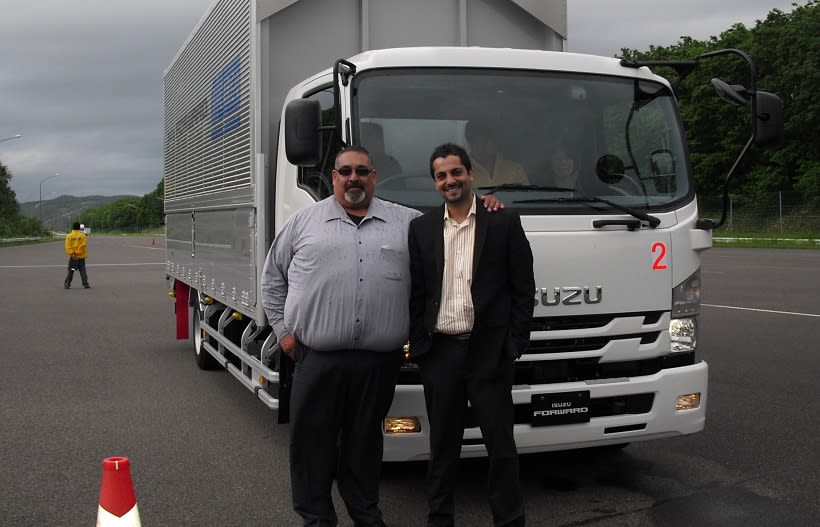
Yogi Shivdasani (right), VP, North America supply chain, LKQ Corporation, at Isuzus testing factility in Japan with LKQ Senior Fleet Manager Phil Orosco.
Photos: Yogi Shivdasani
5 min to read
Yogi Shivdasani, VP, North America supply chain, LKQ Corporation, was recognized as the Fleet Executive of the Year during an online awards ceremony on the first day of the virtual 2020 Automotive Fleet & Leasing Association’s (AFLA) NextGen Conference, which was hosted Oct. 5 - 7, 2020.
The award honors nominees based on cost-saving initiatives, policy setting, and the creation of innovative programs.
Shivdasani, who manages a fleet of 6,200 vehicles, was honored for implementing data and scalable processes to make LKQ’s fleet run more efficiently. This was supported in part by his creation of new vehicle purchasing and idling reduction programs.
He joined the LKQ fleet team at the start of 2016 as the senior director of transportation and logistics when the company tasked him to overhaul its entire fleet operations.
Prior to this, Shivdasani had no experience managing fleet, though he had been with the company for more than 12 years, which included several years as the director of software implementation. His superiors at LKQ had the confidence in him that he would succeed in his new role.
LKQ is a provider of alternative and specialty parts to repair and accessories automobiles and other vehicles.
“There was a need at the company for someone to take over the fleet to fix it and fix it fast,” said Shivdasani. He took over for LKQ’s fleet over approximately 500 branches across the company, which operate in different lines of business, including aftermarket car parts, salvage car parts, self-serve, glass, accessories, and the heavy-duty truck market.
Rehauling the Fleet
One of the first issues he was tasked to address when taking over for fleet were long delays in the vehicle ordering process. Shivdasani said the delays were mainly attributed to a lack of a standardized ordering process, and vehicles not being purchased in mass.
He ended up standardizing vehicle offerings to select manufacturers and a few truck variations that would work throughout its fleet, which also thereby reduced rental expenses and acquisition costs.
Shivdasani and LKQ reduced the average vehicle age by 20 months due to this new disciplined approach to cycling vehicles. The savings for this add up to $2.4 million, annually.
He attributes part of his success here through his previous work history at LKQ, having familiarized himself with company needs when he served as general and district manager at LKQ branch locations. Vehicle offerings are now focused on the line of business and function.
“I used those vehicles, when I ran operations, I knew exactly how they were used. I drove them myself when I had to. And I was very lucky that I did all those things: that I got to drive the vehicle; that I got to run locations; that I got to see all the stuff,” he said. “So it was really my prior, non-fleet related, experience, that I brought into fleet that got me here.”
Prior to restructuring the purchasing plan, Shivdasani said the average delivery turnaround for vehicles was 355 days.
“Having the same vehicles, and knowing they will be used in about the same way, now I can make some much better decisions going forward,” he added.
Another initiative he was recognized for implementing was a new average idle reduction program. Prior to the initiative, LKQ fleet idling was averaging two hours per location, which he found when doing analysis on assets that had telematics devices. He ultimately reduced idling to 15-20 minutes, which he also closely monitored to make sure drivers did not exceed the new policy limits.
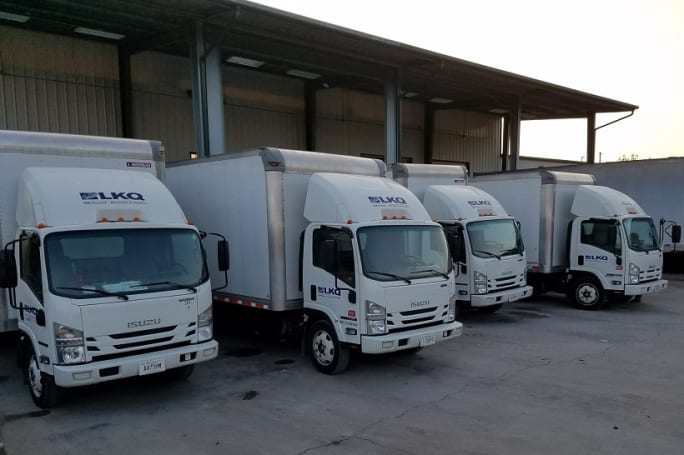
Yogi Shivdasani, VP, North America supply chain, LKQ Corp., attributes part of his success in fleet through his previous work history at LKQ, having familiarized himself with company needs when he served as general and district manager at LKQ branch locations. Vehicle offerings are now focused on the line of business and function.
Photos: Yogi Shivdasani
This ultimately resulted in a savings of $7.5 million. Success with this initiative was grounded in establishing a thorough telematics program, which are now in approximately 5,300 LKQ vehicles.
“So if anybody’s ever thinking about implementing telematics, just look at your idling. If it’s anything over an hour, and you cut it to 30 minutes, or if it’s over an hour and a half, and you cut it to 30 minutes or less, you’ll make up for the expense that pays for the telematics,” he said. “But there is also so much more I get out of telematics.”
This also helped Shivdasani establish a scorecard that provided deeper analytics of overall asset utilization, including details about fueling transactions.
“It basically showed me all my unutilized and under-utilized vehicles; I knew what should be on the list of vehicles to be sold, so I could start processing things and we could get our hands on the titles and cycle them out,” he said.
Other areas that were improved upon following these and other initiatives included lowering maintenance costs and labor costs, reducing average fleet age, and regular lease reviews and adjustment by looking at current versus estimated miles. Also, during the COVID-19 pandemic, Shivdasani was quick to implement a touchless delivery confirmation for all locations, ensuring the protection of all employees and customers.
Gaining Trust and Support to Succeed
Shivdasani said prior experience and earlier initiatives while working in the field as a manager led to some of his methods being implemented through LKQ’s systems and operations when he served in IT as the director of software implementation.
Having gained trust in the field and subsequently bringing best practices to IT and rolling them out through LKQ’s system eventually allowed him to have almost 100% buy-in at the corporate and field level when commencing other initiatives for the company.
“That buy-in still follows me today, and I could not be more thankful for the trust that the LKQ family has in me,” he said.
During the fleet restructuring, LKQ had turned to a new fleet management company in Donlen, who supported Shivdasani in his role, after experiencing issues with a prior FMC.
“Donlen played a big part in our success from staying on top of our day-to-day fleet management needs, and providing in-depth customized visibility on a quarterly basis, which was always relevant to the current situation within the company,” he said.
Shivdasani also credits his vendors for his success during his restructuring of the LKQ fleet.
“I do appreciate everything that my vendors have done, because without them this would have not happened,” he said.
Subscribe to Our Newsletter
More Operations

How Fleets Can Recruit and Train Veterans for Technician Roles
Here's how the technician shortage has affected uptime for fleets, and what to do about it.
Read More →
Avis Budget Group Deploys Neology Toll Management Technology Across Major Brands
Neology’s neoFleet platform will manage toll transactions and toll-authority operations for vehicles across Avis, Budget, Payless, Budget Truck and Zipcar.
Read More →
Fleet Personal-Use Charges Edge Higher in 2026
Nearly eight in 10 surveyed fleets allow personal use of company vehicles, while just over half of respondents report charging employees for the privilege.
Read More →
The Future of Fleet + What’s Changing Right Now | AF News Recap
Could developments overseas offer a preview of what’s coming for U.S. fleets? This week, we’re looking at the future of AI, autonomy, and electrification, plus Ford Pro’s new certified pre-owned program, smarter vehicle offboarding, and a new way for fleets to manage toll expenses.
Read More →
How to Handle Vehicle Offboarding
What do fleet managers need to do when a driver leaves?
Read More →
Sponsored•October 1, 2026
Fleet Manager’s Ultimate Playbook: Navigating the New Standard in OEM Connectivity
Rising operating costs, driver safety concerns, and unplanned downtime are putting unprecedented pressure on modern fleets. Discover how fleet managers use embedded OEM connectivity and real-time vehicle data to cut TCO, prevent downtime, and protect drivers without aftermarket telematics hardware.
Read More →
U.S. Bank Adds Verra Mobility Toll Management to Voyager Fleet Platform
The integration allows U.S. Bank Voyager fleet customers to manage toll payments and violations alongside fuel, EV charging and maintenance expenses.
Read More →
ADAS Prevents Crashes. But Repairs Cost More | AF News Recap
ADAS-equipped vehicles may crash less often, but they can cost more when they do. This week, we’re breaking down what that tradeoff means for fleets, plus Subaru’s first Forester Wilderness Hybrid, Nissan’s new e-POWER Rogue, and why Calstart has become Catalyst Mobility.
Read More →
Moventum Fleet Management Names Mark Iorillo Head of Sales
Iorillo brings nearly 20 years of fleet management and sales experience to the role, including previous positions at Element Fleet Management, CEI, Donlen and Ryder.
Read More →
Fleet Has a Talent Pipeline Problem. What Comes Next? | AF News Recap
Where will fleet’s next generation of leaders come from? This week, we’re looking at the industry’s talent pipeline, what certification can add to a fleet career, how to build an award-worthy track record, and the return of Automotive Fleet’s Personal Use Survey.
Read More →