




Online Remarketing is Growing and Low-Priced Cars are Benefiting
Online remarketing has been a growing trend for the past few years and it promises to continue. As more remarketers are selling and buying wholesale vehicles online, some new trends have emerged.

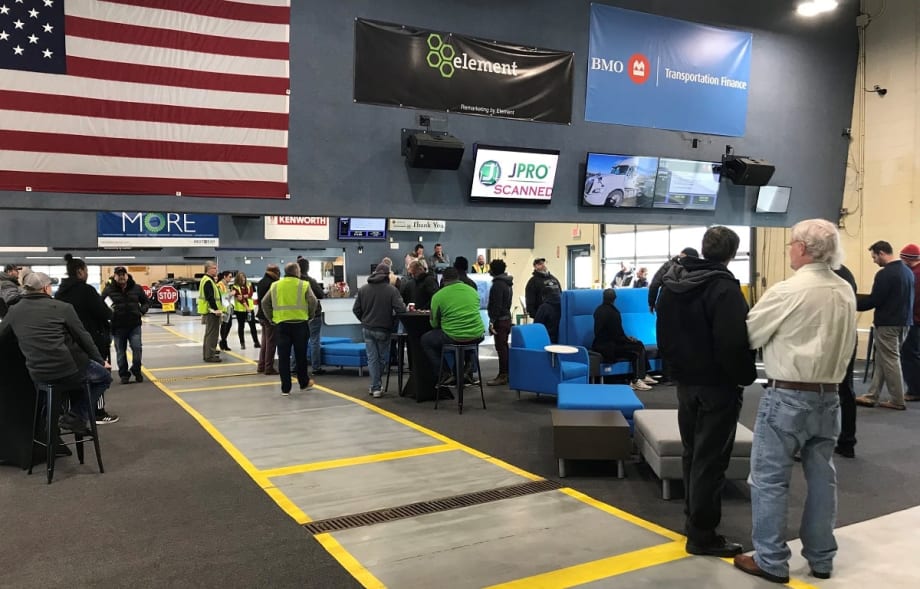
In 2019 48% of sales at Manheim were digital, up from 44% in 2018 and 40% in 2017. In December 2019, 52% of all sales originated from a digital channel and through early January over 50% of sales were digital.
Photo courtesy of Manheim.
Online remarketing has been a growing trend for the past few years and it promises to continue. As more remarketers are selling and buying wholesale vehicles online, some new trends have emerged.
For the past several years online sales have accounted for an increasingly larger share of overall sales at auctions.
More recently, improvements to online vehicle representation through things such as better vehicle imaging and more in-depth condition reports have helped drive growth in online sales.
The continued development of new online tools, platforms, and apps have also made the buying and selling experience more convenient. Apart from convenience, buyers and sellers are finding efficiencies and costs savings by moving more of their remarketing efforts online.
Automotive Fleet recently spoke to representatives of two of the largest players in the wholesale space KAR Global and Manheim to talk about some of these trends, along with others that they have seen in the online remarketing space.
“You’re starting to see sellers be more motivated to sell cars as quickly as possible. They’re looking for velocity and if you think about velocity, the best way to increase that velocity is most likely to sell cars online,” said Jason Ferreri, executive vice president of online services for ADESA.
Both KAR and Manheim have seen year-over-year growth in online sales over the past several years.
As of the third quarter of 2019, the latest available quarter for financial data, online sales accounted for 59% of all transactions for the KAR Global family of companies, up from 38% in 2014. OPENLANE has driven much of that growth for KAR.
In 2019, 48% of sales at Manheim were digital, up from 44% in 2018 and 40% in 2017. In December 2019 52% of all sales originated from a digital channel and through early January over 50% of sales were digital.
Low-Priced Cars Selling Better Online

Zach Hallowell,
Manheim
Both Zach Hallowell, VP Manheim Digital and Ferreri indicated that lower-priced vehicles have benefited from improvements in the online wholesale space.

Jason Ferreri,
ADESA
“All the efforts in improving vehicle representation and instilling more confidence in the buyers has led to KAR seeing the average price point of vehicles selling online move down,” said Ferreri. “This means that people are becoming more and more comfortable buying a lower-dollar vehicle. That’s been great, it shows that it’s not just the $15,000 to $20,000 car that sells online. We can sell a $6,000 car online all day long.”
Manheim saw this same trend in 2019 when Manheim Tucson became its first auction to go all digital.
“Manheim Tucson opened our eyes to the possibilities of cars that you wouldn’t naturally think would sell digitally, can sell digitally,” said Hallowell. “Most of the cars sold at Manheim Tucson are valued at less than $5,000 and are sold as-is, and we’ve been able to sell that digitally.”
Several factors such as safety and buyer feedback led to Tucson’s shift to all-digital and so far, the auction’s performance has been encouraging, noted Hallowell.
The company saw no drop in performance, and in fact, saw a slight up-tick in the values the auction generated.
With the success of its Tucson location, Manheim is now evaluating other locations that it can move toward all-digital.
“Arbitration rates haven’t gotten any higher either,” said Hallowell. “I think that’s attributable to the great work that we do around imaging cars, writing condition reports, standing behind our cars. We’ve been able to give buyers confidence that they can continue to buy cars in a slightly different format but with the same confidence that’s been at Manheim.
Ferreri noted that KAR has always been able to sell higher-priced off-lease vehicles online, but now that vehicles are being represented better online, and buyers are feeling more confident that the vehicle they see onscreen will match their expectations, it’s opening the door to all sorts of vehicles selling better online.
“Everyone can play in the sandbox, so to speak. It isn’t just the off-lease car. Repossessions, fleet cars, dealer cars, it doesn’t really matter what the source of the vehicle was. If represented properly and we instill confidence, we feel any car is eligible to be sold online,” added Ferreri.
At this point, KAR has about a dozen customers — from the commercial, fleet, and dealer segments — that don’t run any cars across the block anymore. They are exclusively using VirtuaLane to sell their cars, noted Ferreri.
On the buyer side, Ferreri noted that many buyers have stopped physically inspecting vehicles. They rely on the data and imaging that’s available digitally.
“It’s funny, we don’t see many folks walk the lot, even the buyers who show up to the physical auction on sale day and participate in the VirtuaLane sale,” said Ferreri. “The report we get from a lot of our auctions is that a lot of those buyers who used to still go out the morning of or the day before to walk those cars, there’s less and less of that occurring. They’re relying more and more on what they see on the TV monitors and what they see on the assets in their hand.”
Making the Online Experience More Personal
The sentiment that Hallowell and Ferreri shared when it comes to the online remarketing is that personalization needs to become a bigger part of the experience.
Amazon and the personalized recommendations that it offers was the example that they gave to explain what their respective companies are hoping to do.
Similar to how Amazon recommends products based on your search history and on the products you purchase, both Manheim and KAR are aiming to offer a similar AI-powered recommendation feature to their online platforms.
Manheim recently redesigned its main website, Manheim.com, to offer this sort of personalization.
When users login to the site, it will now remember previous purchases, searches, and other data points. Then, based on those data points, it’ll feed the user a set of recommended vehicles.
“Purchase history has the most direct expression of interest in the vehicle. If you bought the car and we see a pattern in your buying then our recommendations will lean more heavily toward that,” said Hallowell.
One example given was that if a user happens to buy a lot of domestic trucks, the system will recommend domestic trucks because it has identified a pattern in which those types of vehicles perform well for the user.
If the user doesn’t have a long purchase history with Manheim then the system will lean toward the user’s searches. The system will learn from the user on a day-to-day basis based on the vehicles the user searches for. Essentially, every time the user interacts with the site, it’ll be learning and dynamically respond, noted Hallowell.
But it isn’t just about the buyer, added Hallowell, Manheim has also put plenty of thought into improving the seller experience because in order to grow online sales, all channels need to be addressed. One of those improvements is bulk management for sellers, which allows simpler management of large number of vehicles.
ADESA also added a personalization feature to its website and mobile app at the end of 2019 that is based on similar data points such as purchase history and things that are happening in the retail market.
“It’ll get smarter as it’s used,” said Ferreri. “The more you click on a vehicle that we’re serving up to you, we go OK, great, we were doing the right thing. If you’re not clicking on them, our algorithm needs to get better. It needs to get smarter. It means we’re not serving up the right vehicle to you yet.”
Overall, the goal of these personalized recommendations is to increase the likelihood that a user will purchase a vehicle online. The thought process is that if the platform learns enough about a user that it’s able to feed the user exactly the vehicles the user is interested in buying, it’ll increase the rate at which the user buys vehicles online.
What About Physical Auctions?
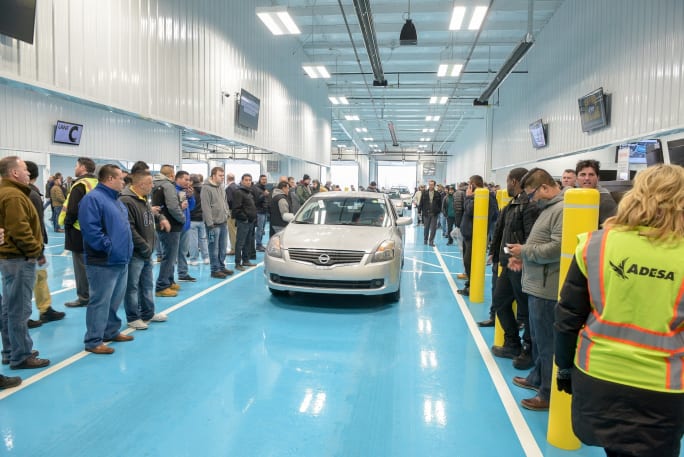
As of the third quarter of 2019, the latest available quarter for financial data, online sales accounted for 59% of all transactions for the KAR Global family of companies, up from 38% in 2014. OPENLANE has driven much of that growth for KAR.
Photo courtesy of ADESA.
When it comes to the place that physical auctions will occupy as digital sales continue to account for a larger share of overall auction sales, the answer appears to be that it will occupy whatever space buyers determine that it should.
Both Hallowell and Ferreri said that their companies aren’t looking to upend physical sales or have goals to reach a certain percentage of digital versus physical sales. The shared sentiment was that if consignors, buyers, and sellers determine that a certain avenue is where they want to go, then they’ll make sure to cater to that choice; whether it means that physical auctions play a smaller role, bigger role, or completely different role.
“We want to have all channels available to both buyers and sellers and let them decide what makes the most sense for them,” said Ferreri. “We don’t have specific stated goals for volumes or percentages. There’s certainly a commitment here at KAR to physical auctions and physical locations. Will auctions potentially look and feel different over the next five to 10 years? I think they will.”
Even if sales continue to move away from physical auctions, Ferreri noted, physical auctions will always offer a location for vehicle storage and reconditioning centers.
“For us it’s not about digital or physical, we’re not saying that there’s only one way to do this,” said Hallowell. “We have the scale to support our sellers that need storage space and security or need a place to hold their repossessed vehicles until the notice of intent to sell has expired. The sellers that need reconditioning, inspection, detailing, and so on.”
Looking ahead, the rate of online sales growth looks like it’s accelerating. Digital channels have become a bigger part of overall business, even outside of remarketing, so it’s only logical that it’ll continue to bleed into the remarketing space.
“When you think of data available from a vehicle, there are vehicles that are starting to update service history and diagnostics over the air, said Hallowell. “We can know how the car was built and get that data via data integration. It’ll be up to us as remarketers to make all that information easily and efficiently accessible.”
More Remarketing

Ford Pro Launches Certified Pre-Owned Program for Commercial Vehicles
Ford Pro Advantage will offer certified pre-owned Class 1-7 commercial vehicles through more than 700 Ford Pro Commercial Vehicle Centers.
Read More →
Copart to Acquire ACV in $1.9 Billion Deal
The acquisition would expand Copart beyond its traditional salvage business into dealer-to-dealer wholesale remarketing while adding ACV’s vehicle data, inspection, and valuation technology.
Read More →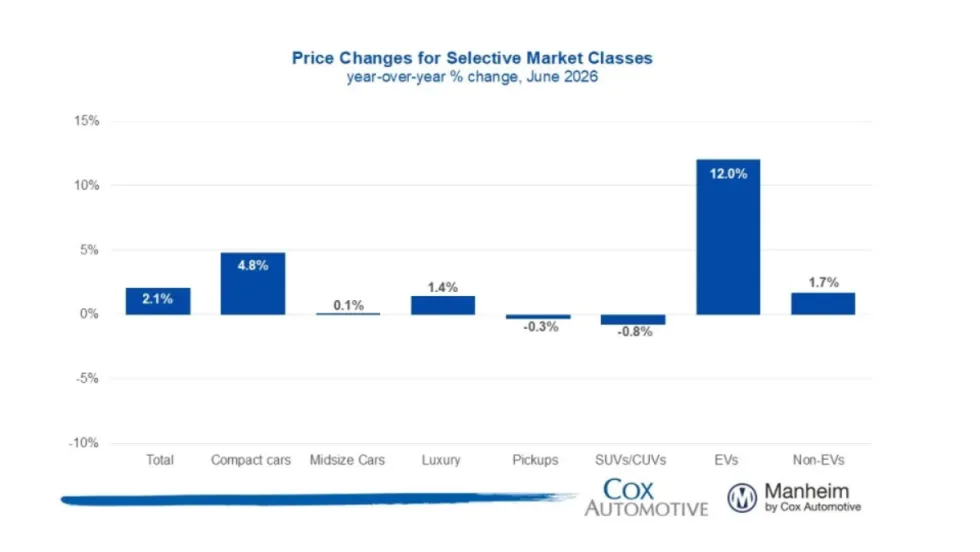
Manheim Index Shows Used-Vehicle Wholesale Prices Up 2.1% in June
The market is seeing stronger appreciation in older used vehicles this year, and the most affordable segments have been among the year’s best performers.
Read More →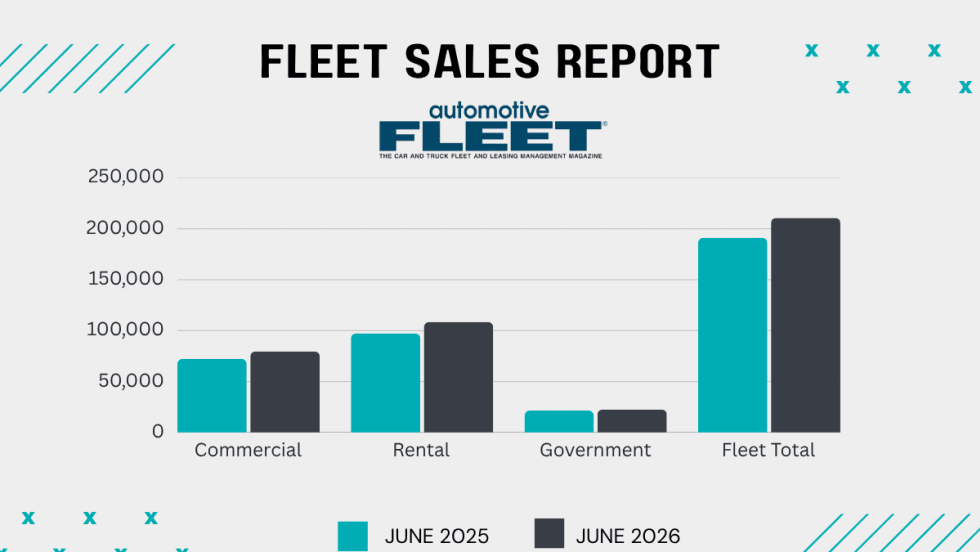
Commercial Fleet Sales Contribute To June, YTD Gains
The fleet sector has boosted its vehicle purchases at a reliable pace in the first half of this year compared with 1H 2025.
Read More →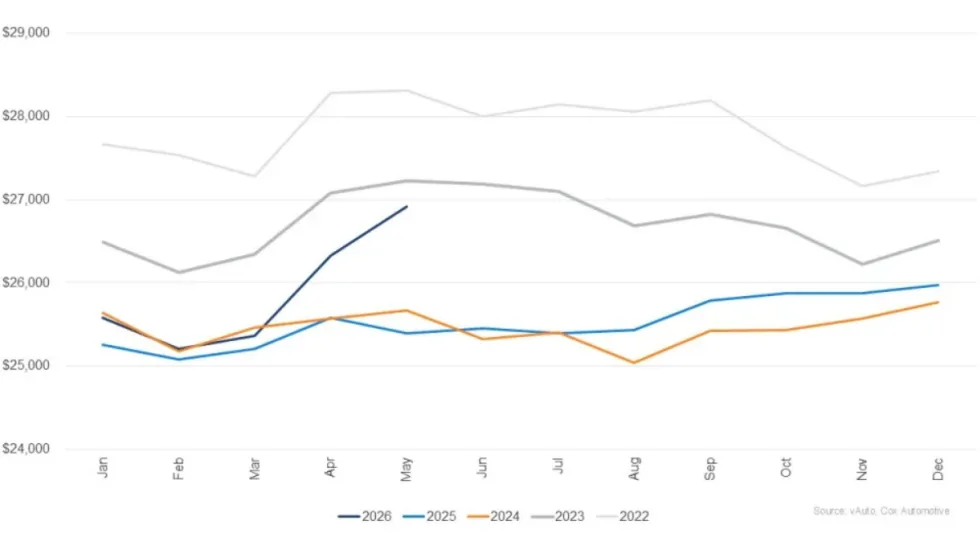
Used Vehicle Prices Climb Higher As Sales Pace Slows
The higher prices at used retail reflect strong wholesale values earlier in the spring, particularly for older, more affordable vehicles.
Read More →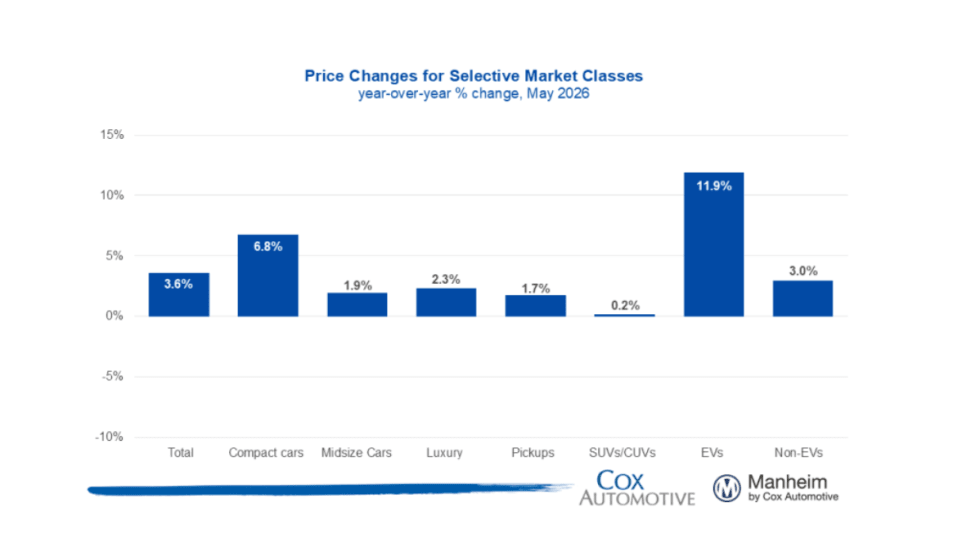
Wholesale Used Vehicle Market Sustains Moderate Rise In Values, Prices
Trends continue to normalize after a strong start to the year, as consumers contend with higher gas prices in the coming summer months.
Read More →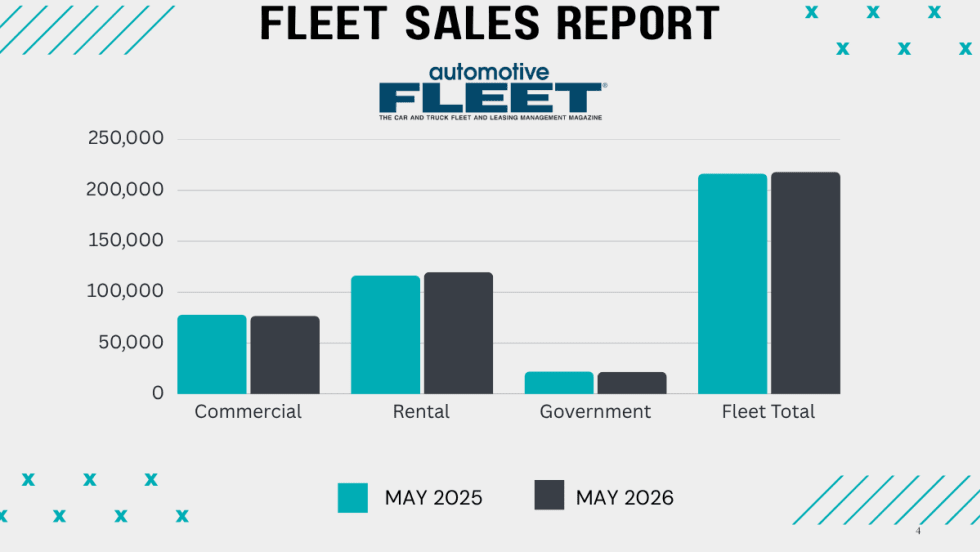
Commercial Fleet Sales Still Lead Sectors Despite May Mini Dip
The U.S. economy's continued growth and positive business investment are creating a favorable environment for fleet vehicle demand.
Read More →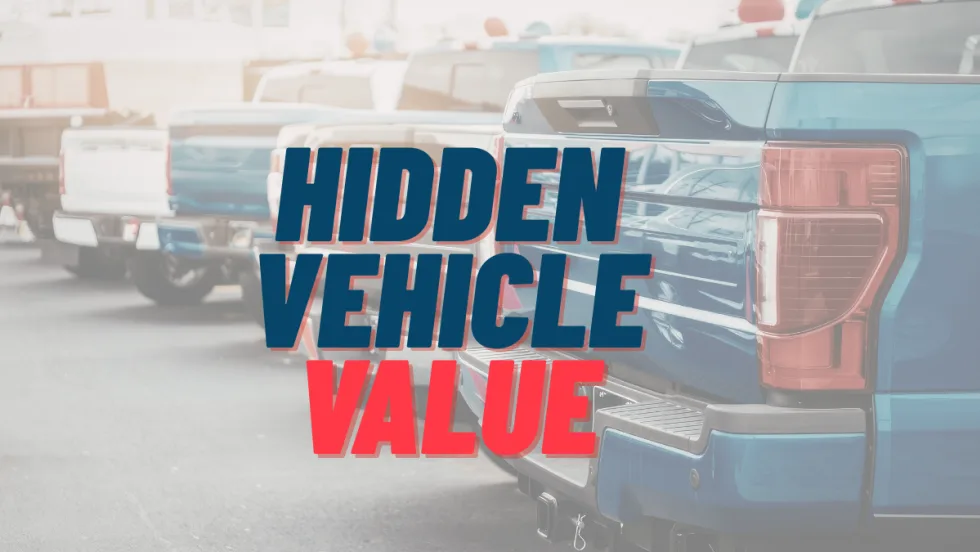
How Connected Vehicle Data Is Lifting Fleet Resale Values
A vehicle health score could improve the value of fleet vehicles at remarketing. The path to a universal standard is forming, and fleets that understand the process early will be better positioned when it arrives.
Read More →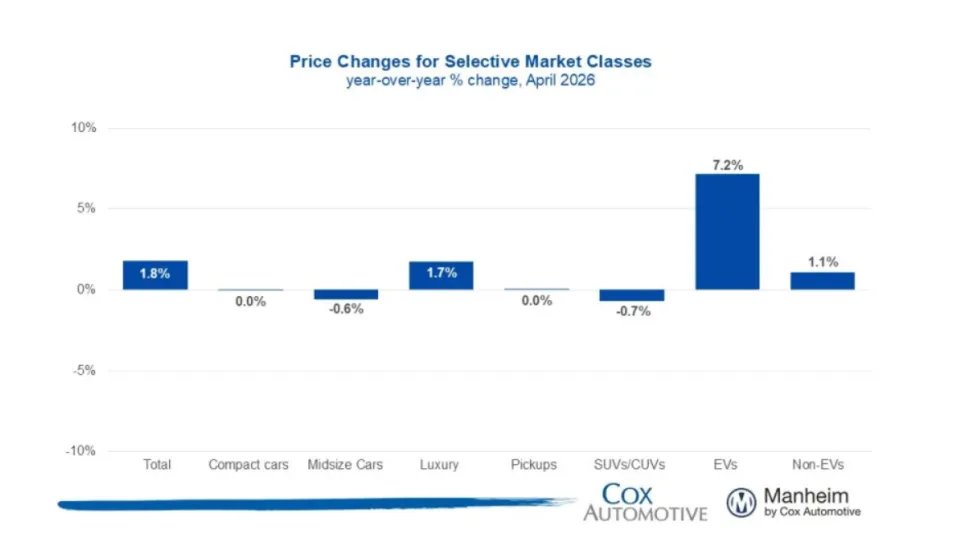
Wholesale Used Vehicle Prices Slightly Up In April
The Iranian conflict and rising gas prices inject much uncertainty into the future wholesale used vehicle markets, as higher gas prices soak up spendable income from vehicle buyers.
Read More →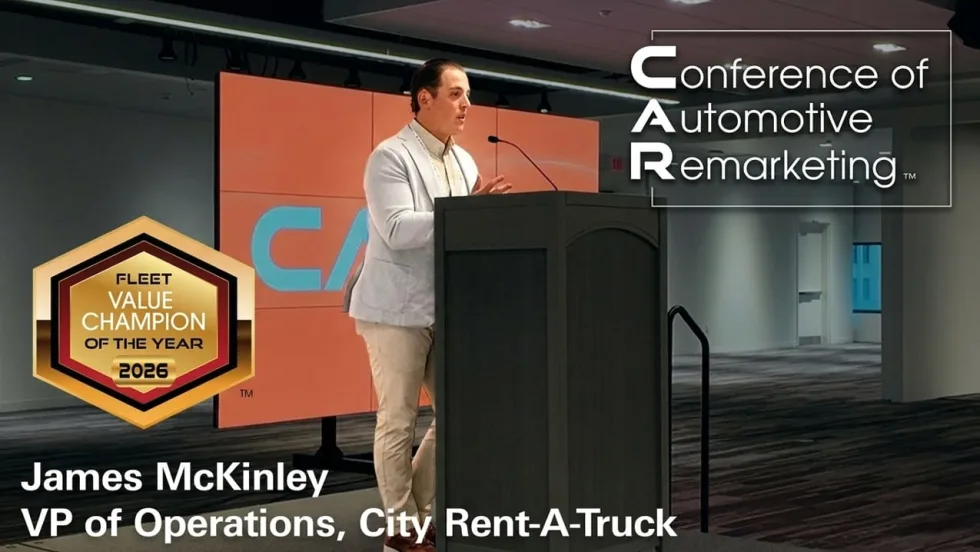
CAR2026: James McKinley Wins Value Champion of the Year
James McKinley of City Rent a Truck was named the inaugural Fleet Value Champion at the CAR Conference for his data-driven approach to fleet lifecycle management and vehicle remarketing.
Read More →