




Related: No Pain, No Gain
Electric Shock!
By the end of next year, there are supposed to be over 50 types of plug-in electric vehicles for sale in the U.S. At some point in the recent past, it appears that everyone decided the time is now for electric vehicles.

Sherb Brown・President
Even if we don’t see a real breakthrough in battery tech, it’s still a Wild West out there for electric vehicle residual values.
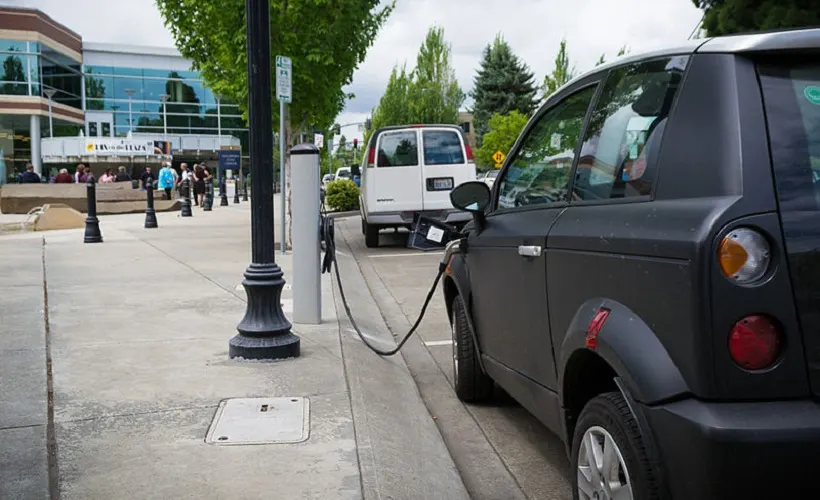
Photo of a electric vehicle charging station in Hillsboro, Oregon. Courtesy of Visitor7 via Wikimedia Commons.
3 min to read
By the end of next year, there are supposed to be over 50 types of plug-in electric vehicles for sale in the U.S. At some point in the recent past, it appears that everyone decided the time is now for electric vehicles.
Our federal and state lawmakers are certainly doing their part with $7,500 incentives at the federal level and many states chipping in another $2,500 - $5,000. With all that support, we’re still a long way from lifecycle cost parity with traditional ICE vehicles. Unfortunately, politicians are leading the charge here and they have little to no concern about being economically rational.
The current deluge of electric vehicles has resulted in a rather chaotic product development cycle. Add the current fascination with autonomous vehicles, and we all should have some real sympathy for the product planners at the major vehicle manufacturers. As fleet managers, many of you are probably looking for some sympathy too. We’re a long way from fleet-friendly electric vehicles today.
Fleet careers are made on managing costs and delivering predictable results. It’s a real challenge to deliver either of those with the crop of new electric vehicles coming our way. Battery improvements at this point are gradual and evolutionary but if we do get to the point where there is a revolutionary change, the lithium batteries in today’s vehicles are going to be worth next to nothing.
Even if we don’t see a real breakthrough in battery tech, it’s still a Wild West out there for electric vehicle residual values. We saw some incredible early interest in BEVs over the last few years.
But now that the tax credits are fading and the early adopters all have one already, it’s going to be very interesting to see what the demand curve looks like going forward. Maybe there is a whole new wave of buyers ready to adopt the EV lifestyle, but that’s a risk most fleet managers can’t afford to take.
One of the great unrealized downsides to the recent push for instant electrification is that the major vehicle manufacturers are all now forced to spend the vast majority of their R&D dollars on technology that is legislatively driven rather than market driven. The technological leaps we have seen in the last few years with gas and diesel powered vehicles has been almost breathtaking.
We have full size pickups getting 25 MPH and more. We have incredibly versatile full-size work van platforms that deliver amazing efficiency while providing a safe and ergonomically functional work environment. Imagine what the tens of billions of dollars being thrown at EVs could have done if the manufacturers were allowed to continue down this path.
If you thought managing a fleet in the past was a big challenge, you’ll be even more impressed with the complexity we are all facing in the near term. It’s no longer enough to worry about safety, job suitability, residual values, and in-cab technology. Proper fleet management today also requires a view toward the future and a crystal ball that can give you insight into the constantly changing political environment that now drives so many of our decisions
Subscribe to Our Newsletter
More Blog Posts

Getting a PhD in Fleet
COVID-19 has changed how fleets connect with each other but that doesn’t mean you have to give up the opportunity to grow, learn, and get better at managing your fleet.
Read More →
All Charged Up
There is an avalanche of new electric vehicles slated to hit the market in the next couple years. There are over 100 new models slated to hit by 2022 from the Big Three, the major imports, and from a lot of new start-ups.
Read More →
Fleet on the Rebound
Most of the key players in the fleet market are either stuck at home or working in an office but unable to travel. So we’re changing our business model to help maintain the flow of information until things get back to the way they were.
Read More →
Undertaking the Complexities of Fleet
Staying on top of industry trends to keep up with the intricacies of fleet can be a full-time job all by itself, and to be a top performing fleet requires a little forward thinking and anticipation.
Read More →
The Real Transportation Revolution
The fleet market is leading the charge on making real gains in efficiency and safety with telematics, in-cab video, and safety technologies that are available today.
Read More →
Stay Out of My Lane
Let’s get a framework in place and a legislative plan that allows us to develop autonomous vehicle technologies without putting lives at risk in the short term.
Read More →
Wrapping Up Another Year
Thanks to the strong economy that the U.S. is enjoying, U.S. commercial companies have been able to invest more money into their fleets, and strong fleet sales are a reflection of that.
Read More →
AFLA's New Canadian Conference Continues Growth Tradition
Fleets know how valuable of a resource that AFLA conferences can be, and the upcoming summit in Canada will serve as another wealth of knowledge that the association has delivered for decades.
Read More →
The Next Chapter
It’s impossible to attend great fleet events like AFLA and not get caught up in why is has helped make the industry so great, but equally exciting is seeing how much the association is ready to take on the evolving industry that is fleet.
Read More →
Fleet Ground Zero
You are missing out on some potentially game changing information when you don’t get out to meet regularly with your peers.
Read More →