




New GM Recall Pulls In Express, Savana Vans
General Motors will recall 303,000 Chevrolet Express and GMC Savana vans from six model years amid a broadening internal and external evaluation of the company's handling of vehicle safety.
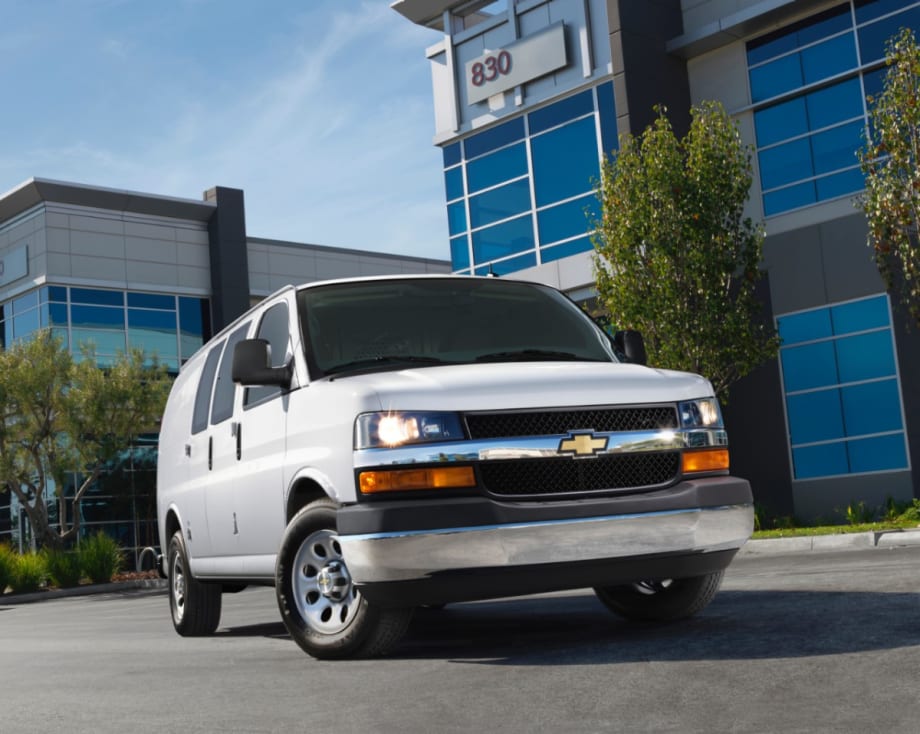
Photo of 2014 Chevrolet Express courtesy of General Motors.

Photo of 2014 Chevrolet Express courtesy of General Motors.
General Motors will recall 303,000 Chevrolet Express and GMC Savana vans from six model years amid a broadening internal and external evaluation of the company's handling of vehicle safety.
Because the full-size vans don't comply with a head-impact requirement for passengers not wearing seat belts, the vehicles need reworking of the passenger instrument panel material. The recalled vans come from the 2009 to 2014 model years and have a gross vehicle weight of 10,000 pounds or less.
Unsold vehicles have been placed on a stop-delivery until a remedy is developed and parts are available, GM announced March 17.
The company decided to launch these new recalls after conducting an internal safety review. Questions arising from the ignition safety switch recall prompted the safety review.
"I asked our team to redouble our efforts on our pending product reviews, bring them forward and resolve them quickly," said Mary Barra, GM's CEO. "That is what today's GM is all about."
Fleet buyers of the Chevrolet Express full-size van will be most impacted by the recall. In calendar-year 2012, fleets registered 52,515 Express vans, including 26,072 commercial and 19,896 government vehicles. Fleets registered 12,825 GMC Savana vans, including 3,823 in commercial fleets and 8,498 in rental fleets.
In a separate action, the automaker is recalling 1.18 million 2008- to 2013-MY Buick Enclave and GMC Acadia vehicles, 2009- to 2013-MY Chevrolet Traverse vehicles and 2008- to 2010-MY Saturn Outlook vehicles.
Mostly rental fleets registered the recalled mid-size SUVs, including the Chevrolet Traverse (15,211), Buick Enclave (5,734), GMC Arcadia (10,513). Commercial fleets added 2,340 Traverse SUVs in 2012, according to the Automotive Fleet 2013 Fact Book.

GM's CEO Mary Barra gives a update on the recalls and federal probe.
VIDEO: GM CEO Gives Recall Update
A third recall involves 63,900 2013- to 2014-MY Cadillac XTS full-size sedans. Fleets registered 855 XTS vehicles in 2012.
In the XTS, a brake booster pump can create positive pressure within the wiring harness attached to the pump relay. This pressure can lead to the dislodging of a plug in the brake booster pump relay, allowing corrosive elements to enter the connector and form a low-resistance short. This short could lead to overheating, melting of plastic components and a possible engine compartment fire.
GM said it is aware of two engine compartment fires in unsold vehicles at dealerships and two cases of melted components.
The Enclave, Traverse, Acadia and Outlook vehicles are equipped with a service air bag warning light in the driver information center. Ignoring the service air bag warning light will eventually result in the non-deployment of the side impact restraints, which include driver and passenger seat-mounted side air bags, a front center air bag (if equipped), and the seat belt pretensioners.
To repair the condition, dealers will remove the driver and passenger side air bag wiring harness connectors and splice and solder the wires together.
"Today's announcement underscores the focus we're putting on the safety and peace of mind of our customers," Barra said. "We are conducting an intense review of our internal processes and will have more developments to announce as we move forward."
GM expects to take a charge of approximately $300 million in the first quarter primarily for the cost of the repairs for the three safety actions and the previously announced ignition switch recall.
More Safety

Top 50 Executive Fleets
It is that time of year again! Time for the 2026 list of the Top 50 Executive Fleets, presented by Automotive Fleet and Volvo as part of its annual Fleet 500. Download now to see this year's list of companies!
Read More →
How Better Visibility Cut Speeding Violations by 48%
Fleet leaders don't need more data, they need clearer visibility into what the data is saying. This case study explores how one utility replaced speeding-event counts with a single metric — miles driven in violation — to strengthen safety and significantly reduce speeding violations.
Read More →
Operation Safe Driver Week: Why the Industry's Oldest Safety Campaign Still Matters to Fleets
A look at how a 2007 enforcement initiative became one of the most consequential weeks on the fleet safety calendar, and what it means for your drivers in 2026.
Read More →
Nexar-Nauto Merger Aims to Give Fleets Better Safety Intelligence Through Larger Driving Dataset
Stefan Heck tells Automotive Fleet that combining more than 10 billion miles of driving history with Nexar's AI models will give fleets deeper insights into driver risk and roadway conditions than either company could provide independently.
Read More →
From Silos to Solutions: Relationship Management for Safer Fleets
From telematics adoption and driver accountability to policy consistency and risk mitigation, this episode breaks down what it really takes to build a safer fleet culture without slowing business down.
Read More →
IIHS Launches First Commercial Vehicle Safety Evaluations
The Insurance Institute for Highway Safety has begun evaluating heavy-duty pickups and cargo vans for driver protection. Which models earned top marks?
Read More →
Reducing Risk by Eliminating Phone Use Behind the Wheel
Hosted with the cofounder of Lifesaver Mobile, this episode addresses phone use behind the wheel and how to design a driving environment that actually helps prevents accidents.
Read More →
Cameras, Safety and Insurance: From Reactive Claims to Real-Time Prevention (Part 2 of 2)
Part Two: Commercial auto remains one of the most challenging and costly lines of coverage for fleet operators and insurers alike. Continue learning more about how to effectively address these issues from Onur Aksan, Enterprise Business Development Executive, Geotab
Read More →
How 5-Second Telematics Data Is Changing Fleet Safety
This episode connects with Steve Santostasi of Ford Pro and covers how a few seconds of data can make a difference in fleet safety.
Read More →
The Two Biggest Summer Downtime Threats for Fleets
A conversation with a maintenance expert reveals the two most common summer maintenance pains and how to prevent them.
Read More →