





Related: Video: Study Highlights Safety Benefits of Adaptive Headlights
How to Drive Safely on Winding Roads
Along with slowing down, there are a number of other steps drivers can take to navigate curves cautiously and arrive safely at their end destination.
March 2, 2015

Photo via istock.com.
3 min to read

Photo via istock.com.
Whether located on rugged mountain terrain or on smoother surfaces, winding roads are a fact of driving life. And, they can be a challenge to navigate.
The primary action drivers can take when traveling along curving roadways is an obvious one: simply slow down. In addition, drivers should make sure to follow advisory speed limit signs.
“Every curve has what’s called the ‘critical speed of the curve.’ If you go too fast, it’s going to get to a point where you’re going to lose control. You could oversteer or understeer,” said Phil Moser, vice president of Advanced Driver Training Services (ADTS).
Proceed with Caution
Other basic tips for driving carefully on twisting terrain include:
Scanning ahead as far as possible.
Slowing down when approaching a curve, especially a blind curve.
Keeping the vehicle centered in the lane.
Slowing down and being especially observant in areas inhabited by animals, such as deer.
Using high beams as much as possible when driving at night and/or in weather conditions that limit visibility.
Drivers should particularly take weather into account in areas where it can be unpredictable.
“On mountainous roads, it might be wet down at the bottom, but there may be snow and ice at the top. Expect it and drive accordingly,” Moser said.
If a driver’s vehicle goes off the road, he or she should avoid hitting the brakes or jerking the wheel back onto the road — instead, the driver should ease off the accelerator pedal and gradually come back onto the pavement if there’s a “lip” on the road, according to Moser.
And, make sure to slow down when approaching the crest of a hill.
“If you’re following a larger vehicle — say, a tractor trailer — and there’s a passing lane, I really advise that people do not pass that truck at the crest of a hill because trucks use gravity to help them build up momentum to go up to the other side,” Moser said.
Be Prepared
Another key to driving safely — on roads both winding and straight — is taking preventive measures to ensure the vehicle is in good condition. Fleet managers should have components such as brakes, suspension, steering, and fluid levels checked regularly, and they should make sure the windshield and headlights are clean. In addition, tires should be properly inflated, and Moser recommended that fleet managers ensure drivers check vehicle tire pressure on a weekly basis.
“You want proper tire-to-road surface contact, so proper tire inflation is crucial,” Moser said.
In addition, keep loose items in the vehicle properly stored. Although the trunk is the ideal storage location for cargo such as sales materials or samples, if the vehicle does not have a trunk or cage to separate the passenger area from equipment, items should be placed as low and as far to the back of the vehicle as possible.
If an item absolutely has to be on a seat, put a seatbelt around it. And, if an item begins to slide off the seat, let it fall.
“Don’t grab for it, because now you’re distracted, you’re probably turning the wheel inadvertently, and you’re in worse trouble,” Moser said.
Subscribe to Our Newsletter
More Safety

Nexar-Nauto Merger Aims to Give Fleets Better Safety Intelligence Through Larger Driving Dataset
Stefan Heck tells Automotive Fleet that combining more than 10 billion miles of driving history with Nexar's AI models will give fleets deeper insights into driver risk and roadway conditions than either company could provide independently.
Read More →
Don't Wait for a Crisis: 5 Ways to Build Mental Health Into Your Fleet Safety Program
For Suicide Prevention Month, fleet and safety leaders have an opportunity to put mental health where it belongs: at the center of workplace safety.
Read More →
How Camera Data Can Strengthen a Fleet’s Insurance Renewal
Insights from a commercial insurance carrier and a broker show how fleets can turn video telematic data, driver coaching, and improved claims results into a stronger case at insurance renewal.
Read More →
The Safest Fleets Aren’t the Ones with the Most Technology
You’ve made the telematics investment. Here’s how to capture the other half of its value and build the safest fleet on the road.
Read More →
Sponsored•August 7, 2026
Hidden in Plain Sight: Fleet Compliance Risks
Fleet compliance isn't just about having policies — it's about consistently enforcing them. This practical guide reveals six hidden compliance risks common in public sector and shared fleet operations and outlines proven strategies to improve visibility, accountability, and audit readiness
Read More →
NETS Sets 2026 Fleet Safety Benchmark Conference for Indianapolis
The Sept. 15–17 program will feature fleet benchmarking data, case studies, emerging technologies, and implementation strategies while running alongside the NSC Safety Congress & Expo.
Read More →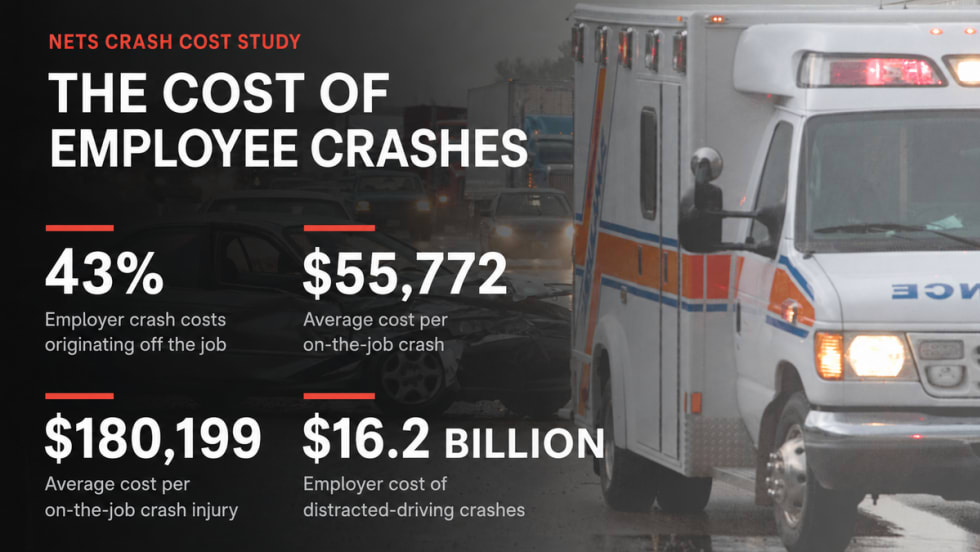
Off-the-Job Crashes Account for 43% of Employers’ $61.7 Billion Crash Burden
NETS quantifies costs dispersed across fleet, risk, HR, and other departments while providing new per-crash benchmarks for employers.
Read More →
Ram Recalls More Than 1.27 Million 1500 Pickups for Seat Belt Anchor Issue
The recall affects certain 2019-2026 Ram 1500 pickups that may have improperly attached second-row seat belt buckle anchors.
Read More →
Sponsored•July 17, 2026
How Better Visibility Cut Speeding Violations by 48%
Fleet leaders don't need more data, they need clearer visibility into what the data is saying. This case study explores how one utility replaced speeding-event counts with a single metric — miles driven in violation — to strengthen safety and significantly reduce speeding violations.
Read More →
Operation Safe Driver Week: Why the Industry's Oldest Safety Campaign Still Matters to Fleets
A look at how a 2007 enforcement initiative became one of the most consequential weeks on the fleet safety calendar, and what it means for your drivers in 2026.
Read More →