




These Factors Are Impacting Sales of Alternative Fuel Vehicles
While hybrid vehicle sales are increasing, the total percentage of overall sales is not. Alternative-fuel vehicles are still garnering interest, but several factors are impacting sales.
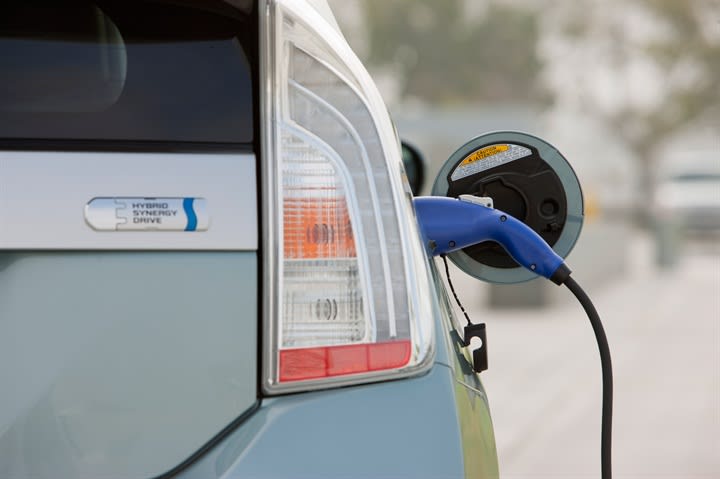
Photo courtesy of Toyota.
Photo courtesy of Toyota.
There are many reasons for an individual, company, or fleet buyer to consider and choose hybrids, electrics, or other alternative-fuel vehicles. Whether the selection is determined by an ecological point of view or one to lower certain operating costs, one factor is the same for both: the level of sales penetration over the past four to five years.
Through September 2014, according to data from www.hybridcars.com, hybrid vehicle sales increased, but the percentage of total sales at 2.88 percent was less than the previous year’s 3.32 percent. Plug-in hybrid and total electric vehicle sales increased slightly for 2014, but still made up just over one-third of 1 percent of total sales. Another alternative fuel, diesel, within the car and utility models, increased in 2014 to 0.89 percent. There are other alternative fuels that have garnered interest, such as compressed natural gas (CNG) and liquefied propane gas (LPG), with the majority of these used in more commercial applications.
For fleet users, some of the factors that are part of the decision to “go green” continue to be acquisition costs, which can change due to product price adjustments from various manufacturers, as well as the availability of state and federal tax incentives that are in effect or are running out.
Range limitation and infrastructure of public charging stations or CNG filling stations come into play. And, with the national price of gas at a four-year low of $2.98, as of press time, total new-vehicle sale average mpg hit a record high of 24.1 mpg for calendar-year 2014. Couple that with the mid-size internal combustion engine (ICE)-powered cars that are consistently rated in the mid-30s mpg range, and it all makes the return on investment (ROI) take even longer to balance out.
Conversations at the recent 7th Annual Green Fleet Conference and Expo presented by Bobit Business Media highlighted a difference in how “going green” is perceived. From the retail consumer’s point of view, other than just being green, cost of entry, corporate image, and ROI are major decision-making factors. For many commercial or government fleets, it is all about mandates to sustainability.
Detailing Gasoline vs. Alt-Fuel Variances
Based on data gathered by Black Book from many of the major fleet management companies, even with higher fuel efficiency of hybrid vehicles, gasoline-powered models, over the past three years, have been driven more miles during their in-service time than hybrid models.
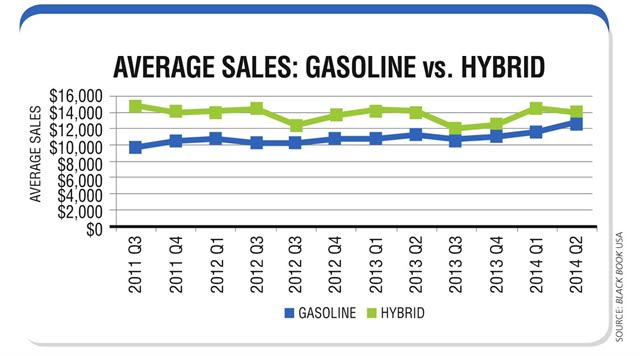
Average sales prices for hybrid vehicles remain higher than those for their gasoline/internal combustion engine counterparts, but the gap is starting to once again narrow. Source: Black Book USA
We also know that the additional technology included in hybrids makes the new price higher. The actual dollar variance for the hybrid models to traditionally powered models over the past three years has been as much as $4,000, gradually narrowing to less than $2,000. As a percentage of new cost, the hybrid market continues to trend on the lower side compared to the ICE models.
As we continue to track and report used-market values, the most direct cause falls to the steadily decreasing price of gasoline at the pump combined with the increasing fuel economy of all vehicles being sold.
Another segment of the alternative-fuel industry has been around for almost as many years as traditional gasoline-powered vehicles: diesel. Yes, there is a premium cost for new models just as with the hybrid models, but the difference is the actual return of the new price premium after three years of use.
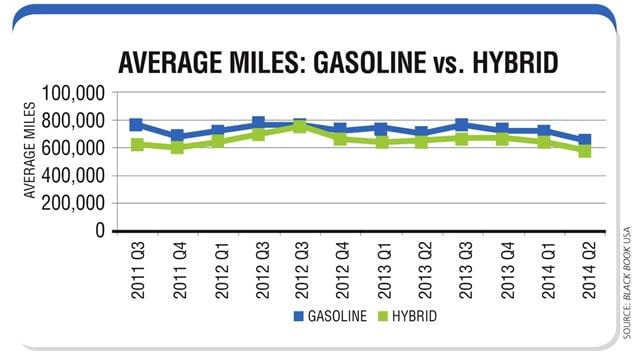
Vehicles have become more fuel efficient over the years, but are being driven less, with hybrid vehicles still driven less than gasoline counterparts. Source: Black Book USA
Of 13 car, utility, and light-duty pickup models, four models actually return greater than 100 percent of their new premium and another six models retain from 76 to 96 percent of the new premium cost. These returns still prevail even when the cost of diesel fuel consistently runs 30-40 cents more per gallon.
The third most recognized alternative fuel, compressed natural gas (CNG)/liquefied natural gas (LNG), continues to be used more within the commercial fleets. This fuel works extremely well with usage that begins and ends at home base. Why the advantage here? It all falls back on the fueling infrastructure. Another challenge is tracking the resale of the CNG models. Many either are run for their entire usable life in one fleet or get traded prior to reaching the wholesale channels. We feel this will continue until a more widespread infrastructure is established.
Being green and sustainable means different things to different users. From basing decisions on analytical data, cost of entry, and return on investment, actual selection will vary by user and their “charge.”
And, as we often comment, the auto industry is not black and white. That is another reason this is such a great industry.
Ricky Beggs is senior vice president, editorial director at Black Book USA. He can be reached via e-mail at rbeggs@blackbookusa.com
More Green Fleet
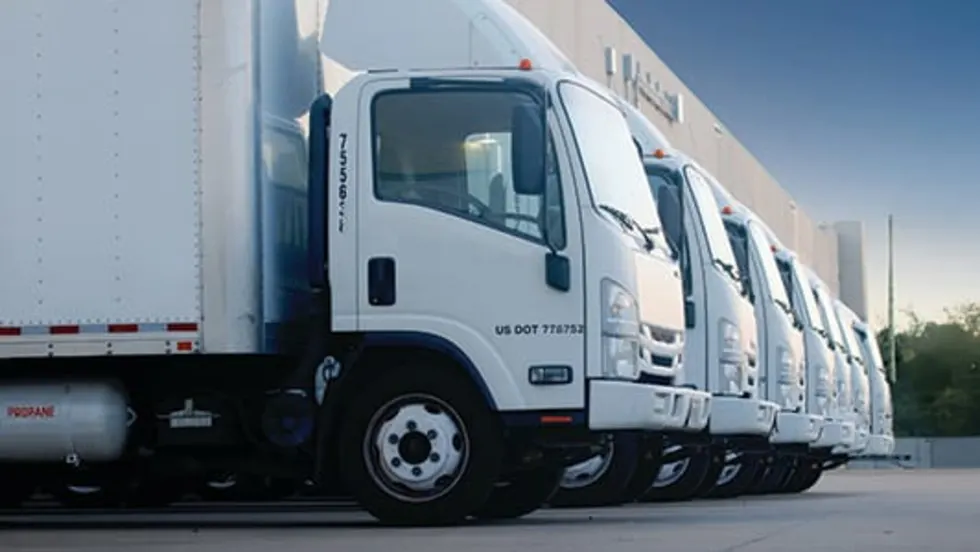
New Propane Autogas Program Offers Fleet Compensation
Qualified commercial fleets can receive $7,500 per eligible propane autogas vehicle and up to $10,000 for new refueling site prep. Learn how the program works and see whether your fleet qualifies.
Read More →
EV Charging Use Is Outpacing Infrastructure Growth
ChargePoint’s 2026 Charging Forward Report points to rising charger use, higher-powered charging, commercial vehicle electrification, and energy-management technology. Here’s what fleets should know.
Read More →
Merchants Fleet Reports 290M EV Miles as Fleets Navigate Changing Electrification Market
From millions in operating savings to hundreds of millions of EV miles, Merchants Fleet’s latest report reveals what’s working and what’s changing in fleet electrification.
Read More →
The EV Breakdown Nobody's Talking About: Why Most Electric Vehicle Roadside Calls Aren't Mechanical Failures
Here's why EV breakdowns are widely misunderstood.
Read More →
ChargePoint Now Available in Energy Pass
ChargePoint and additional planned charging network integrations were added to GM's Energy Pass.
Read More →

First Look: Slate Auto's Electric Fleet Pickup
Could an affordable, modular EV pickup make electrification more practical for fleets?
Read More →
Slate Debuts Colorful, Unique EV Models
A recent media and client event, studded with electric vehicles dressed up on platforms, planted a new position for the manufacturer in the wider EV market. Fleets will find cost-saving advantages.
Read More →
Slate Electric SUV, Pickup Switchable Model Aims For Light-Duty Fleets
Everything about this EV is counterintuitive and understated, making it stand out from the crowd.
Read More →
Inspiration Mobility Acquires Key Electrada Assets
Inspiration Mobility Group has acquired select assets of Electrada, adding the fleet electrification provider's team, technology, and charging infrastructure development capabilities to its energy management business.
Read More →