Replacement tire prices for CY-2016 are flat because of less volatility in the global prices of commodities used to manufacture tires, namely oil, rubber, and steel. The forecast is for a continuation of price stability into CY-2017.
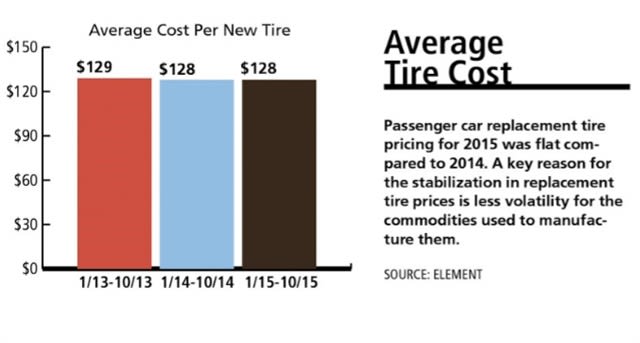
Replacement tire pricing for calendar-year 2016 has been flat compared to 2015. A key reason is less volatility in the price of commodities used to manufacture tires, namely oil, rubber, and steel. These lower materials prices have contributed to keeping replacement tire costs flat.
Ad Loading...
With commodity prices remaining low — particularly oil — material costs have not shown much fluctuation. In addition, increased imports of low-cost replacement tires from abroad has helped keep average prices down.
At A Glance
Tire costs are flat for 2016. The cost of commodities used to manufacture tires continues to be the driving force behind the price of replacement tires.
Extended replacement cycles and the overall increase in average vehicle life has driven the demand for replacement tires and impacted over tire spend
The forecast is for replacement tire prices to gradually trend upward in 2017.
“The cost of commodities used to manufacture tires continues to be the driving force behind the price of replacement tires. Extended replacement cycles and the overall increase in average vehicle life have driven the demand for replacement tires and impacted tire spend,” said Romy Bria, director, fleet management for ARI.
Others, likewise, share the same assessment, forecasting flat pricing of replacement tires continuing so long as crude oil prices remain stable.
“We expect only moderate tire cost increases unless crude oil prices significantly rise,” said Chad Christensen, strategic consultant for Element Fleet Management.
In addition to oil, the other key commodity needed to manufacture tires is rubber, which has also experienced less pricing volatility in the past 12 months.
Ad Loading...
“Tire costs are down compared to 2015 thanks to decreased rubber costs driven by high dealer inventories and a relatively mild winter,” said Bill Croke, manager of TotalView Analytics for Merchants Fleet Management. “Replacement tire prices should be expected to trend back towards previous years as dealers’ finish offloading their excess inventories.”
The wildcard continues to be the price of the key commodities used to manufacture tires, but the near-term outlook is that pricing will remain stable.
Influence of Fleet Application on Replacement Tire Costs
The types of vehicles in a fleet has a direct bearing on overall tire costs, especially in the oil patch. Also, the overall fleet expense for replacement tires will vary by the type of fleet application and region of the country.
“Total tire expenses for truck fleets has increased slightly for many companies this year,” said Bria of ARI.
Fleet policy is an important component to manage replacement tire costs. Companies are taking a closer look at policies regarding job function/terrain and making data-driven decisions when formulating fleet policy.
Ad Loading...
Another consideration is that the size and rating of the tire will determine the tire’s cost. A specific manufactured tire could be of the same size, but with a different rating, the cost can vary dramatically.
“Fleets should consider OE tire sizes when making selector decisions. Tire size can have a significant impact on tire costs, especially when snow tires are required during the winter months. Certain tire sizes impact tire availability and limit alternate brand options,” added Simek.
Graph courtesy of Element.
There have been minimal increases in pricing structures from most suppliers. The main fleet issue is the lack of product availability for new tire size and load requirements of latest model service vehicles.
Another issue that needs clarification at the tire store level is how to determine the load index indicator.
“Changes in replacement tire sizes have been confusing to tire stores and fleets. The load index tire indicator refers to the load carrying capacity for a tire or how much weight it can support. The load index numerical code can be referenced on an industry chart to see the maximum load. It’s important to not replace a tire with a load index lower than the original tire provided by the vehicle manufacturer,” said Bill Jones, director of managed maintenance for Element Fleet Management.
Ad Loading...
Introduction of New Tire Sizes
One factor influencing replacement tire expenses is the OEM trend to offer new models with a much broader variety of tire sizes.
A recurring issue from past model-years is the lag time in the availability of tires in the aftermarket, which were specially designed for a specific model.
As auto manufacturers develop unique tire sizes for new-model vehicles, it impacts the replacement tire supplies for one to two years, as aftermarket tire companies may not be able to immediately meet the demand for these tire sizes. This lag time limits selection and availability of replacement tires.
“The engineers from the OEM look for the perfect tire to match the vehicle, keeping in mind tire size, load range, and, speed rating. When that occurs, there are no tires in the aftermarket world and the customer is forced to pay the higher price of the OEM tire,” said Tony Blezien, vice president, Operations for LeasePlan USA. “It’s a good idea to check with your fleet management company when ordering a vehicle to verify that replacement tires are available.”
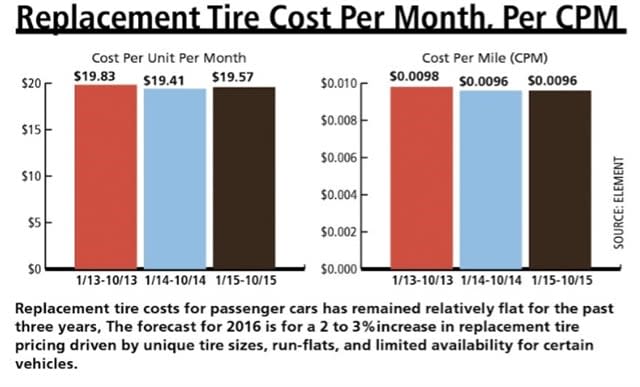
Graphs courtesy of Element.
The other recurring issue is the ongoing trend of larger size tires being spec’ed for new models. This continued trend toward larger diameter, lower profile tires has impacted tire costs.
Ad Loading...
“Increased use of larger-sized wheels and tires has driven up the cost of fleet replacement tires and has, in some instances, created limited availability in parts of the county,” said Bria of ARI. “Additionally, the influx of new vehicle models — such as European-style vans — has increased prices on new tire models due to reduced competitive options for specific tread patterns and sizes. Prices for identical size and models, however, have not increased significantly this year.”
Market Dynamics
The numerous variables impacting tire replacement patterns, a dizzying array of fleet applications, and regional pricing dynamics makes it difficult to make broad sweep generalizations about the market.
Seasonality is also a factor in replacement tire pricing, especially with snow tires, which result in product shortages with severe weather changes.
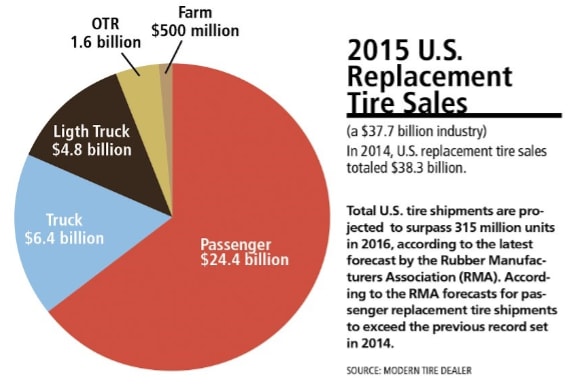
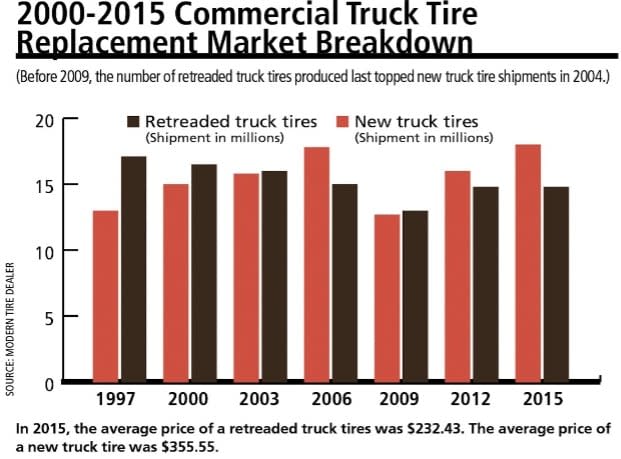
Graph courtesy of Modern Tire Dealer.
Another factor putting downward pressure on total fleet tire expenditures is the ongoing improvement in tire quality, which has resulted in longer wear life during the past decade. Tire life has been extended by 10% in the past 10 years. This has helped offset some of the recent price increases since the expense is spread out for a longer period.
“Interest in run-flat tires has been lower than expected, considering many OEMs don’t provide spare tires. Tire durability and reliability has improved due to stronger tire construction in recent years. There are now fewer flat tires, punctures, and sidewall damages,” said Jones of Element Fleet Management.
Ad Loading...
Forecast for 2017 Tire Prices
Replacement tire prices are anticipated to remain stable into the 2017 calendar-year.
This forecast is based on the anticipation that commodity prices and vehicle replacement policies will remain stable in 2017.
Others foresee tire prices trending upward. “We expect tire prices to gradually trend up from 2015 and become a more significant portion of fleet spend. As that happens we expect fleet managers to begin strategically targeting cycle policies that replace vehicles before tire replacement intervals. Additionally, with the EIA projecting a 20% increase in the price of crude oil, synthetic tires will become more expensive, impacting primarily passenger vehicles,” said Croke of Merchants Fleet Management.
The key to future tire prices is the price of oil. If oil prices continue at the current levels, expect to see flat tire prices.
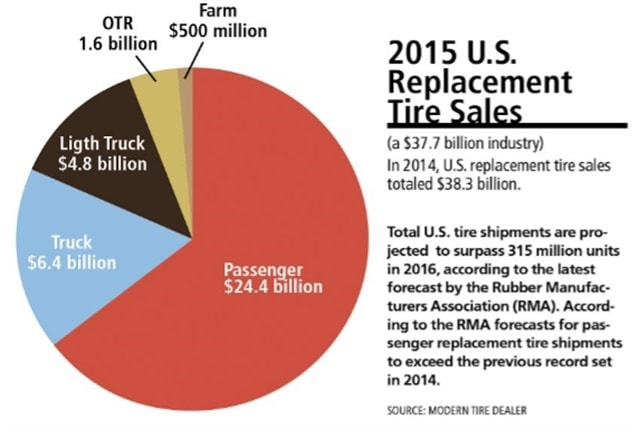
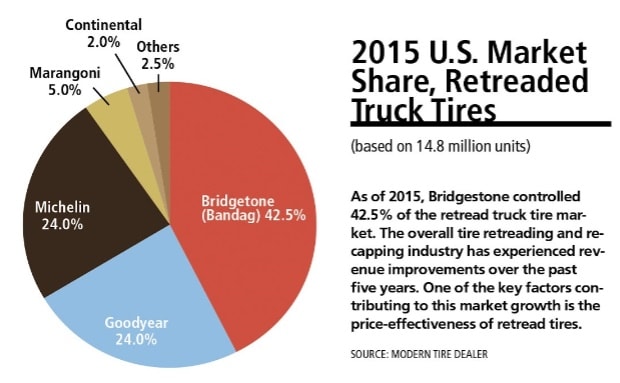
Graph courtesy of Modern Tire Dealer.
Another factor is the importation of low-cost tires from Asia. “The U.S. Department of Commerce continues to investigate tire imports from China, Sri Lanka, and India, having already put in place temporary tariffs. Long-term tariffs could reduce the amount of imported tires, driving prices up,” said Croke.
Ad Loading...
Low-cost house brand tires offered by major tire OEMs, along with bargain-priced import tires, are helping to exert downward pressure on replacement tire costs in the aftermarket.
“These alternative tire brand options have covered gaps in tire sizes not readily available with more recognized tire brands,” said Jones of Element Fleet Management.
Barring any unforeseen changes to commodity and oil prices, tire prices are expected to remain flat or increase just slightly in 2017.
“All indications are that tire prices should remain stable in 2017, as raw material costs are staying flat,” said Blezien of LeasePlan USA.
Fleetio’s Brianna Perry demonstrates how Service Advisor evaluates maintenance requests, identifies pricing anomalies, and provides the context fleet managers need to focus their attention on potential problems.
Fleet compliance isn't just about having policies — it's about consistently enforcing them. This practical guide reveals six hidden compliance risks common in public sector and shared fleet operations and outlines proven strategies to improve visibility, accountability, and audit readiness
Vincentric’s three-year, 60,000-mile projections reveal wide differences for both scheduled and unscheduled maintenance among selected vehicle categories. Projected maintenance visits also play a factor.
Keeping fleet vehicles on the road has become as important as buying them. Darren Bradshaw of Mopar North America explains how connected vehicle data, AI, and proactive service strategies are helping Stellantis reduce downtime and move closer to predictive maintenance.
Merchants Fleet has expanded its relationship with Pep Boys, increasing the service provider's role within its national maintenance network. The move is intended to enhance maintenance coordination and support commercial fleets through Pep Boys' nationwide footprint.
Fleet leaders have more data than ever, but turning that data into clear, actionable decisions remains a challenge. This white paper shows how leading organizations are using connected vehicle data to improve safety, reduce costs, and optimize fleet performance. Learn how to turn insight into action across your fleet.
Bobit Business Media surveyed 190 fleet professionals and found that while most fleets are tracking costs, fragmented systems and data gaps are keeping true TCO visibility out of reach. With rising pressure to control spend in an increasingly volatile environment, the gap between what fleets think they know and what the data actually shows is wider than you might expect. See how your peers are managing costs today and where the industry still has room to improve.