




DuPont's Dick Prettyman Wins '92 Professional Fleet Manager Award
Expense monitoring, centralized fleet operations, standardized selectors, and a commitment to safety are at the heart of Prettyman's efforts to control costs for the 5,048-unit corporate fleet of the Wilmington, DE-headquartered company.

Dick Prettyman, manager of fleet operations for Du Pont, and Dawn Jackson, Du Pon's rental car contract administrator, discuss rental fleets that contain vehicles meeting Du Pont's requirments. According to fleet policy, any vehicle rented by a Du Pont employee must contain an airbag and meet other rigid safety requirements.
Out of a field of 10 candidates competing for the 1992 Professional Fleet Manager of the Year Award, Dick Prettyman, manager of fleet operations for Du Pont emerged the winner of Automotive Fleet’s eighth annual award recognizing individual professionalism and integrity within the fleet industry.
Prettyman’s career with Du Pont started in 1972 when he began working for Du Pont’s Corporate Trucking Service in the maintenance, tax compliance, and cost administration areas. In 1984, Prettyman transferred to Du Pont Automotive Fleet Management and became part of a centralized fleet implementation team, then assumed total fleet responsibilities in 1988. Currently, Prettyman is responsible for corporate rental car operation and executive transportation for Du Pont Automotive Fleet interviewed Prettyman after winning his award to gain insight into some of the fleet practices and innovations that have helped him throughout his 20-year fleet management career at Du Pont.
AF: In a recent survey conducted by Automotive Fleet, fleet managers reported that their #1 challenge in the next three years is containing fleet operating expenses. Can you elaborate on the cost control and expense monitoring methods Du Pont has implemented?

Dick Prettyman, manager of fleet operations for Du Pont, and Dawn Jackson, Du Pon's rental car contract administrator, discuss rental fleets that contain vehicles meeting Du Pont's requirments. According to fleet policy, any vehicle rented by a Du Pont employee must contain an airbag and meet other rigid safety requirements.
Prettyman: You can’t control costs unless you can monitor expenses. We maintain a collection of fleet performance records dating back to 1984, when we first adopted a centralized fleet program. This accumulation of data allows us to look at historic fleet costs, adjust for inflation, and compare past and current costs. Fleet expenses are tracked on a monthly basis so, for example, we can look at operating costs for any given month in 1984, 1988, or any other year, and determine if we’re making improvements and beating inflationary increases. This method allows us to accurately tract actual fleet operating expenses month-by-month.
AF: What reductions have you seen as a result of your expense monitoring and exception reporting programs?
Prettyman: If you go back to fleet operating costs in 1984, take the cost-per-mile, factor in inflation, and figure actual operating costs then and now, we’re currently operating at eight to nine cents per mile less than we did in 1984. This translates
Into a tremendous savings for Du Pont, because the fleet logs approximately 75 million miles per year. The policies and programs instituted at Du Pont have produced a total savings of approximately $10 million since the inception of a centralized fleet.
AF: What other policies or programs have generated significant cost-savings for your company?
Prettyman: The program that perhaps is showing the greatest current cost savings began approximately 18 months ago, when we turned many of our clerical and administrative functions over to PHH. As any fleet manager knows, a great number of driver calls come into a fleet department, and they’re often extremely labor-intensive to answer. We felt that our in-house staff wasn’t adding any true value to the process by answering the calls ourselves and providing answers to such questions as option price differences and licensing information, so we set up a toll-free number that goes directly to PHH – they even answer the phone as ‘Du Pont Fleet Management’ – and drivers now deal with PHH on issues such as licensing, titling, option costs, accident reporting, and used-vehicle sales. Drivers feel they’re getting better service, and the fleet management team here has more time to monitor program performance, and establish and make policy decisions regarding fleet management.
AF: In addition to the overall cost saving realized by converting to a centralized fleet that you mentioned above, what are some of the other advantages you’ve found in centralization?
Prettyman: There are many businesses in Du Pont, and centralization allowed us to understand the overall size and scope of the fleet – no one had a handle on this before we centralized. In 1984, estimated fleet size was 3,000 units. At present, we exceed that figure by more than 2,000 units.
Another advantage is that you’re able to standardize such safety equipment as airbags, ABS, and power door locks. Before, each department equipped its cars differently, but now that equipment is standardized company-wide, which helps ensure safety for our drivers.
We also can better control the trade-in cycle. Before centralization, the various departments often simply ran vehicles until they dropped Centralization which also allows a fleet to leverage its purchasing volume. There are obvious advantages to buying several thousand cars per year rather than buying one or two here and there. Volume purchasing also eliminated redundancy within the corporation. If every business group orders its own vehicles, you end up with 50-60 people involved in a purchasing operation that is just as easily handles by one or two people.
AF: Can you tell us more about Du Pont’s fleet cycling policies?
Prettyman: The optimum time to buy a car obviously is in September, which gets a new vehicle into service and the old one out of service by mid-October, before the traditional November resale price drop. We noticed, however, that if delivery of new vehicles was delayed for any reason, we lost out on the resale end. So we now place a second vehicle order in January, and take delivery in mid-March when resale process start to swing back up.
To maximize resale, we equip vehicles with options that have retail appeal. When these vehicles go to auction, we want them to be different that the other vehicles. Also, by equipping vehicles for the retail buyer, our drivers like them better. If they like them, they’ll take better care of them, and may elect to purchase their vehicles at replacement and employee sales return more than taking the vehicles to auction.
AF: Can you explain Du Pont’s recently introduced driver safety program? What other safety measures has Du Pont implemented within its fleet?
Prettyman: Training drivers to safely operate motor vehicles is actually only one facet of Du Pont’s long history of a company-wide emphasis on safety. There’s a whole list of safety programs, which includes safe driving, forklift operation, back injury prevention, workplace ergonomics, and several others. Du Pont holds monthly safety meetings on different topics, so employees constantly receive the safety message.
As far as the safe driving program is concerned, it’s not based on defensive driving per se, but directed more toward driver attitude. Our program addresses the task at hand, which is driving with an attitude that gets you safely to your next sales call. Attitude is one of the hardest things to get hold of as you drive; because it changes from block to block as other drivers interact with you on the road. Driving a car with an attitude that helps you avoid accidents is a skill everyone needs. As with several of our other safety programs, we also provide safe driving classes for employees’ spouses and family members. It doesn’t do much good to let a spouse drive a company car if that spouse hasn’t had safe driver training. If an accident occurs, we incur the same costs as if the employee was involved.
One new development within Du Pont’s overall safety program is that it’s now marketed to other companies. The corporation felt that such a successful program should also be available to other companies. The safety training programs are conveyed through videos, audio tapes, classroom training, and user guides, and participant workbooks that subscribers can administer to their employees.
AF: What do you consider as your greatest accomplishment during your tenure at Du Pont, and what would you like to accomplish in the future?
Prettyman: The fleet management group’s best accomplishment was integrating the Du Pont fleet program with PHH. They have an extremely dedicated staff there. Not only do the cost savings make it worthwhile, but the partnership allowed us to reduce fleet staff size, which created an opportunity for fleet department members to move into other areas of Du Pont that held greater promise for their careers. Plus, by giving drivers complete access to PHH, they get better service. After all, the business of fleet management is servicing customers.
As for the future, I’d like to find out what the fleet department can do on a relationship basis for Du Pont’s overseas subsidiaries. How can we help them? What programs would they want from us? Would they want total fleet management, and can we provide that service to them? We’ll undoubtedly get more involved in Du Pont’s international fleet operations and probably become a focal point for overseas operations in the areas of vehicle policy, vehicle selection, and supplier relationships. We’re already in contact with Du Pont’s domestic suppliers concerning overseas needs, and if we create favorable relationships here by stabilizing our volumes with the automobile Du Pone’s divisions overseas. We want to be able to do that.
More Operations
Here's When You Should Make an Exception to Fleet Policy
Fleet policies are designed to create consistency, but not every driver or situation fits neatly within standard rules.
Read More →
AI-Native or AI-Acquired: What Should Fleet Managers Look for in an AI Platform?
Six questions can help fleet managers look beyond AI marketing claims to evaluate integration, data access, and real-world operational performance.
Read More →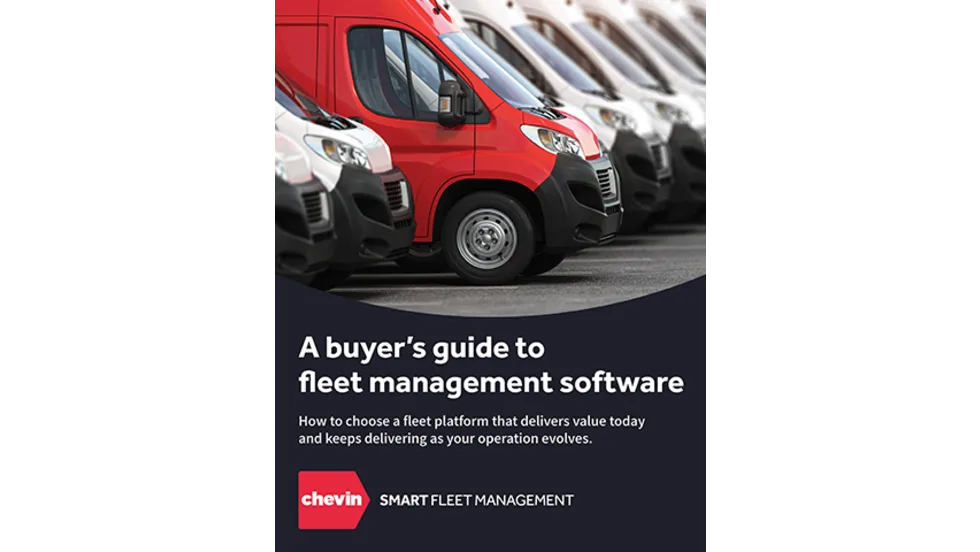
A buyer's guide to fleet management software in 2027
Buying fleet management software in 2027 means looking beyond features and price. As fleet operations, technology and expectations evolve, this guide explores what today’s fleet professionals should consider when choosing a system that can deliver value now and adapt to what comes next.
Read More →
What Will Shape the Next Era of Fleet Management?
EVs, AI, and autonomous vehicles are reshaping fleet management. Discover what’s ahead—and how fleet leaders can prepare for the next era.
Read More →
How Fleets Can Recruit and Train Veterans for Technician Roles
Here's how the technician shortage has affected uptime for fleets, and what to do about it.
Read More →
Avis Budget Group Deploys Neology Toll Management Technology Across Major Brands
Neology’s neoFleet platform will manage toll transactions and toll-authority operations for vehicles across Avis, Budget, Payless, Budget Truck and Zipcar.
Read More →
Fleet Personal-Use Charges Edge Higher in 2026
Nearly eight in 10 surveyed fleets allow personal use of company vehicles, while just over half of respondents report charging employees for the privilege.
Read More →
The Future of Fleet + What’s Changing Right Now | AF News Recap
Could developments overseas offer a preview of what’s coming for U.S. fleets? This week, we’re looking at the future of AI, autonomy, and electrification, plus Ford Pro’s new certified pre-owned program, smarter vehicle offboarding, and a new way for fleets to manage toll expenses.
Read More →
How to Handle Vehicle Offboarding
What do fleet managers need to do when a driver leaves?
Read More →
Fleet Manager’s Ultimate Playbook: Navigating the New Standard in OEM Connectivity
Rising operating costs, driver safety concerns, and unplanned downtime are putting unprecedented pressure on modern fleets. Discover how fleet managers use embedded OEM connectivity and real-time vehicle data to cut TCO, prevent downtime, and protect drivers without aftermarket telematics hardware.
Read More →