


 MENU
MENU SEARCHMENUSEARCH
Loading data...

Retail transaction prices for light-truck replacement tire were up 12.5% in 2010, and 11% for the passenger car segment. Although retail tire prices increased, replacement tire pricing for commercial fleets remained relatively flat because of pre-existing national account pricing agreements. However, it would be short-sighted to believe national account vendors will indefinitely absorb tire cost increases without passing them on to their fleet customers.
Read More →
Vehicle violations now represent 1-3 percent of total fleet costs. Traffic violation revenues are being used by many jurisdictions to balance budgets. In an era of budget deficits, fleets are discovering a sharp uptick in driver violations.
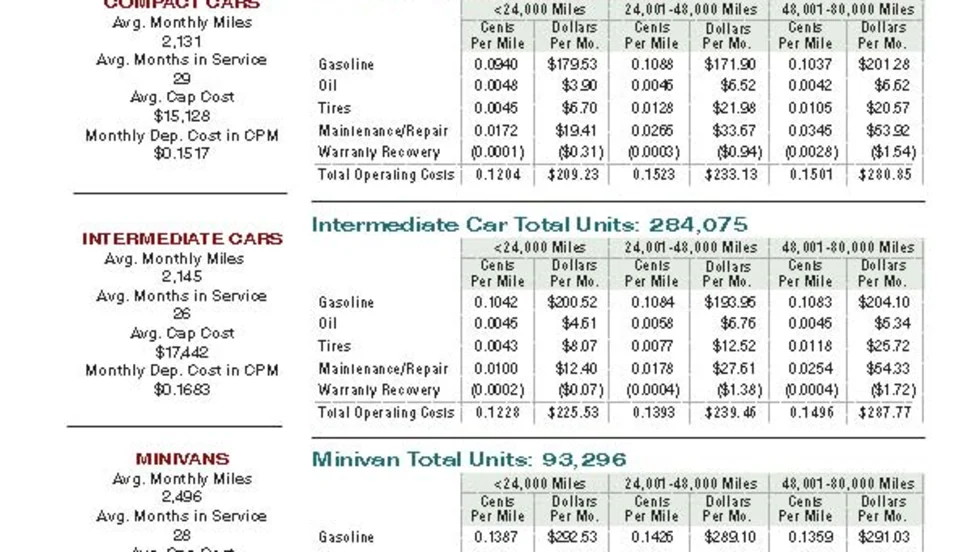
Read More →Stable fuel prices were the primary reason fleet costs remained flat. Also, national accounts did not increase prices for oil changes and replacement tires. Maintenance costs were up for fleets that extended vehicle cycling.
Read More →Operating costs will trend higher in the 2011 calendar-year, primarily due to an incremental increase in fuel prices, which represent the largest fleet operating expense category. Another factor contributing to upward pressure on operating expenses will be higher maintenance costs, primarily due to extended replacement cycling. Beyond 2011, fleet acquisition costs are anticipated increase to meet higher CAFE requirements.
Read More →EDEN PRAIRIE, MN - With a goal of significantly reducing its operating costs, Web Service Company, a national laundry services provider, has signed a new, three-year agreement with GE Capital Fleet Services to use GE's Monitor and Intelligent Ops telematics solutions.
Read More →IVYLAND, PA - Corporate Claims Management (CCM) has developed a "Guaranteed Savings" approach to the cost of operating a fleet. As part of this effort, fleet personnel have an opportunity to conduct a "30-second audit" in the comfort of their office.
Read More →It will become more expensive to operate a fleet in the coming years. Vehicle acquisition costs will increase. Fuel prices, in all likelihood, will trend upward and maintenance costs will ratchet higher due to more companies adopting extended replacement schedules. In addition, vehicle-related taxes will increase. Let's examine the dynamics that will force fleet expenses to escalate.
Read More →The new reality of a tighter corporate operating environment has forced fleet managers to pursue two different types of cost-cutting goals - cost deferral and cost elimination. However, many cost-cutting decisions for fleet are made for the short-term, with very little consideration for total cost of ownership. Sometimes senior management is more interested in the fiscal, rather than economic, consequences of their decisions.
Read More →Fuel costs, the largest fleet operating expense, declined dramatically in the 2009 calendar-year due to a sharp decline in worldwide consumption. Also, many fleets have downsized, which contributed to a lower overall fuel spend.
Read More →