




Assembling Ford's Transit Van
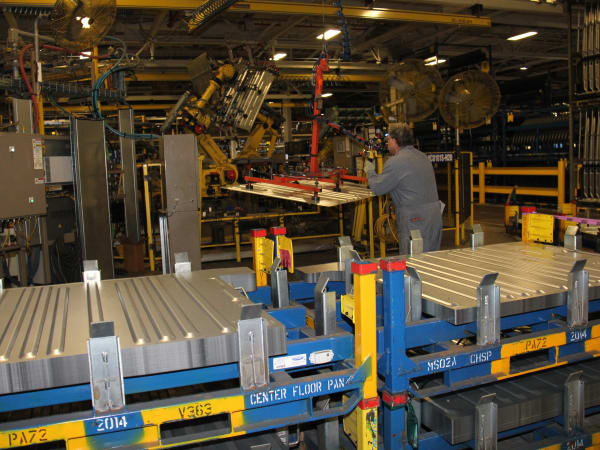
Transit assembly begins with the "rear pan load," where robots drill 55 holes in the first part of the rear underbody.
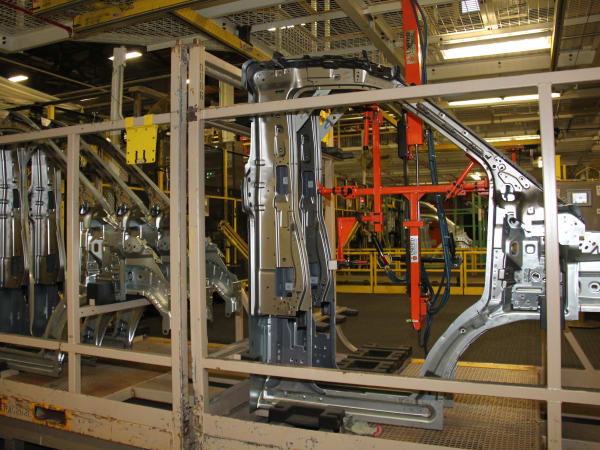
Body parts such as door frames wait their turn to be brought onto the assembly line.
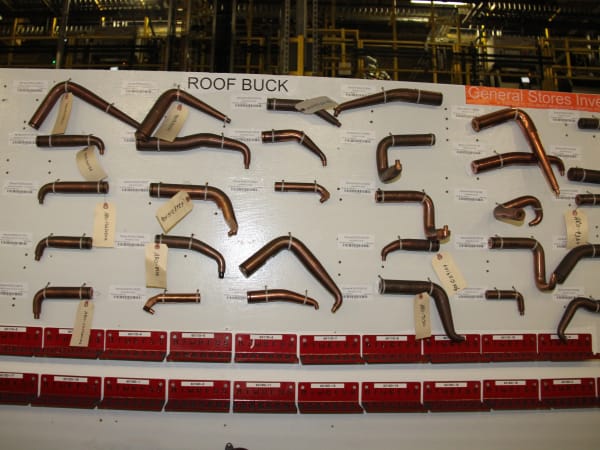
These "roof buck" welding tips are used to build the van.
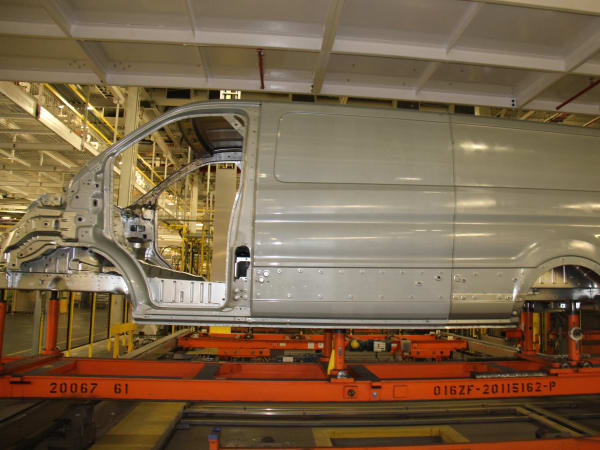
A mated Transit body and underbody moves to the next phase.
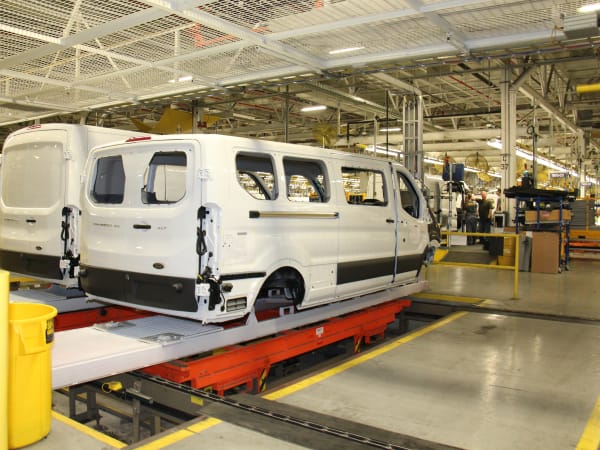
Trim pieces have been added to these painted van bodies.
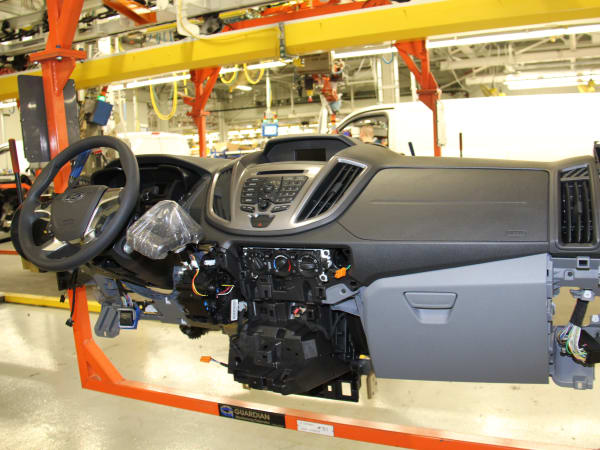
At the IP line, workers add instrument panels to the vans.
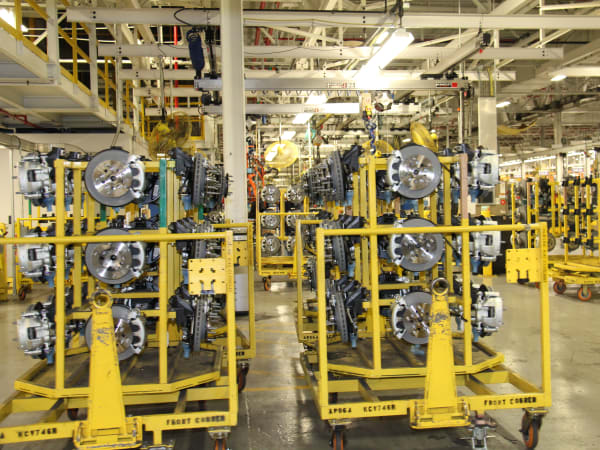
Bearing packs with a rotor and caliper await installation as part of the front hub assembly.
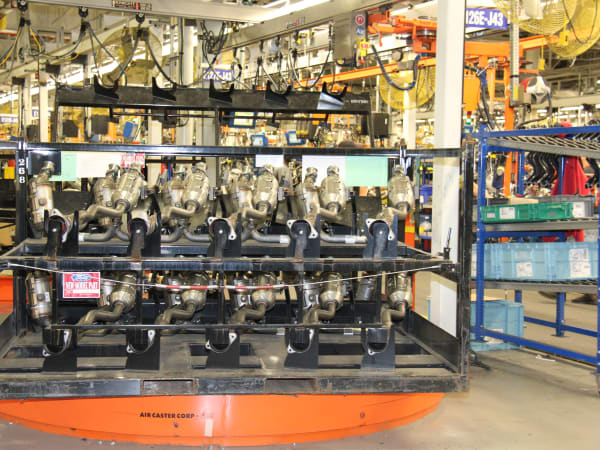
A rack of exhaust parts will be added to the underbody.
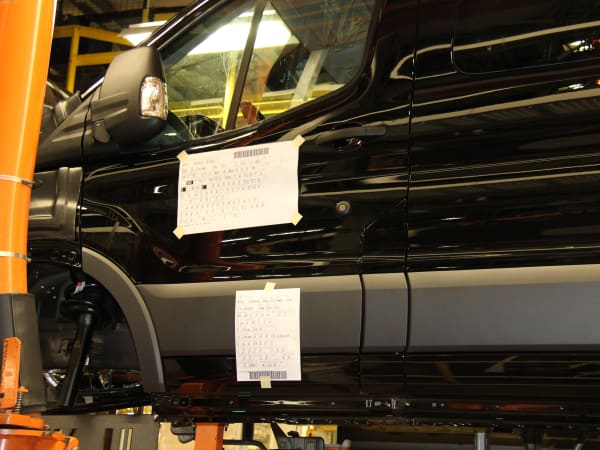
The vans get a Universal Product Code (UPC) that assists tracking of each job in the D Skid Area.
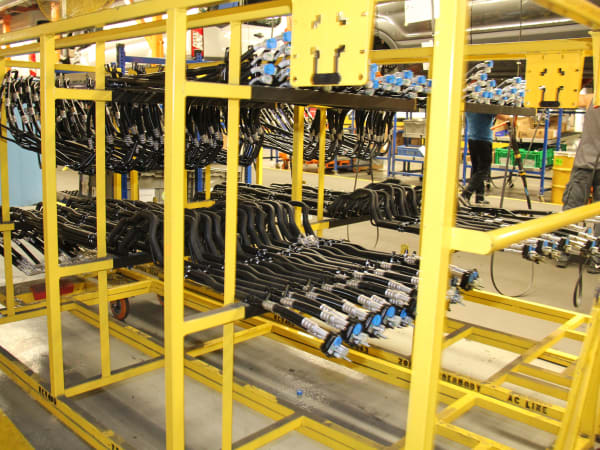
Various-length fuel lines must be added depending on the van's length and whether it includes a factory-gas-prep package for CNG or propane autogas.
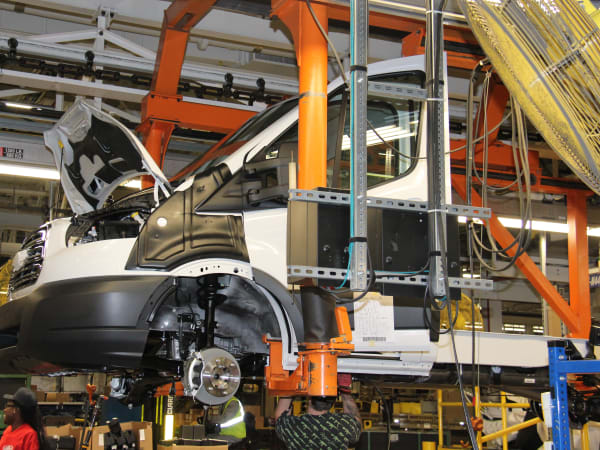
Workers add front fascia panels and bumpers.
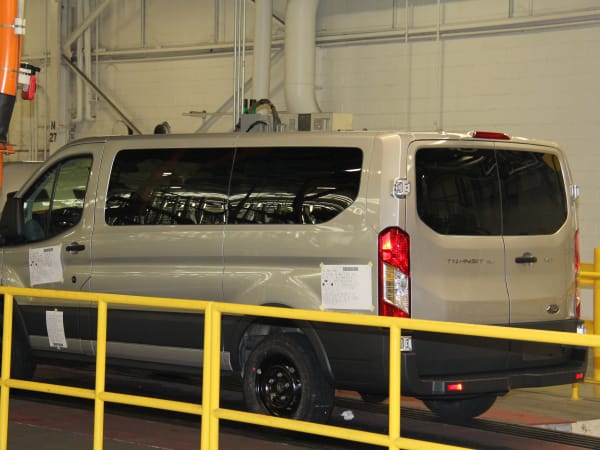
Ford builds 58 basic configurations and more than 2,000 different versions of its Ford Transit van.
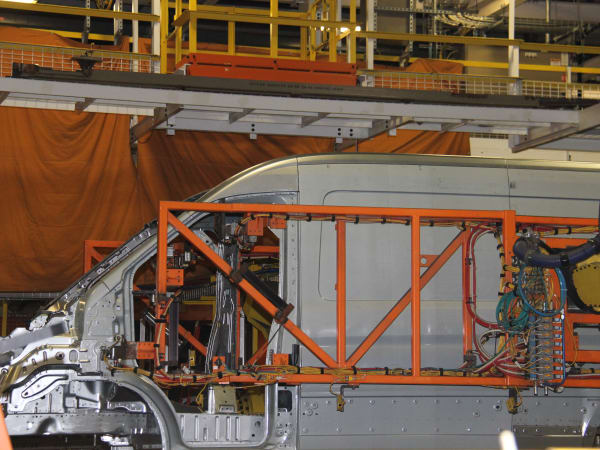
Framing robots set the bodysides and roof rails to the underbody and weld them into place.
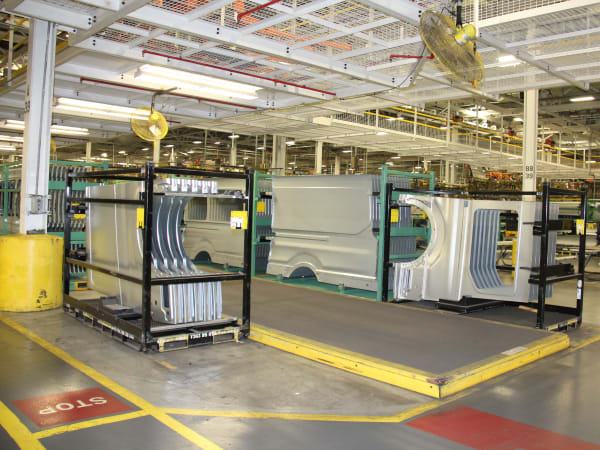
The plant uses a "just in time" parts system that cuts down on the number of parts that need to be stored in the plant.
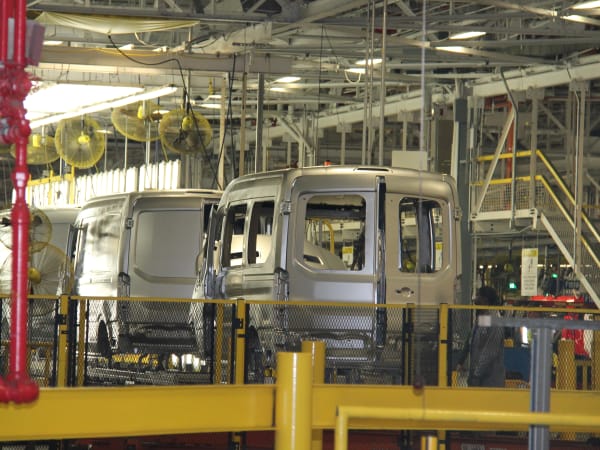
These van bodies head to the Paint Shop. They are called "bodies in white" before moving parts are added.
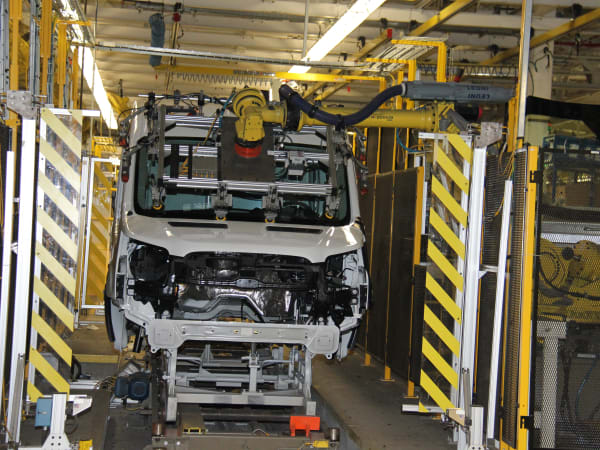
Robots add windshields that have been etched and primed.
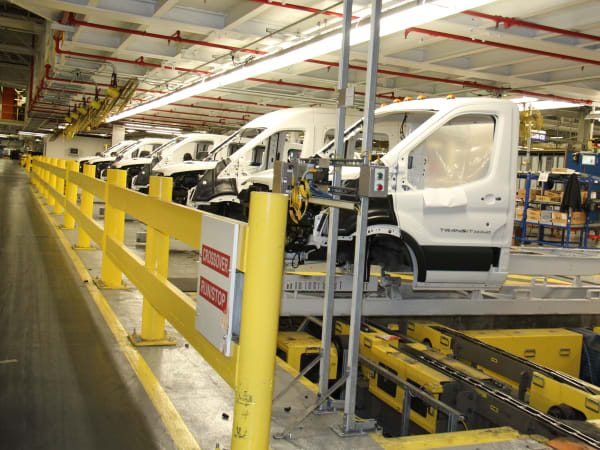
This lineup shows the variety of van configurations rolling through the line.
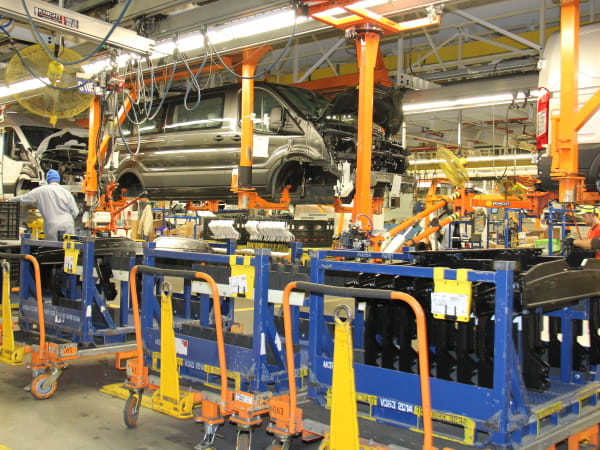
Passenger and cargo vans move down the line often next to each other.
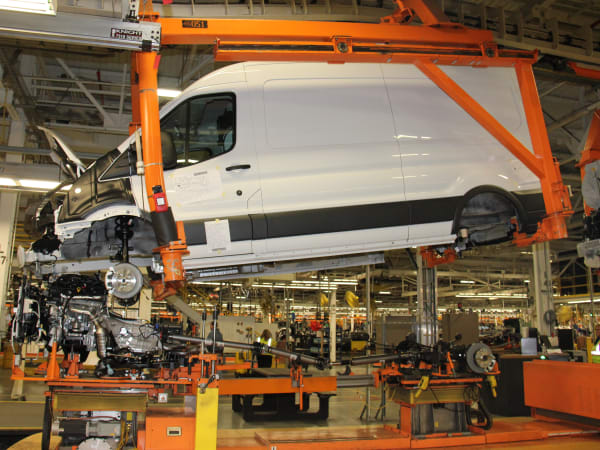
The step of the process shows powertrain installation for the unibody van.
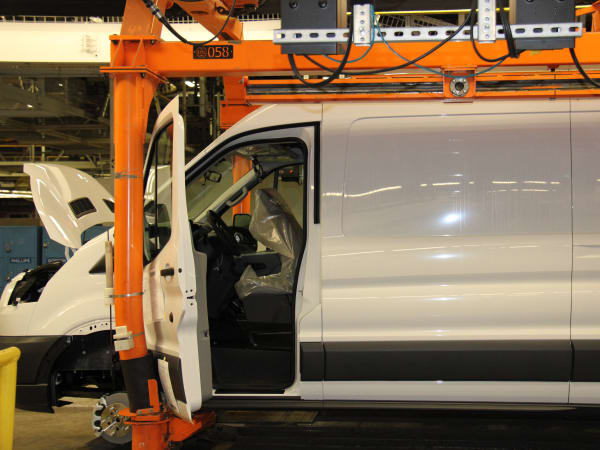
Front seats are installed near the end of the line.
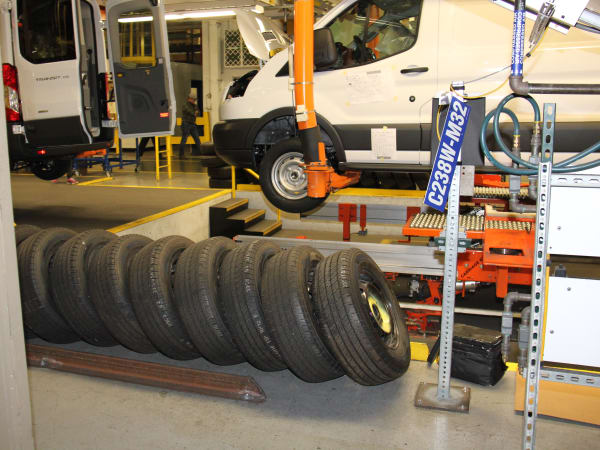
In the final step, wheels are added and a tire pressure monitoring system activates a TPMS chip in the wheel.