




Related: Uber Suspends Self-Driving Tests After Vehicle Kills Pedestrian
Arizona Halts Uber's Autonomous Testing
Arizona's Gov. Doug Ducey called the crash "an unquestionable failure" and suspended Uber's ability to test self-driving cars on public roads throughout the state.
by Staff
March 27, 2018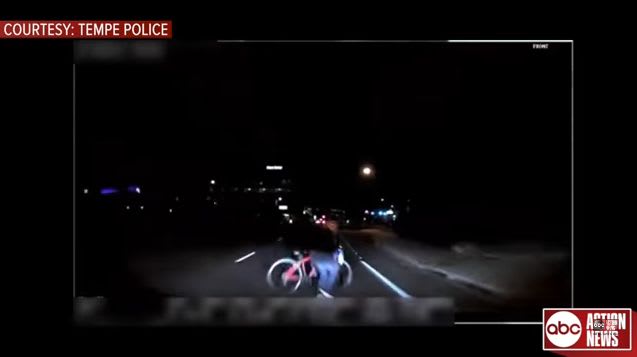
Screenshot via ABC Action News.
3 min to read
Screenshot via ABC Action News.
The recent death of a pedestrian after being struck by an Uber self-driving car has set off a variety of reactions on the part of regulators, autonomous parts suppliers, tech companies and other autonomous vehicle manufacturers.
In the wake of the incident, Uber temporarily suspended the testing of its autonomous vehicles in four U.S. cities including Phoenix. However, the company was dealt a blow on March 26 when Gov. Doug Ducey of Arizona called the crash "an unquestionable failure" and suspended Uber's ability to test self-driving cars on public roads throughout the state, reports Reuters.
Arizona was a critical hub for Uber, serving as a base for approximately 50% of the company's 200 self-driving cars.
While police and safety regulators are investigating the fatal accident, it has put a new spotlight on the lack of clear safety standards for self-driving cars, reports Reuters.
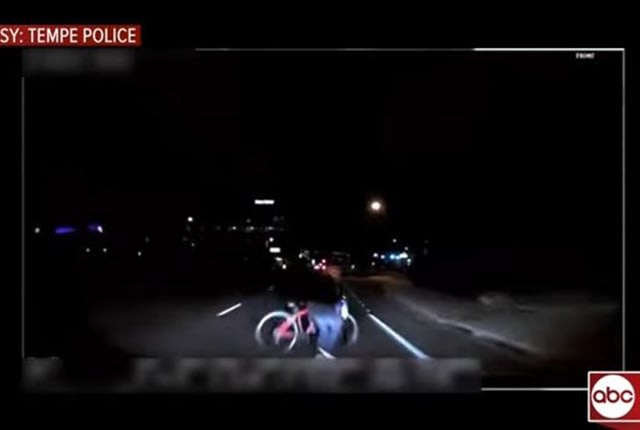
In a letter to Uber's chief executive and shared with the media, Gov. Ducey said he found a video released by police of the crash "disturbing and alarming, and it raises many questions about the ability of Uber to continue testing in Arizona."
In an effort to protect their reputations, an auto parts maker and a software company have both spoken out about their respective technologies as they relate to the Uber self-driving vehicle that crashed.
Aptiv Plc, the supplier of the vehicle's radar and camera, went on record that Uber disabled the standard collision-avoidance technology in the Volvo XC90 that struck and killed the woman, according to Bloomberg.
"We don't want people to be confused or think it was a failure of the technology that we supply for Volvo, because that's not the case," said Zach Peterson, a spokesman for Aptiv Plc. The Volvo XC90's standard advanced driver-assistance system "has nothing to do" with the Uber test vehicle's autonomous driving system, he said.
At the same time, the CEO of Intel Corp's Mobileye, which makes chips and sensors used in collision avoidance systems and is a supplier to Aptiv, called for a concerted effort to validate the safety of autonomous vehicles, reports Reuters.
Mobileye said it tested its own software after the crash by playing a video of the Uber incident on a television monitor. Despite low quality imaging, Mobileye was able to detect the pedestrian approximately one second before impact, according to reports.
The company's CEO, Amnon Shashua, has noted that even the basic building blocks of autonomous systems — the ability to detect and classify objects — remain challenging tasks. He believes "new entrants" in the field lack the years of experience needed to ensure safety and that the time for a formal safety validation framework has arrived.
Toyota Motor Corp. appears to be the only other self-driving car company that has curbed its testing in the wake of the Uber crash. Citing the emotional toll the incident may have on its drivers, Toyota said it would temporarily pause its "Chauffer mode testing on public roads," according to a company statement.
However, Ford Motor Co., Nissan Motor Co., General Motors, and Alphabet Inc.'s Waymo division continue to test their autonomous vehicles.
In a statement released to the media, Ford said safety is the company's top priority, and company officials are taking a wait-and-see approach after the Uber incident, reports the Washington Post. When more facts and data are available, Ford will make a determination about whether or not to adjust its approach to self-driving vehicle development.
View the full dash cam from the crash here.
More Safety
IIHS Crash Avoidance Tests Reveal Safety Gaps in Cargo Vans and Work Trucks
New crash-avoidance ratings from the Insurance Institute for Highway Safety reveal inconsistent performance among commercial vehicles, with several popular cargo vans and heavy-duty pickups struggling to avoid collisions with other vehicles and pedestrians.
Read More →
What’s Next for Fleet? Safety, AI & Industry Recognition | AF News Recap
Could your company's culture be encouraging distracted driving? This week, we're exploring how workplace expectations affect driver safety, what AI, EVs, and autonomous vehicles could mean for the future of fleet management, and how fleet professionals can strengthen their award nominations.
Read More →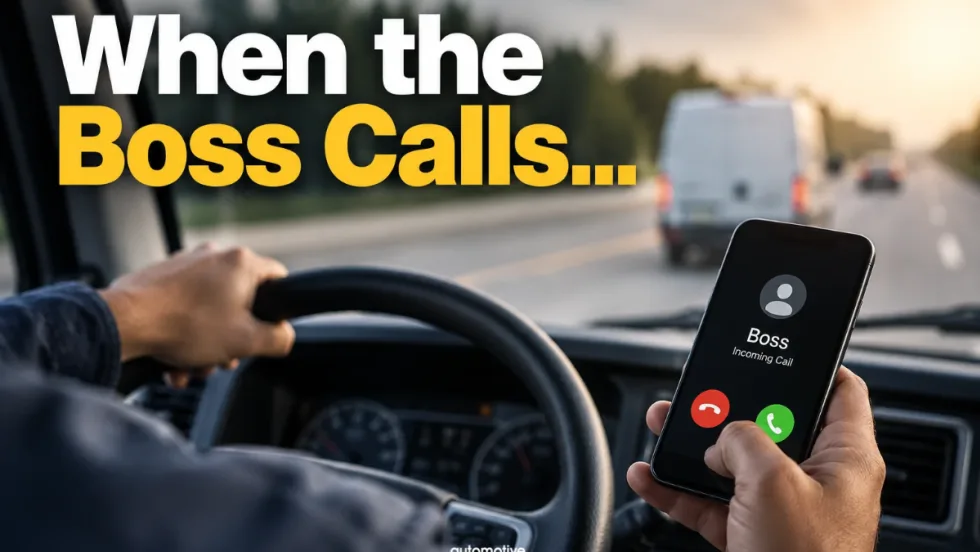
Does Your Fleet's Culture Encourage Distracted Driving?
What happens when the people responsible for enforcing safety rules are the ones setting the wrong example? The answer may reveal why some of the biggest risks to fleet drivers have little to do with what's written in the employee handbook.
Read More →
Sponsored•October 1, 2026
Fleet Manager’s Ultimate Playbook: Navigating the New Standard in OEM Connectivity
Rising operating costs, driver safety concerns, and unplanned downtime are putting unprecedented pressure on modern fleets. Discover how fleet managers use embedded OEM connectivity and real-time vehicle data to cut TCO, prevent downtime, and protect drivers without aftermarket telematics hardware.
Read More →
From Driver Well-Being to EV Charging | AF News Recap
Mental health belongs in the fleet safety conversation. This week, we’re looking at five ways fleets can support employee well-being before a crisis, plus Holman’s expansion in Mexico, new one-day Fleet Forward passes, and why EV charging demand is outpacing infrastructure growth.
Read More →
Nexar-Nauto Merger Aims to Give Fleets Better Safety Intelligence Through Larger Driving Dataset
Stefan Heck tells Automotive Fleet that combining more than 10 billion miles of driving history with Nexar's AI models will give fleets deeper insights into driver risk and roadway conditions than either company could provide independently.
Read More →
Don't Wait for a Crisis: 5 Ways to Build Mental Health Into Your Fleet Safety Program
For Suicide Prevention Month, fleet and safety leaders have an opportunity to put mental health where it belongs: at the center of workplace safety.
Read More →
How Camera Data Can Strengthen a Fleet’s Insurance Renewal
Insights from a commercial insurance carrier and a broker show how fleets can turn video telematic data, driver coaching, and improved claims results into a stronger case at insurance renewal.
Read More →
The Safest Fleets Aren’t the Ones with the Most Technology
You’ve made the telematics investment. Here’s how to capture the other half of its value and build the safest fleet on the road.
Read More →
Sponsored•August 7, 2026
Hidden in Plain Sight: Fleet Compliance Risks
Fleet compliance isn't just about having policies — it's about consistently enforcing them. This practical guide reveals six hidden compliance risks common in public sector and shared fleet operations and outlines proven strategies to improve visibility, accountability, and audit readiness
Read More →