




Why Fleet Drivers Need to Buckle Up
Each year, U.S. employers spend billions on traffic accidents involving workers who didn’t wear a seat belt. And some workers are more likely to ditch the belt than others.
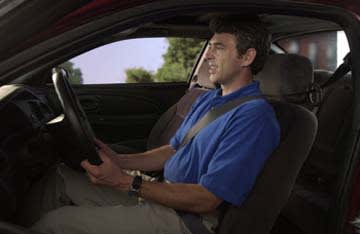
Photo courtesy of the National Highway Traffic Safety Administration.
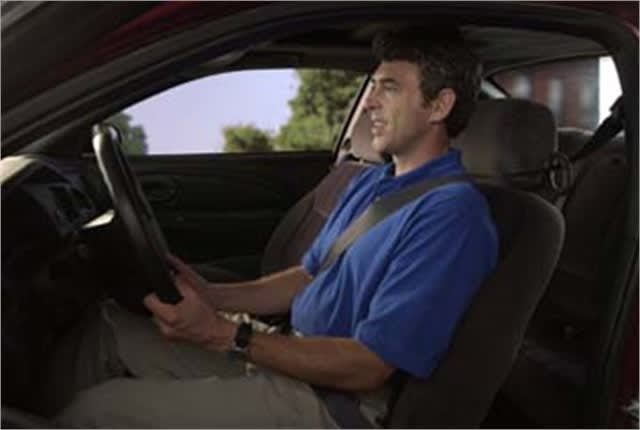
Photo courtesy of the National Highway Traffic Safety Administration.
Fleet managers often struggle to reach and maintain a high seat belt use rate among employees. And research suggests that the task of convincing all fleet drivers to buckle up is a taller order for some fleet managers than others, depending on the employer location and industry.
Studies show that drivers in jurisdictions lacking strong seat belt enforcement laws are much more likely to fail to buckle up. What’s more, a study released this past summer indicates that drivers working in some occupational groups — construction and extraction, for example — are at a greater risk for eschewing seat belts.
In 2015, 35,092 people in the U.S. died in traffic crashes. Almost half of the passenger vehicle occupants killed weren’t wearing seat belts, according to the National Highway Traffic Safety Administration.
Use of lap and shoulder seat belts reduces the fatal injury risk to car front-seat occupants by 45% and the risk to light truck front-seat occupants by 60%, according to federal research.
In 2015, the nationwide seat belt use rate reached 88.5%, as measured by a NHTSA survey. Nineteen states reached seat belt use rates of 90% or higher, including California, Georgia, Oregon, Illinois, Washington, Minnesota, New Mexico, Alabama, Iowa, Maryland, Michigan, Hawaii, New York, Nevada, Indiana, South Carolina, New Jersey, Texas, and Delaware.
In general, states with more relaxed seat belt laws with lower fines see lower belt use rates. The states with the lowest seat belt use rates in 2015 included Arkansas (77.7%), Massachusetts (74.1%), Mississippi (79.6%), Missouri (79.9%), Montana (77%), Nebraska (79.6%), New Hampshire (69.5%; no seat belt law for adults), South Dakota (73.6%), and Wyoming (79.8%).
Use rates are also lower in states with secondary-enforcement, rather than primary-enforcement, seat belt laws. In states with a secondary seat belt law, law enforcement officers can issue a ticket for not wearing a seat belt only when there’s another traffic violation observed, such as speeding or an illegal turn. Police can’t pull over a vehicle solely because seat belt nonuse is suspected. Fifteen states have secondary seat belt laws, according to the Governors Highway Safety Association.
“For all occupational groups, the prevalence of not always using seat belts was higher in states with secondary seat belt laws (23.6% unadjusted) than in states with primary seat belt laws (10.4% unadjusted),” researchers noted in the summary of a 2016 study on seat belt use among adult workers. “After adjusting for age, sex, race/ethnicity, education, marital status, body mass index, county urbanization, and state seat belt law type, there was substantial variability among occupational groups in self-reported seat belt use.”
This study, based on self-reported 2013 data, was released by the Centers for Disease Control and Prevention in June of this year. It was the first U.S. report on seat belt use among a wide range of occupational groups in a representative population-based sample.
So which occupational groups, as defined by the U.S. Department of Labor, were less likely to buckle up in 2013?
According to the CDC study, they were construction and extraction; legal; installation, maintenance, and repair; protective service; and farming, fishing, and forestry.
U.S. employers are collectively spending an extra $5 billion annually on traffic crashes involving employees who weren’t wearing a seat belt while driving or riding in a vehicle — either on the job or off, according to a 2016 study released by the Network of Employers for Traffic Safety (NETS). To help employers improve seat belt usage among employees, NETS and NHTSA partnered to develop a free online toolkit called 2seconds2click.
To download the toolkit, click here. It includes a plan for a six-week promotional campaign.
To download the full NETS study, click here.
To download the full CDC study, click here.
To access a list of state seat belt laws, click here.
More Safety
IIHS Crash Avoidance Tests Reveal Safety Gaps in Cargo Vans and Work Trucks
New crash-avoidance ratings from the Insurance Institute for Highway Safety reveal inconsistent performance among commercial vehicles, with several popular cargo vans and heavy-duty pickups struggling to avoid collisions with other vehicles and pedestrians.
Read More →
What’s Next for Fleet? Safety, AI & Industry Recognition | AF News Recap
Could your company's culture be encouraging distracted driving? This week, we're exploring how workplace expectations affect driver safety, what AI, EVs, and autonomous vehicles could mean for the future of fleet management, and how fleet professionals can strengthen their award nominations.
Read More →
Does Your Fleet's Culture Encourage Distracted Driving?
What happens when the people responsible for enforcing safety rules are the ones setting the wrong example? The answer may reveal why some of the biggest risks to fleet drivers have little to do with what's written in the employee handbook.
Read More →
Fleet Manager’s Ultimate Playbook: Navigating the New Standard in OEM Connectivity
Rising operating costs, driver safety concerns, and unplanned downtime are putting unprecedented pressure on modern fleets. Discover how fleet managers use embedded OEM connectivity and real-time vehicle data to cut TCO, prevent downtime, and protect drivers without aftermarket telematics hardware.
Read More →
From Driver Well-Being to EV Charging | AF News Recap
Mental health belongs in the fleet safety conversation. This week, we’re looking at five ways fleets can support employee well-being before a crisis, plus Holman’s expansion in Mexico, new one-day Fleet Forward passes, and why EV charging demand is outpacing infrastructure growth.
Read More →
Nexar-Nauto Merger Aims to Give Fleets Better Safety Intelligence Through Larger Driving Dataset
Stefan Heck tells Automotive Fleet that combining more than 10 billion miles of driving history with Nexar's AI models will give fleets deeper insights into driver risk and roadway conditions than either company could provide independently.
Read More →
Don't Wait for a Crisis: 5 Ways to Build Mental Health Into Your Fleet Safety Program
For Suicide Prevention Month, fleet and safety leaders have an opportunity to put mental health where it belongs: at the center of workplace safety.
Read More →
How Camera Data Can Strengthen a Fleet’s Insurance Renewal
Insights from a commercial insurance carrier and a broker show how fleets can turn video telematic data, driver coaching, and improved claims results into a stronger case at insurance renewal.
Read More →
The Safest Fleets Aren’t the Ones with the Most Technology
You’ve made the telematics investment. Here’s how to capture the other half of its value and build the safest fleet on the road.
Read More →
Hidden in Plain Sight: Fleet Compliance Risks
Fleet compliance isn't just about having policies — it's about consistently enforcing them. This practical guide reveals six hidden compliance risks common in public sector and shared fleet operations and outlines proven strategies to improve visibility, accountability, and audit readiness
Read More →