




Feds Release Autonomous Vehicle Policy
The new guidelines include a 15-point safety assessment framework that provides vehicle performance standards for manufacturers and developers.

U.S. Transportation Secretary Anthony Foxx discusses new federal guidelines for autonomous vehicles during a Sept. 20 press conference. Screen shot courtesy of U.S. DOT.

U.S. Transportation Secretary Anthony Foxx discusses new federal guidelines for autonomous vehicles during a Sept. 20 press conference. Screen shot courtesy of U.S. DOT.
The U.S. Department of Transportation has released the first federal guidelines for the testing and deployment of autonomous vehicles, proposing new regulatory authority and outlining a 15-point “safety assessment” process aimed at ensuring safety compliance.
The policy’s goal, according to the Department of Transportation, is to “bring lifesaving technologies to the roads safely while providing innovators the space they need to develop new solutions.” Though the focus is primarily on self-driving vehicles, some of the guidelines also apply to lower levels of automation, including advanced driver-assistance systems already on the market.
Most of the provisions go into effect immediately, but U.S. Secretary of Transportation Anthony Foxx stressed during a press conference that the new policy represents a framework that “leaves room for more growth and changes in the future.” He characterized the policy as a “living document” that will be updated annually. The department will also continue to accept public input during a 60-day period.
The 15-point safety assessment provides automated vehicle performance guidance for manufacturers, developers, and other organizations. The assessment process is intended to set clear expectations for manufacturers developing and deploying automated vehicle technologies.
Manufacturers must document how they’re meeting guidelines in 15 areas: operational design domain, object and event detection and response, fall back/minimal risk condition (response and robustness of the autonomous vehicle upon system failure), validation methods, registration and certification, data recording and sharing, post-crash behavior, privacy, system safety, vehicle cybersecurity, human machine interface, crashworthiness, consumer education and training, ethical considerations (how vehicles are programmed to address conflict dilemmas on the road), and law compliance (federal, state, and local traffic laws).
The newly released federal policy also delineates federal and state regulatory responsibilities for autonomous vehicles, and offers a framework for future state regulatory action. Federal responsibilities, for example, include setting safety standards for new vehicles and managing safety recalls. Liability and insurance regulations, however, fall under state authority.
Additionally, the policy proposes giving the Department of Transportation — specifically its National Highway Traffic Safety Administration agency — new authority to require pre-market testing, data, and analyses from manufacturers. This marks a departure from NHTSA’s current self-certification system and represents a more proactive approach, Foxx noted.
Moreover, the policy proposes giving federal officials the authority to require manufacturers to take immediate action to address safety risks that pose “imminent hazards.”
New regulatory tools proposed include enhanced data recorders and the expansion of vehicle testing methods in order to make test environments more representative of the real world.
Some of these proposals would require Congressional action.
Click here to read the policy.
More Safety

Nexar-Nauto Merger Aims to Give Fleets Better Safety Intelligence Through Larger Driving Dataset
Stefan Heck tells Automotive Fleet that combining more than 10 billion miles of driving history with Nexar's AI models will give fleets deeper insights into driver risk and roadway conditions than either company could provide independently.
Read More →
Don't Wait for a Crisis: 5 Ways to Build Mental Health Into Your Fleet Safety Program
For Suicide Prevention Month, fleet and safety leaders have an opportunity to put mental health where it belongs: at the center of workplace safety.
Read More →
How Camera Data Can Strengthen a Fleet’s Insurance Renewal
Insights from a commercial insurance carrier and a broker show how fleets can turn video telematic data, driver coaching, and improved claims results into a stronger case at insurance renewal.
Read More →
The Safest Fleets Aren’t the Ones with the Most Technology
You’ve made the telematics investment. Here’s how to capture the other half of its value and build the safest fleet on the road.
Read More →
Hidden in Plain Sight: Fleet Compliance Risks
Fleet compliance isn't just about having policies — it's about consistently enforcing them. This practical guide reveals six hidden compliance risks common in public sector and shared fleet operations and outlines proven strategies to improve visibility, accountability, and audit readiness
Read More →
NETS Sets 2026 Fleet Safety Benchmark Conference for Indianapolis
The Sept. 15–17 program will feature fleet benchmarking data, case studies, emerging technologies, and implementation strategies while running alongside the NSC Safety Congress & Expo.
Read More →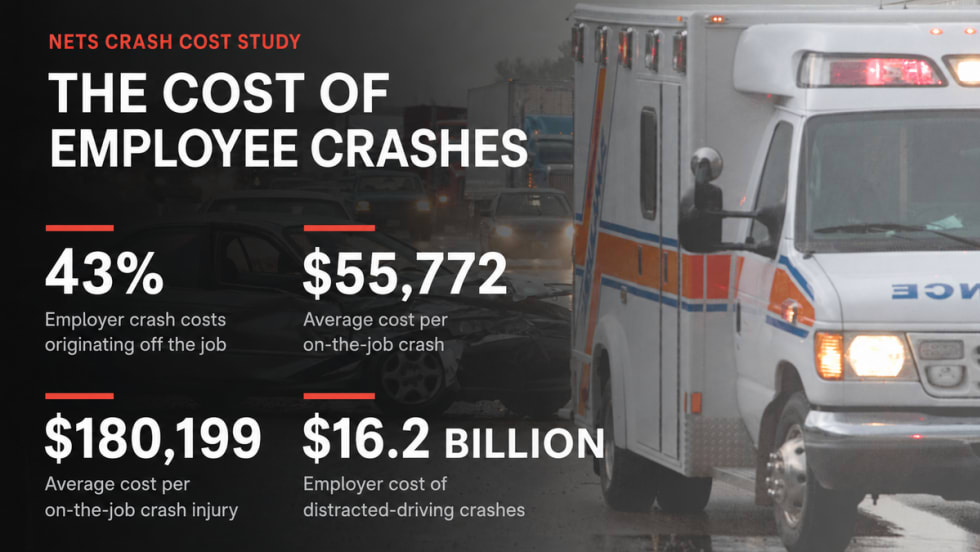
Off-the-Job Crashes Account for 43% of Employers’ $61.7 Billion Crash Burden
NETS quantifies costs dispersed across fleet, risk, HR, and other departments while providing new per-crash benchmarks for employers.
Read More →
Ram Recalls More Than 1.27 Million 1500 Pickups for Seat Belt Anchor Issue
The recall affects certain 2019-2026 Ram 1500 pickups that may have improperly attached second-row seat belt buckle anchors.
Read More →
How Better Visibility Cut Speeding Violations by 48%
Fleet leaders don't need more data, they need clearer visibility into what the data is saying. This case study explores how one utility replaced speeding-event counts with a single metric — miles driven in violation — to strengthen safety and significantly reduce speeding violations.
Read More →
Operation Safe Driver Week: Why the Industry's Oldest Safety Campaign Still Matters to Fleets
A look at how a 2007 enforcement initiative became one of the most consequential weeks on the fleet safety calendar, and what it means for your drivers in 2026.
Read More →