




Drivers Feel Pressured to 'Stay Connected'
A new survey from the National Safety Council finds that perceived expectations from family and work are making Americans more prone to distracted driving.

Despite growing efforts to educate the public about the dangers of distracted driving, a new National Safety Council survey suggests that most American drivers still feel pressured by family and work to constantly stay connected so they can respond to calls and messages.
The survey, released in conjunction with the beginning of Distracted Driving Awareness Month, found that 82% of Americans feel the most pressure from their families. A total of 54% of drivers indicated they still feel pressure from work.
“The finding not only sheds light on why Americans continue to drive distracted, but also underscores their ongoing struggle to accurately assess risk,” the National Safety Council said in a released statement about the survey. “Two-thirds of drivers felt unsafe because of another driver’s distraction, but far fewer — just 25% — recognized that their own distractions have put themselves or others at risk.”
Other key findings of the survey include:
74% of drivers would use Facebook behind the wheel.
One in four drivers would feel much better about their drive if there were no way to use technology behind the wheel.
66% of drivers would talk on the phone while driving through a parking lot — a chaotic environment with many hazards.
Of the teen drivers surveyed, 73% said their friends put the most pressure on them to drive distracted — slightly higher than family (71%).
"It is a sad irony that the people we love are actually jeopardizing our safety,” said Deborah A.P. Hersman, president and CEO of the National Safety Council. “If you really care, don’t call to say, ‘I love you.’ Instead, encourage your family to set everything else aside, disconnect and focus only on the road.”
Thousands have died in distracted driving crashes. The dangers of using cell phones — even hands-free phones — while driving have been understood for years. But there are more ways than ever to stay connected behind the wheel, the National Safety Council pointed out. In-vehicle systems allow drivers to call, text, email, update social media and browse the Internet, despite research showing such systems cause distraction that can linger long after the driver finishes the task.
But there is some good news. A total of 55% of drivers said that if their vehicle or phone came with a technology solution to prevent distraction, they would not turn it off.
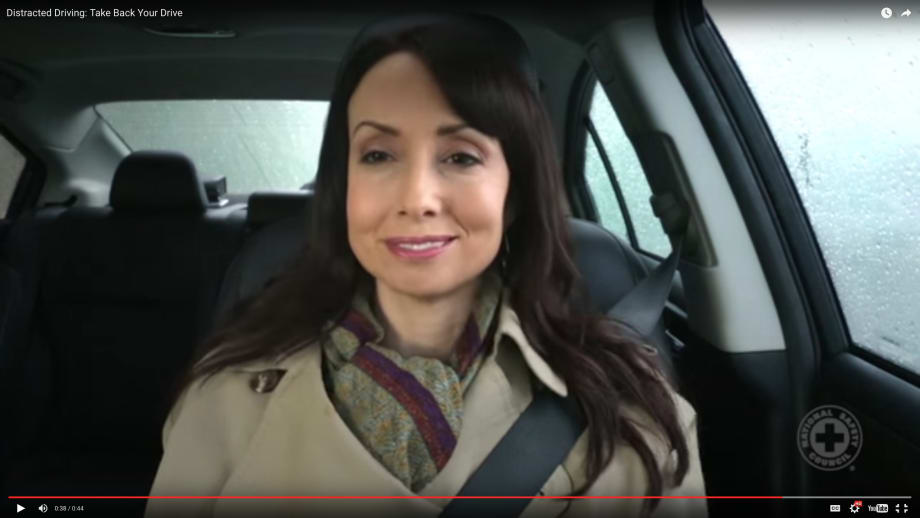
To view a National Safety Council video produced for Distracted Driving Awareness Month, click on the photo or link below the headline.
More Safety
IIHS Crash Avoidance Tests Reveal Safety Gaps in Cargo Vans and Work Trucks
New crash-avoidance ratings from the Insurance Institute for Highway Safety reveal inconsistent performance among commercial vehicles, with several popular cargo vans and heavy-duty pickups struggling to avoid collisions with other vehicles and pedestrians.
Read More →
What’s Next for Fleet? Safety, AI & Industry Recognition | AF News Recap
Could your company's culture be encouraging distracted driving? This week, we're exploring how workplace expectations affect driver safety, what AI, EVs, and autonomous vehicles could mean for the future of fleet management, and how fleet professionals can strengthen their award nominations.
Read More →
Does Your Fleet's Culture Encourage Distracted Driving?
What happens when the people responsible for enforcing safety rules are the ones setting the wrong example? The answer may reveal why some of the biggest risks to fleet drivers have little to do with what's written in the employee handbook.
Read More →
Fleet Manager’s Ultimate Playbook: Navigating the New Standard in OEM Connectivity
Rising operating costs, driver safety concerns, and unplanned downtime are putting unprecedented pressure on modern fleets. Discover how fleet managers use embedded OEM connectivity and real-time vehicle data to cut TCO, prevent downtime, and protect drivers without aftermarket telematics hardware.
Read More →
From Driver Well-Being to EV Charging | AF News Recap
Mental health belongs in the fleet safety conversation. This week, we’re looking at five ways fleets can support employee well-being before a crisis, plus Holman’s expansion in Mexico, new one-day Fleet Forward passes, and why EV charging demand is outpacing infrastructure growth.
Read More →
Nexar-Nauto Merger Aims to Give Fleets Better Safety Intelligence Through Larger Driving Dataset
Stefan Heck tells Automotive Fleet that combining more than 10 billion miles of driving history with Nexar's AI models will give fleets deeper insights into driver risk and roadway conditions than either company could provide independently.
Read More →
Don't Wait for a Crisis: 5 Ways to Build Mental Health Into Your Fleet Safety Program
For Suicide Prevention Month, fleet and safety leaders have an opportunity to put mental health where it belongs: at the center of workplace safety.
Read More →
How Camera Data Can Strengthen a Fleet’s Insurance Renewal
Insights from a commercial insurance carrier and a broker show how fleets can turn video telematic data, driver coaching, and improved claims results into a stronger case at insurance renewal.
Read More →
The Safest Fleets Aren’t the Ones with the Most Technology
You’ve made the telematics investment. Here’s how to capture the other half of its value and build the safest fleet on the road.
Read More →
Hidden in Plain Sight: Fleet Compliance Risks
Fleet compliance isn't just about having policies — it's about consistently enforcing them. This practical guide reveals six hidden compliance risks common in public sector and shared fleet operations and outlines proven strategies to improve visibility, accountability, and audit readiness
Read More →