




Ford to Test Self-Driving Cars on Calif. Roads
In 2016, the automaker will begin testing autonomous Fusion Hybrids on California streets in an initiative driven by the company’s quickly expanding Silicon Valley-based research center.
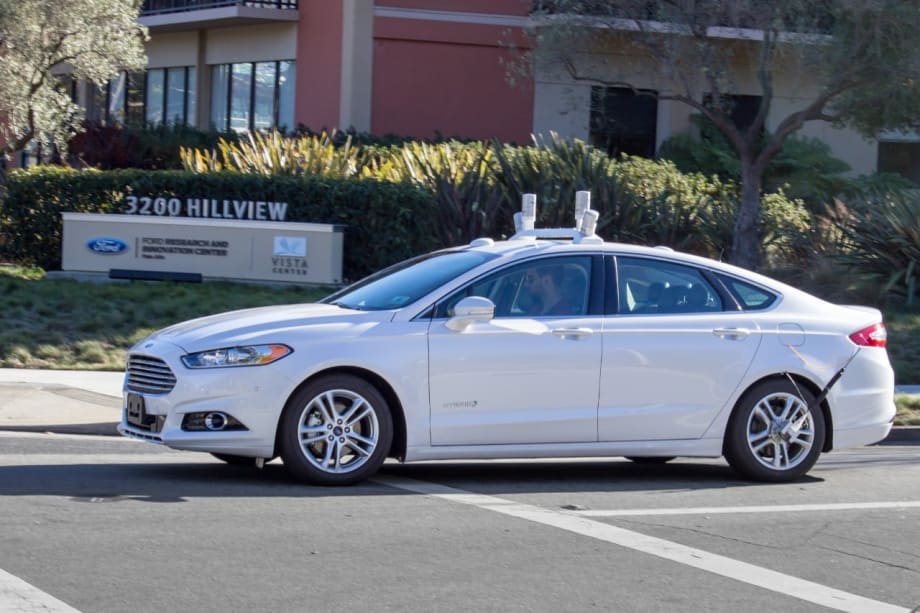
Photo of Fusion Hybrid sedan courtesy of Ford.
Photo of Fusion Hybrid sedan courtesy of Ford.
Fully autonomous Ford Fusion Hybrid sedans will begin driving on California public streets next year, as the Ford Research and Innovation Center Palo Alto team continues to advance Ford's ambitious "smart mobility plan."
Ford is now officially enrolled in the California Autonomous Vehicle Testing Program, the automaker has announced. The testing is part of Ford's 10-year autonomous vehicle development program and a key element of Ford Smart Mobility, the automaker's plan to take the company to the next level in connectivity, mobility, autonomous vehicles, the customer experience, and data and analytics.
Ford Research and Innovation Center Palo Alto is one of the largest automotive manufacturer research centers in the region, with a team of more than 100 researchers, engineers and scientists. The research lab opened in January, expanding Ford's presence in Silicon Valley that began in 2012.
Eighty percent of the Palo Alto team joined Ford from the technology sector. The remaining 20 percent include Ford employees from the U.S., China, Germany and Australia.
Ford has expanded its Silicon Valley facility from a 15-person office to a 100-plus-person research and development center. Research the lab has conducted this past year includes:
Autonomous vehicle virtual test drive — This study allows virtual interaction between an autonomous car and pedestrians, replicating real-world situations to better understand and develop responses to some of the unexpected things that can happen on the road.
Sensor fusion — Sensors on autonomous vehicles detect and track objects in the vehicle's view, fusing information together to provide a 360-degree view of the car's surroundings including street signs, other vehicles, even pedestrians.
Camera-based pedestrian detection — Camera sensors serve as the eyes of a vehicle, allowing the car to "see" and sense pedestrians.
Data-driven health care — Throughdata collection from Ranger pickups and motorcycles outfitted with OpenXC technology, Ford is working with Riders for Health to collect GPS data and mapping coordinates to make health care, vaccines and medication delivery to people throughout rural Africa more efficient and accessible.
Ford said it has cultivated several relationships with top universities this year, including the University of California-Berkeley, Carnegie Mellon, Santa Clara and San Jose State.
Additionally, the company is further expanding its strategic research collaboration with Stanford University in 2016, planning 13 projects covering all five areas of Ford Smart Mobility. That's more than double the number of collaborations this year.
More Safety

Ram Recalls More Than 1.27 Million 1500 Pickups for Seat Belt Anchor Issue
The recall affects certain 2019-2026 Ram 1500 pickups that may have improperly attached second-row seat belt buckle anchors.
Read More →
Top 50 Executive Fleets
It is that time of year again! Time for the 2026 list of the Top 50 Executive Fleets, presented by Automotive Fleet and Volvo as part of its annual Fleet 500. Download now to see this year's list of companies!
Read More →
How Better Visibility Cut Speeding Violations by 48%
Fleet leaders don't need more data, they need clearer visibility into what the data is saying. This case study explores how one utility replaced speeding-event counts with a single metric — miles driven in violation — to strengthen safety and significantly reduce speeding violations.
Read More →
Operation Safe Driver Week: Why the Industry's Oldest Safety Campaign Still Matters to Fleets
A look at how a 2007 enforcement initiative became one of the most consequential weeks on the fleet safety calendar, and what it means for your drivers in 2026.
Read More →
Nexar-Nauto Merger Aims to Give Fleets Better Safety Intelligence Through Larger Driving Dataset
Stefan Heck tells Automotive Fleet that combining more than 10 billion miles of driving history with Nexar's AI models will give fleets deeper insights into driver risk and roadway conditions than either company could provide independently.
Read More →
From Silos to Solutions: Relationship Management for Safer Fleets
From telematics adoption and driver accountability to policy consistency and risk mitigation, this episode breaks down what it really takes to build a safer fleet culture without slowing business down.
Read More →
IIHS Launches First Commercial Vehicle Safety Evaluations
The Insurance Institute for Highway Safety has begun evaluating heavy-duty pickups and cargo vans for driver protection. Which models earned top marks?
Read More →
Reducing Risk by Eliminating Phone Use Behind the Wheel
Hosted with the cofounder of Lifesaver Mobile, this episode addresses phone use behind the wheel and how to design a driving environment that actually helps prevents accidents.
Read More →
Cameras, Safety and Insurance: From Reactive Claims to Real-Time Prevention (Part 2 of 2)
Part Two: Commercial auto remains one of the most challenging and costly lines of coverage for fleet operators and insurers alike. Continue learning more about how to effectively address these issues from Onur Aksan, Enterprise Business Development Executive, Geotab
Read More →
How 5-Second Telematics Data Is Changing Fleet Safety
This episode connects with Steve Santostasi of Ford Pro and covers how a few seconds of data can make a difference in fleet safety.
Read More →