




Advanced Tech Helping Seniors Drive Longer
Research from the AAA Foundation and the University of Michigan underscores how older drivers can benefit from such technologies as forward collision warning/mitigation.
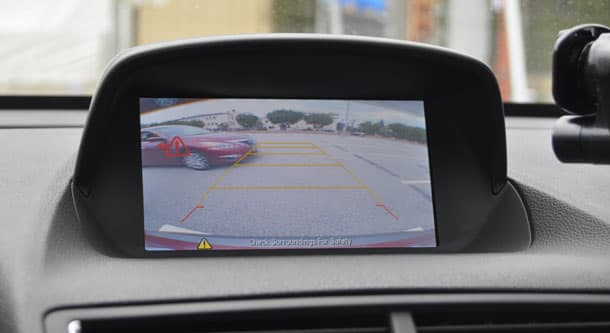
Advanced safety features, including parking assist technology, can help older drivers to continue driving safely for more years. Photo courtesy of AAA.
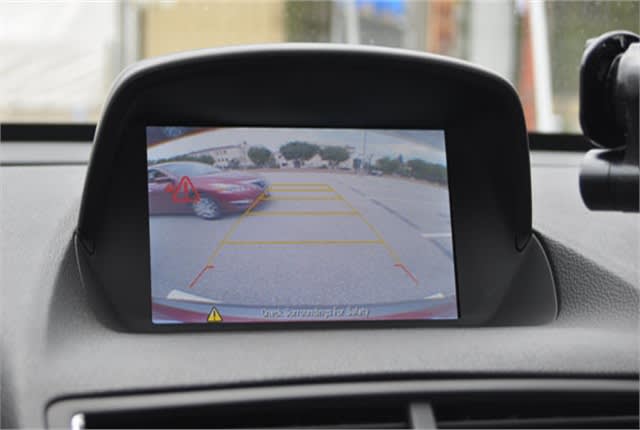
Advanced safety features, including parking assist technology, can help older drivers to continue driving safely for more years. Photo courtesy of AAA.
Advanced automotive technologies, coupled with safe driving habits, can help older motorists remain behind the wheel longer into their lives, according to two new studies by the AAA Foundation for Traffic Safety and the University of Michigan Transportation Research Institute.
Such findings are especially important because a record 36 million adults ages 65 and older drive in the U.S., and this number is expected rise over the next decade. Recent AAA Foundation research has found that seniors who give up driving are almost two times more likely to experience depression and nearly five times as likely to enter a long-term care facility.
“Permanently giving up the keys can have severe consequences for the health and mental well-being of older adults,” said Peter Kissinger, AAA Foundation for Traffic Safety’s president and CEO. “New technologies and a focus on safe driving can help seniors remain behind the wheel for years to come.”
The researchers examined 16 advanced vehicle technologies and determined that six of these can provide high value for older adults by potentially reducing crashes and improving the ease and comfort of driving:
Forward collision warning/mitigation – These systems can help prevent crashes by warning drivers of a potential collision or by automatically applying the brakes. For older drivers, this technology can improve reaction times and reduce crashes by up to 20 percent.
Automatic crash notification – These systems automatically alert emergency services in the event of a crash. Older drivers are more likely to suffer from the serious effects of a crash because of their age, which means these systems can provide a greater safety benefit to seniors.
Park assist with rearview display – This technology includes backup cameras and obstacle-detection warning systems, which can help prevent crashes when pulling out of a parking space. About 95 percent of seniors want these systems in their next vehicle, while 55 percent reported that it can help reduce driver stress and workload.
Parking assist with cross-traffic warning – These systems utilize radar sensor technology to notify drivers of crossing vehicles when backing out of a parking space, and on some vehicles, the systems automatically can apply the brakes to prevent a collision.
Semi-autonomous parking assistance – These systems take over steering while moving into a parallel parking space, which can reduce stress and make parking easier for older drivers.
Navigation assistance – Turn-by-turn GPS navigation systems can provide older drivers with increased feelings of safety, confidence, attentiveness and relaxation, which can help seniors remain focused on the road and comfortable behind the wheel.
“Seniors in the market for a new car may want to consider the potential long-term benefits of choosing a vehicle with advanced safety technologies,” said Jake Nelson, AAA’s director of traffic safety and advocacy. “Equipping a new car with the right features can help an aging driver remain confident behind the wheel and out of crashes.”
Older adults also can extend their driving years by adopting strategies that reduce their risk on the road, AAA noted. The research revealed that many seniors can improve their safety by avoiding challenging situations, such as driving at night, in bad weather, during rush-hour traffic, and in unfamiliar areas or on the highway.
In addition, seniors who successfully continue to drive are less likely to engage in potentially distracting behaviors, such as talking on a cell phone, texting, eating, smoking or grooming in the car. Many older drivers also are less likely to speed or frequently change lanes, which can further reduce crash risks, AAA said.
More Safety

Does Your Fleet's Culture Encourage Distracted Driving?
What happens when the people responsible for enforcing safety rules are the ones setting the wrong example? The answer may reveal why some of the biggest risks to fleet drivers have little to do with what's written in the employee handbook.
Read More →
Fleet Manager’s Ultimate Playbook: Navigating the New Standard in OEM Connectivity
Rising operating costs, driver safety concerns, and unplanned downtime are putting unprecedented pressure on modern fleets. Discover how fleet managers use embedded OEM connectivity and real-time vehicle data to cut TCO, prevent downtime, and protect drivers without aftermarket telematics hardware.
Read More →
From Driver Well-Being to EV Charging | AF News Recap
Mental health belongs in the fleet safety conversation. This week, we’re looking at five ways fleets can support employee well-being before a crisis, plus Holman’s expansion in Mexico, new one-day Fleet Forward passes, and why EV charging demand is outpacing infrastructure growth.
Read More →
Nexar-Nauto Merger Aims to Give Fleets Better Safety Intelligence Through Larger Driving Dataset
Stefan Heck tells Automotive Fleet that combining more than 10 billion miles of driving history with Nexar's AI models will give fleets deeper insights into driver risk and roadway conditions than either company could provide independently.
Read More →
Don't Wait for a Crisis: 5 Ways to Build Mental Health Into Your Fleet Safety Program
For Suicide Prevention Month, fleet and safety leaders have an opportunity to put mental health where it belongs: at the center of workplace safety.
Read More →
How Camera Data Can Strengthen a Fleet’s Insurance Renewal
Insights from a commercial insurance carrier and a broker show how fleets can turn video telematic data, driver coaching, and improved claims results into a stronger case at insurance renewal.
Read More →
The Safest Fleets Aren’t the Ones with the Most Technology
You’ve made the telematics investment. Here’s how to capture the other half of its value and build the safest fleet on the road.
Read More →
Hidden in Plain Sight: Fleet Compliance Risks
Fleet compliance isn't just about having policies — it's about consistently enforcing them. This practical guide reveals six hidden compliance risks common in public sector and shared fleet operations and outlines proven strategies to improve visibility, accountability, and audit readiness
Read More →
NETS Sets 2026 Fleet Safety Benchmark Conference for Indianapolis
The Sept. 15–17 program will feature fleet benchmarking data, case studies, emerging technologies, and implementation strategies while running alongside the NSC Safety Congress & Expo.
Read More →
Off-the-Job Crashes Account for 43% of Employers’ $61.7 Billion Crash Burden
NETS quantifies costs dispersed across fleet, risk, HR, and other departments while providing new per-crash benchmarks for employers.
Read More →