




Safety Team to Help NHTSA Improve Defect Probes
The federal safety agency releases two internal reports, one of which details mistakes NHTSA made that contributed to delays in the GM ignition switch recall.

FOXX

FOXX
An outside team of auto safety systems experts will spend the next year advising the National Highway Traffic Safety Administration on how to implement new reforms to strengthen its defect investigations, U.S. Transportation Secretary Anthony Foxx said.
This three-man safety systems team will assist the federal agency in adopting operational changes outlined in a newly released internal report, “NHTSA’s Path Forward.” The report includes a review of NHTSA’s actions surrounding the General Motors ignition switch recall and identifies shortcomings of NHTSA’s defect investigation. The agency’s Office of Defects Investigation (ODI) is responsible for identifying vehicle safety defects.
The number of approved death compensation claims tied to defective GM ignition switches has climbed to 111, according to a June 8 report from MLive.com.
NHTSA has also launched an Internal Risk Control Innovations Program. This project brings together NHTSA staff from across the agency to address emerging safety risks that cut across NHTSA’s enforcement, vehicle safety and behavioral safety efforts.
The “NHTSA’s Path Forward” report concludes that both GM and NHTSA contributed to the years-long delay in recalling GM vehicles with defective ignition switches.
A GM engineer initially approved the faulty ignition switch, even though it fell short of the automaker’s torque specifications and allowed a key to be jostled out of the “run” position. Later, NHTSA failed to hold GM accountable for providing inadequate information. When the agency’s Early Warning Division requested details from GM about multiple collisions in which air bags failed to deploy, GM provided scant information and invoked legal privilege, according to the report.
“Rather than push back and request more information, NHTSA analyzed the incomplete responses, preventing NHTSA from having a complete understanding of all the incidents in question,” the report says.
Eventually, the air bag non-deployments would be tied to the ignition switches’ failure to keep the key in the “run” position. Inadvertent movement to the “accessory” or “off” position had disabled the air bags.
The report also concludes that both GM and NHTSA lacked a thorough understanding of advanced air bag technology. Investigators from both GM and NHTSA for years failed to recognize the connection between key position and air bag function.
Additionally, the report says NHTSA failed to identify and follow up on apparent trends embedded within the agency’s own investigation results. In some instances, this failure resulted from a lack of communication and data sharing among different groups within the federal agency. NHTSA also didn’t adequately probe alternate theories about what caused the air bag non-deployments.
To address such shortcomings, the new safety systems team will assist the agency in implementing six improvements:
Increasing the auto industry’s accountability, focusing on audits and collecting information
Increasing NHTSA’s knowledge base of new and emerging technologies
Enhancing ODI's approach to detection and analysis
Enhancing information management, analysis and sharing
Establishing improved controls for assessing potential defects
Ensuring effective communications and coordination within ODI and between ODI and the Special Crash Investigation Division.
"NHTSA has identified improvements, some already in progress and some we plan to make, to better investigate, identify and remedy defects that threaten public safety," Foxx said.
The safety systems team members are Joseph Kolly, director of the Office of Research and Engineering at the National Transportation Safety Board; J. Victor Lebacqz, former associate administrator for aeronautics research at NASA; and Dr. James P. Bagian, director of the Center for Healthcare Engineering and Patient Safety at the University of Michigan.
NHTSA also released a second report, which addresses the budgetary and workforce boosts needed to implement such changes in how the agency investigates potential auto defects. This report, “Workforce Assessment: The Future of NHTSA’s Defects Investigations,” offers two separate models. The “minimum boost” model requires increases of $23.64 million and 92 full-time staff members. The “new paradigm” model, which proposes dramatic changes to NHTSA’s enforcement program, requires increases of $89 million and 380 full-time staff members, according to the report.
More Safety

Nexar-Nauto Merger Aims to Give Fleets Better Safety Intelligence Through Larger Driving Dataset
Stefan Heck tells Automotive Fleet that combining more than 10 billion miles of driving history with Nexar's AI models will give fleets deeper insights into driver risk and roadway conditions than either company could provide independently.
Read More →
Don't Wait for a Crisis: 5 Ways to Build Mental Health Into Your Fleet Safety Program
For Suicide Prevention Month, fleet and safety leaders have an opportunity to put mental health where it belongs: at the center of workplace safety.
Read More →
How Camera Data Can Strengthen a Fleet’s Insurance Renewal
Insights from a commercial insurance carrier and a broker show how fleets can turn video telematic data, driver coaching, and improved claims results into a stronger case at insurance renewal.
Read More →
The Safest Fleets Aren’t the Ones with the Most Technology
You’ve made the telematics investment. Here’s how to capture the other half of its value and build the safest fleet on the road.
Read More →
Hidden in Plain Sight: Fleet Compliance Risks
Fleet compliance isn't just about having policies — it's about consistently enforcing them. This practical guide reveals six hidden compliance risks common in public sector and shared fleet operations and outlines proven strategies to improve visibility, accountability, and audit readiness
Read More →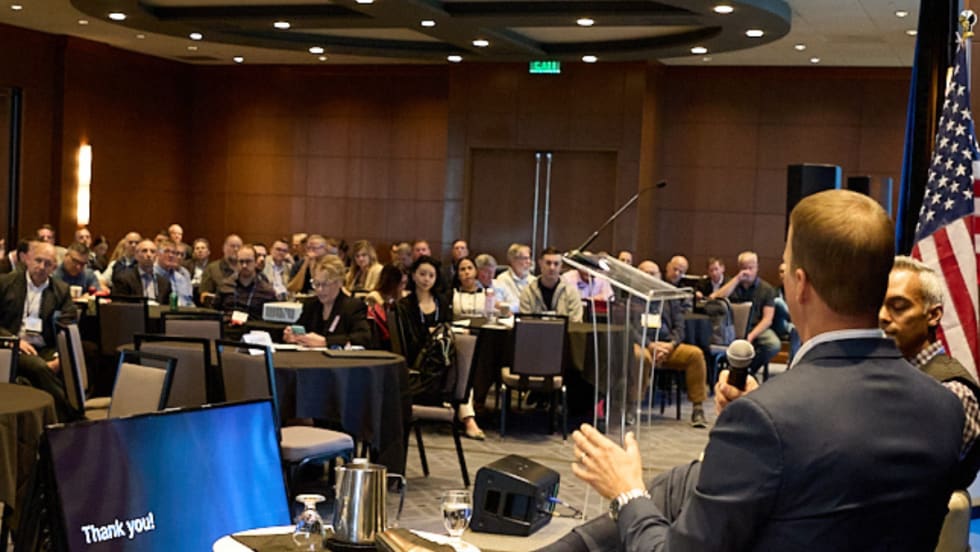
NETS Sets 2026 Fleet Safety Benchmark Conference for Indianapolis
The Sept. 15–17 program will feature fleet benchmarking data, case studies, emerging technologies, and implementation strategies while running alongside the NSC Safety Congress & Expo.
Read More →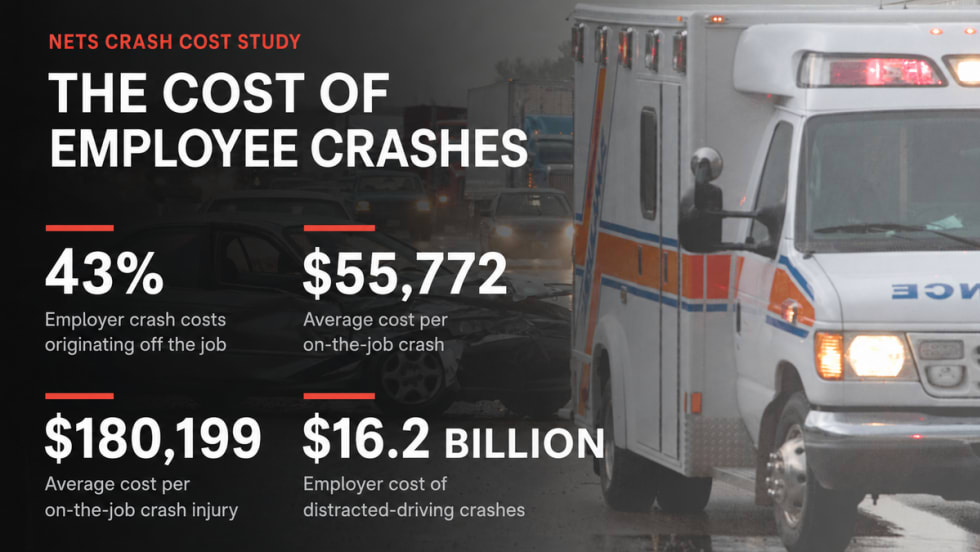
Off-the-Job Crashes Account for 43% of Employers’ $61.7 Billion Crash Burden
NETS quantifies costs dispersed across fleet, risk, HR, and other departments while providing new per-crash benchmarks for employers.
Read More →
Ram Recalls More Than 1.27 Million 1500 Pickups for Seat Belt Anchor Issue
The recall affects certain 2019-2026 Ram 1500 pickups that may have improperly attached second-row seat belt buckle anchors.
Read More →
How Better Visibility Cut Speeding Violations by 48%
Fleet leaders don't need more data, they need clearer visibility into what the data is saying. This case study explores how one utility replaced speeding-event counts with a single metric — miles driven in violation — to strengthen safety and significantly reduce speeding violations.
Read More →
Operation Safe Driver Week: Why the Industry's Oldest Safety Campaign Still Matters to Fleets
A look at how a 2007 enforcement initiative became one of the most consequential weeks on the fleet safety calendar, and what it means for your drivers in 2026.
Read More →