




Related: Video Van Profile: Ford Transit
Ford Adds Rear-View Camera to 2016 Transit Van
Ford is adding a rear-view camera as standard equipment on its 2016 model-year Transit van, as well as several options including the SYNC 3 infotainment system, Ford has announced.
by Staff
June 4, 2015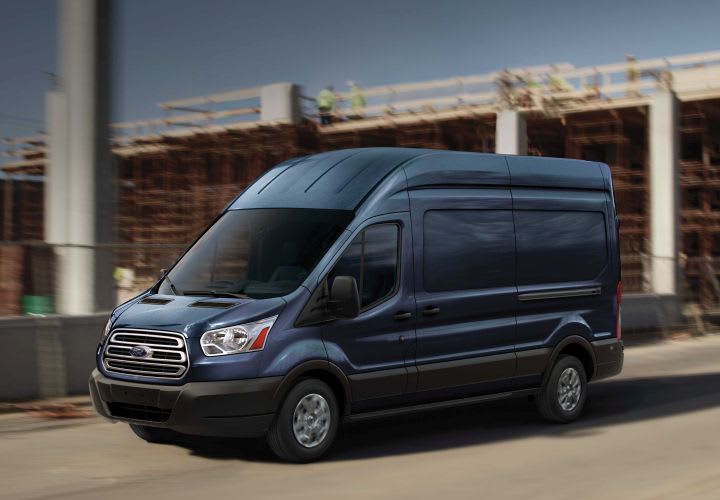
Photo of 2016 Transit courtesy of Ford.
2 min to read
Photo of 2016 Transit courtesy of Ford.
Ford is adding a rear-view camera as standard equipment on its 2016 model-year Transit van, as well as several options including the SYNC 3 infotainment system, Ford has announced.
Buyers of the 2016 Transit will be able to add the next generation of Ford's infotainment system that features faster performance, more conversational voice recognition, a more smartphone-like touch screen and easier-to-understand graphical interface, according to the company.
In addition to the standard rear-view camera, buyers will also get trailer hitch assist technology as a standard feature. The feature helps drivers line up a hitch with a trailer when reversing the vehicle.
As another update, dual sliding side cargo doors will be available for the first time on medium- and high-roof Transit vans, which increases the number of configurations to 58 from 47 in the 2015 model year.
Transit fleet customers can add an available speed limitation feature that caps top speed at 70 mph. Speeds already can be limited to 65 mph and 75 mph on 2015 models.
Other upgrades for 2016 have been designed to improve upfitting. Optional auxiliary fuse panels will power custom upfit accessories or other implements. Ford is also offering an optional single absorbed glass mat (AGM) battery designed for drivers who need to power extra lights or equipment.
Customers who purchase the wagon variant can add a heavy-duty alternators to provide more power to run accessories. Front dome lamps with map lights and theater dimming will be standard on all Transit variants. The USB jack moves above the cupholder in the center console for easy access.
Ford also added four exterior colors including Shadow Black, Caribou, Magnetic and Race Red.
Customers have begin ordering 2016 Transit vans starting Aug. 11. The vehicles should arrive at dealerships in September.
The 2015 Transit helped deliver Ford record its best May performance for commercial vans since 1978 with 20,655 total commercial vans sold.
More Operations

Fleet Has a Talent Pipeline Problem. What Comes Next? | AF News Recap
Where will fleet’s next generation of leaders come from? This week, we’re looking at the industry’s talent pipeline, what certification can add to a fleet career, how to build an award-worthy track record, and the return of Automotive Fleet’s Personal Use Survey.
Read More →
Smith System Launches Driver Risk Management Program
Fleets have more driver data than ever, but identifying risky behavior doesn't necessarily correct it. Smith System's new Driver Risk Management program combines monitoring, training, and follow-up coaching to help fleets connect risk signals with driver intervention.
Read More →
Automotive Fleet Opens 2026 Personal Use Survey for Commercial Fleet Managers
Less than two weeks left! Commercial and corporate fleet managers are invited to share how their organizations handle company vehicle personal-use policies, charges, and driver eligibility.
Read More →
From AI Prompts to AI-Generated Safety Songs | AF News Recap
Can better prompts make AI more useful for fleet managers? This week, we’re breaking down smarter fleet analysis, an AI-assisted experiment that turned safety training into music, and what happened to fuel prices in August.
Read More →
How to Write Better AI Prompts for Fleet Analysis
Include these six elements in your fleet prompts to generate more relevant analysis and accurate answers.
Read More →
Fleet Meets: Eric Kilgore
This edition of the Fleet Meets series features one of the industry's best leaders driving multi-market and national operations.
Read More →
Why Reactive Fleet Management Is Becoming Too Expensive to Sustain
Research highlights a growing need for proactive management strategies to address rising costs in fleet operations effectively.
Read More →
Sponsored•August 12, 2026
What Your Fleet KPIs Aren’t Telling You
Tracking fleet metrics is only useful when the data leads to better decisions. This guide helps fleet leaders assess cost, utilization, and downtime more accurately, identify performance gaps, and prioritize the actions that can improve operational results.
Read More →
Sponsored•August 7, 2026
Hidden in Plain Sight: Fleet Compliance Risks
Fleet compliance isn't just about having policies — it's about consistently enforcing them. This practical guide reveals six hidden compliance risks common in public sector and shared fleet operations and outlines proven strategies to improve visibility, accountability, and audit readiness
Read More →
Turning Fleet Payment Data into Executive Insights
Does data alone drive results in operations?
Read More →