However, a new driver survey indicates the need for greater measures to combat such risks as distracted driving.
by Staff
December 18, 2014
Distracted driving remains a challenge for fleet managers, despite an overall increase in driving safety training.
3 min to read
Distracted driving remains a challenge for fleet managers, despite an overall increase in driving safety training.
Though fleet safety is a growing priority in the corporate world, a recent survey found that 57 percent of company drivers in the U.S. still make phone calls while driving.
Meanwhile, the debate over driver use of mobile devices continues to intensify, with some fleet managers still weighing their options for a policy on distracted driving.
Ad Loading...
The driver survey, conducted by TNS for LeasePlan, questioned 3,377 company car drivers in 20 countries. LeasePlan is a leading fleet management and driver mobility company. TNS is a major marketing research provider.
Despite the persistent threat of distracted driving, the survey results underscore how companies are making driver training more accessible. Forty-five percent of American drivers said their employer regularly sends e-mails offering driving safety tips. Nearly a third (30 percent) of drivers questioned said they have the opportunity to attend courses and workshops – or take tests – on safe driving.
On a global scale, 29 percent of surveyed company drivers said their employer regularly provides safe driving information and tips.
“Influencing driver behavior is the next level of fleet optimization,” said Nathalie de Vries, senior consultant at LeasePlan. “We need to engage drivers to modify their behavior to meet various objectives in the area of safety, but also cost control and CO2 emissions.”
The company’s LeasePlan Monitor provides information about global mobility throughout LeasePlan’s network of companies in 32 countries. The goal is to make it easier for fleet decision makers to stay up to date on key developments and trends.
Ad Loading...
The LeasePlan Monitor shows North American companies take the lead in informing their lease drivers about safety: 73 percent of U.S. drivers surveyed said their employer informs them on this topic. In the U.S., only 16 percent of drivers said their company offers nothing on driver safety.
“At LeasePlan, safety is priority and a key initiative,” said Dan Shive, vice president of risk management for LeasePlan USA. “Finding the courage to stand up against driving dangers such as distracted driving is important. We try to give fleet managers the information and the tools to create a safe culture for their drivers.”
The survey also showed that compared to company drivers in other countries, American drivers demonstrate more caution when checking social media and sending messages.
Globally, governments and fleet managers are stepping up their efforts to inform drivers about the risks associated with using smartphones while driving, LeasePlan said.
LeasePlan USA has implemented a total cell phone ban policy for anyone who has a company vehicle or mobile device.
Ad Loading...
In addition, LeasePlan offers fleet managers help in promoting driver safety. LeasePlan can provide advice on implementing distracted driving policies to any interested company.
Survey participants were also queried on other topics related to safe driving. When questioned about what driver behaviors irritated them the most, American drivers expressed their displeasure with being cut off or tailgated. Less than 10 percent admitted that they have committed such driving gaffes themselves, while 80 percent said they have been on the receiving end. A total of 71 percent claimed that their driving style is the same regardless of whether they’re driving a lease vehicle or a personal vehicle.
The overall survey showed that fleet drivers in other countries share Americans’ disdain for tailgating. The survey results identified tailgating (24 percent) as the most annoying road behavior, followed by driving too slow (20 percent) and cutting off (17 percent).
But the ranking differed for each continent. Also, when questioned about the nationality of the worst drivers, nearly all drivers chose one other than their own.
Fleet drivers face constant visual, cognitive, and environmental interruptions the moment they hit the road. From roadside chaos to mental fatigue and digital overload, today’s biggest driving risks often come from outside the vehicle itself.
FLASH Weather AI has launched a first-of-its-kind hail prediction model capable of forecasting hail size and arrival time at 1-kilometer resolution up to 55 minutes ahead, giving fleets and insurers critical time to prepare for severe storms.
As litigation risk rises, vehicles are increasingly targeted. This Coca-Cola bottler shares how it’s reducing exposure through driver training, technology, and a proactive risk management approach.
From identity management to third-party certifications, the right technology partner should make security easier to manage. Here are the three building blocks that fleet managers need to stay in control as connected systems scale.
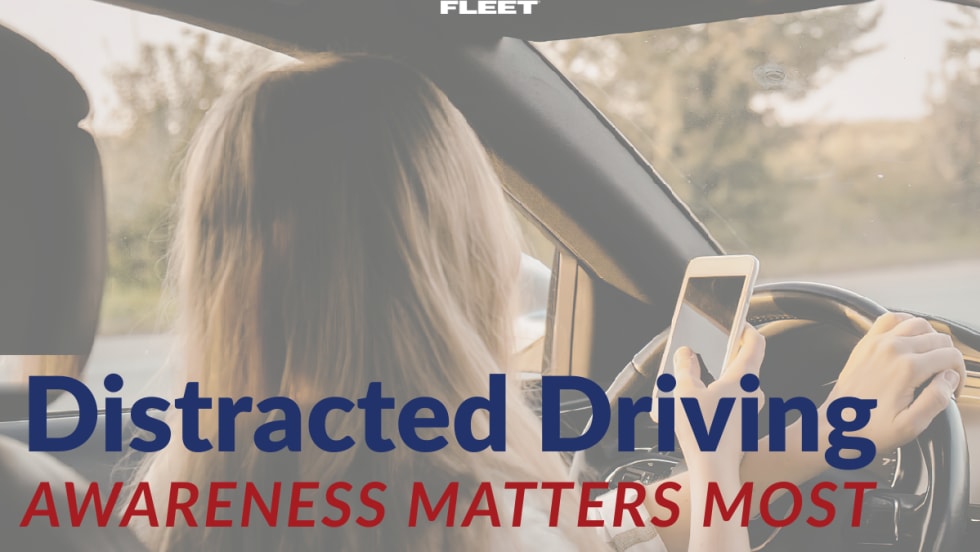
Distracted driving remains one of the most persistent risks in fleet operations. New approaches focus on removing mobile device use entirely while adding real-time safety support.
As distraction risks evolve, fleets are turning to smarter, more connected technologies to better understand what’s happening behind the wheel. Part 2 explores how these tools are helping identify risky behaviors and improve visibility across operations.
Distracted driving is often measured by what we can see—phones in hand, eyes off the road. But what about the distractions we can’t? A recent incident raises a bigger question about awareness, attention, and why subtle risks so often go unnoticed.