




7 Automakers Initiate Air Bag Recall
The recalls involve seven different automakers, whose dealers will replace any defective air bag inflators free of charge.
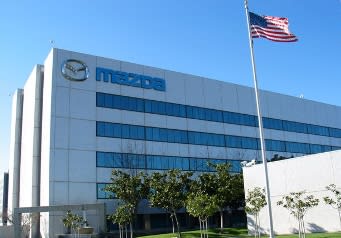
Mazda North American Operations is among the automakers involved in the Takata airbag inflator recalls. Photo of Irvine, Calif., headquarters courtesy of Mazda.
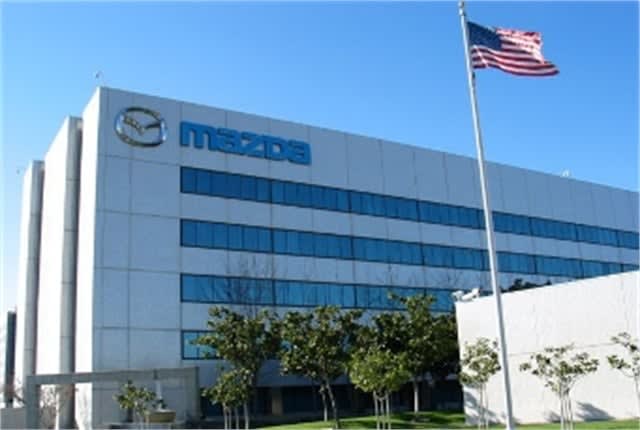
Mazda North American Operations is among the automakers involved in the Takata airbag inflator recalls. Photo of Irvine, Calif., headquarters courtesy of Mazda.
The National Highway Traffic Safety Administration on June 23 announced eight separate recalls aimed at replacing any defective Takata-brand air bag inflators.
The Takata-manufactured air bag inflators run the risk of rupturing and injuring occupants during an air bag deployment, NHTSA said. The recalls involve vehicles manufactured by seven different automakers — Mazda, Chrysler, Honda, Toyota, BMW, Ford and Nissan.
If a frontal airbag deploys during a crash in these vehicles, a defective air bag inflator might rupture as a result of excessive internal pressure, NHTSA said. Such a rupture could release metal fragments that may strike and injure vehicle occupants.
Dealers will install any needed replacement air bag inflator parts free of charge.
"Today’s action is influenced by a NHTSA investigation into six reports of air bag inflator ruptures, all of which occurred in Florida and Puerto Rico," NHTSA said in a released statement. "Based on the limited data available at this time, NHTSA supports efforts by automakers to address the immediate risk in areas that have consistently hot, humid conditions over extended periods of time."
The first recall involves certain Chrysler vehicles originally sold in, or now registered in, Florida, Puerto Rico, Hawaii and the U.S. Virgin Islands. Chrysler, however, hasn’t yet released a list of the models involved. The recall covers driver- and passenger-side frontal air bag inflators.
The second recall covers Honda vehicles originally sold in, or eventually registered in, Alabama, Florida, Georgia, Hawaii, Louisiana, Mississippi, South Carolina, Texas, Puerto Rico and the U.S. Virgin Islands. This recall involves passenger-side frontal airbag inflators in 2003-2005 model-year Accord, Civic, CR-V, Element, Pilot and Acura MDX vehicles. The action also covers airbag inflators in 2003-2004 MY Odyssey minivans and 2005 MY Acura RL sedans.
The third recall involves driver-side frontal air bag inflators in certain Honda vehicles in the same states and territories as the second recall. This action covers 2001-2007 MY Accord (4-cylinder), 2001-2002 MY Accord (V6), 2001-2005 MY Civic, 2002-2006 MY CR-V, 2003-2011 MY Element, 2002-2004 MY Odyssey, 2003-2007 MY Pilot, 2006 MY Ridgeline, 2003-2006 Acura MDX and 2002-2003 MY TL/CL vehicles.
The fourth recall involves passenger-side frontal air bag inflators in certain 2003-2005 MY Toyota vehicles now registered in Florida, Puerto Rico, Hawaii and the U.S. Virgin Islands. The recall covers 2003-2005 MY Toyota Corolla, Matrix, Sequoia, Tundra, and Lexus SC430 vehicles.
Toyota previously announced these recall plans on June 11. This recall also includes Pontiac Vibe cars manufactured by a Toyota-General Motors joint venture. GM dealers will handle any necessary replacement part installations in the Vibes.
The fifth recall covers passenger- and driver-side frontal air bag inflators in 2001-2005 MY BMW 325i, 325xi, 330i and 330xi vehicles and 2001-2006 MY 325Ci, 330Ci vehicles currently registered in Florida, Puerto Rico, Hawaii and the U.S. Virgin Islands. This recall is expected to get under way in August.
The sixth recall involves driver- and passenger-side frontal air bag inflators in 34,600 Mazda vehicles originally sold in, or currently registered in, Florida, Puerto Rico and Hawaii. These include 2003-2007 MY Mazda6 cars, 2006-2007 MY Mazdaspeed6 cars, 2004 MY MPV minivans and 2004-2008 MY RX-8 sports cars.
The seventh recall covers frontal air bag inflators in 58,669 2005-2007 MY Ford Mustang, 2005-2006 MY GT and 2004 MY Ranger vehicles. In the Mustangs, the driver-side airbag inflators are involved. But in the Rangers, the passenger-side airbag inflators are involved. The recall covers both frontal airbag inflators in the GT vehicles. These Ford vehicles were originally sold in, or are now registered in, Florida, Puerto Rico, Hawaii and the U.S. Virgin Islands.
The eighth recall concerns passenger-side frontal air bag inflators in certain Nissan vehicles sold in, or currently registered in, Florida, Puerto Rico, Hawaii and the U.S. Virgin Islands. Details of the covered models aren't yet available, but the recall is expected to begin in July.
More Safety

Nexar-Nauto Merger Aims to Give Fleets Better Safety Intelligence Through Larger Driving Dataset
Stefan Heck tells Automotive Fleet that combining more than 10 billion miles of driving history with Nexar's AI models will give fleets deeper insights into driver risk and roadway conditions than either company could provide independently.
Read More →
Don't Wait for a Crisis: 5 Ways to Build Mental Health Into Your Fleet Safety Program
For Suicide Prevention Month, fleet and safety leaders have an opportunity to put mental health where it belongs: at the center of workplace safety.
Read More →
How Camera Data Can Strengthen a Fleet’s Insurance Renewal
Insights from a commercial insurance carrier and a broker show how fleets can turn video telematic data, driver coaching, and improved claims results into a stronger case at insurance renewal.
Read More →
The Safest Fleets Aren’t the Ones with the Most Technology
You’ve made the telematics investment. Here’s how to capture the other half of its value and build the safest fleet on the road.
Read More →
Hidden in Plain Sight: Fleet Compliance Risks
Fleet compliance isn't just about having policies — it's about consistently enforcing them. This practical guide reveals six hidden compliance risks common in public sector and shared fleet operations and outlines proven strategies to improve visibility, accountability, and audit readiness
Read More →
NETS Sets 2026 Fleet Safety Benchmark Conference for Indianapolis
The Sept. 15–17 program will feature fleet benchmarking data, case studies, emerging technologies, and implementation strategies while running alongside the NSC Safety Congress & Expo.
Read More →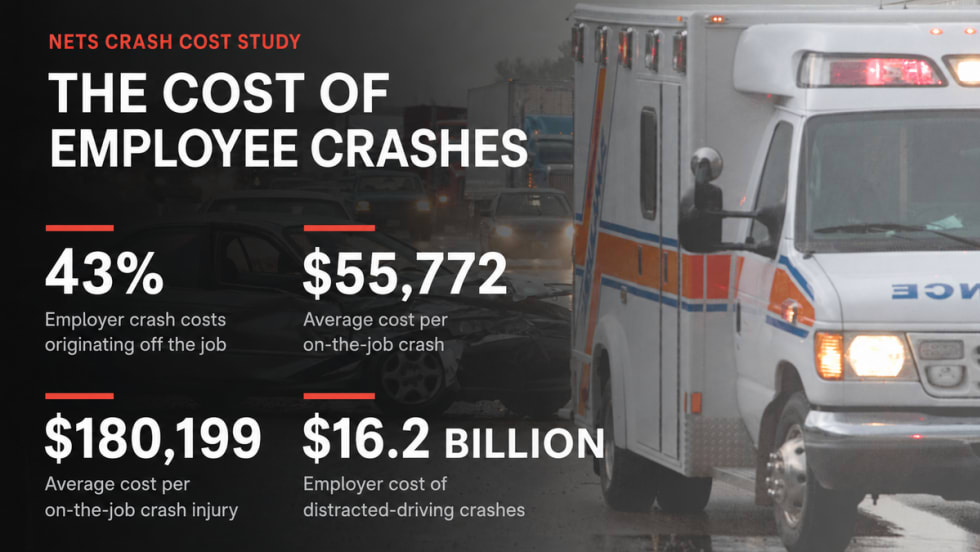
Off-the-Job Crashes Account for 43% of Employers’ $61.7 Billion Crash Burden
NETS quantifies costs dispersed across fleet, risk, HR, and other departments while providing new per-crash benchmarks for employers.
Read More →
Ram Recalls More Than 1.27 Million 1500 Pickups for Seat Belt Anchor Issue
The recall affects certain 2019-2026 Ram 1500 pickups that may have improperly attached second-row seat belt buckle anchors.
Read More →
How Better Visibility Cut Speeding Violations by 48%
Fleet leaders don't need more data, they need clearer visibility into what the data is saying. This case study explores how one utility replaced speeding-event counts with a single metric — miles driven in violation — to strengthen safety and significantly reduce speeding violations.
Read More →
Operation Safe Driver Week: Why the Industry's Oldest Safety Campaign Still Matters to Fleets
A look at how a 2007 enforcement initiative became one of the most consequential weeks on the fleet safety calendar, and what it means for your drivers in 2026.
Read More →