




Honda LaneWatch Blind Spot Display Wins Award from Good Housekeeping
The system, available on the 2013 model-year Accord and Crosstour, helps the driver locate objects in the right-side blind spot.
Honda's LaneWatch blind spot display has won a Good Housekeeping 2013 "Very Innovative Products" (VIP) Award. LaneWatch is the only automotive product to earn this distinction for 2013 and one of only nine innovative new product winners overall.
Good Housekeeping's 2013 VIP award winners were chosen from more than 1,500 new products evaluated by the scientists and engineers at the Good Housekeeping Research Institute during the past year in the magazine's product-testing laboratory. Before any product can be named a VIP award winner, it must also pass the Research Institute's evaluations for performance and safety.
LaneWatch debuted on the all-new 2013 Accord, which recently earned the Insurance Institute for Highway Safety's (IIHS) new Top Safety Pick+ designation. LaneWatch is now also available on the 2013 Crosstour.
LaneWatch uses a camera mounted on the passenger-side mirror to display real-time images of the vehicle's right-side blind spot on an 8-inch color dashboard display. The image appears when the right turn signal is activated, or when a button on the end of the turn signal stalk is pressed.
"Automotive products don't often win Good Housekeeping's VIP awards, and that makes it even sweeter to have LaneWatch listed among the best new consumer products of 2013," said Mike Accavitti, vice president of national marketing operations for American Honda Motor Co. Inc.
The typical field of view for a passenger-side mirror is approximately 18 to 22 degrees, but the LaneWatch field-of-view is about four times greater, or approximately 80 degrees. The system helps the driver to see traffic, as well as pedestrians, bicycles or other objects in the vehicle's blind spot.
To help make judging distance easier, the display has three reference lines. Drivers are encouraged to visually confirm roadway conditions prior to changing lanes.
More Safety

From Driver Well-Being to EV Charging | AF News Recap
Mental health belongs in the fleet safety conversation. This week, we’re looking at five ways fleets can support employee well-being before a crisis, plus Holman’s expansion in Mexico, new one-day Fleet Forward passes, and why EV charging demand is outpacing infrastructure growth.
Read More →
Nexar-Nauto Merger Aims to Give Fleets Better Safety Intelligence Through Larger Driving Dataset
Stefan Heck tells Automotive Fleet that combining more than 10 billion miles of driving history with Nexar's AI models will give fleets deeper insights into driver risk and roadway conditions than either company could provide independently.
Read More →
Don't Wait for a Crisis: 5 Ways to Build Mental Health Into Your Fleet Safety Program
For Suicide Prevention Month, fleet and safety leaders have an opportunity to put mental health where it belongs: at the center of workplace safety.
Read More →
How Camera Data Can Strengthen a Fleet’s Insurance Renewal
Insights from a commercial insurance carrier and a broker show how fleets can turn video telematic data, driver coaching, and improved claims results into a stronger case at insurance renewal.
Read More →
The Safest Fleets Aren’t the Ones with the Most Technology
You’ve made the telematics investment. Here’s how to capture the other half of its value and build the safest fleet on the road.
Read More →
Hidden in Plain Sight: Fleet Compliance Risks
Fleet compliance isn't just about having policies — it's about consistently enforcing them. This practical guide reveals six hidden compliance risks common in public sector and shared fleet operations and outlines proven strategies to improve visibility, accountability, and audit readiness
Read More →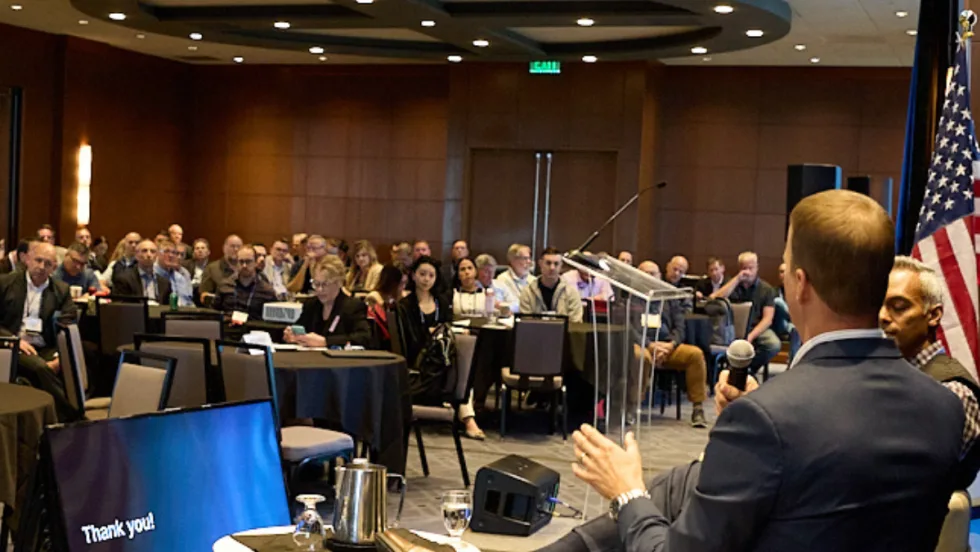
NETS Sets 2026 Fleet Safety Benchmark Conference for Indianapolis
The Sept. 15–17 program will feature fleet benchmarking data, case studies, emerging technologies, and implementation strategies while running alongside the NSC Safety Congress & Expo.
Read More →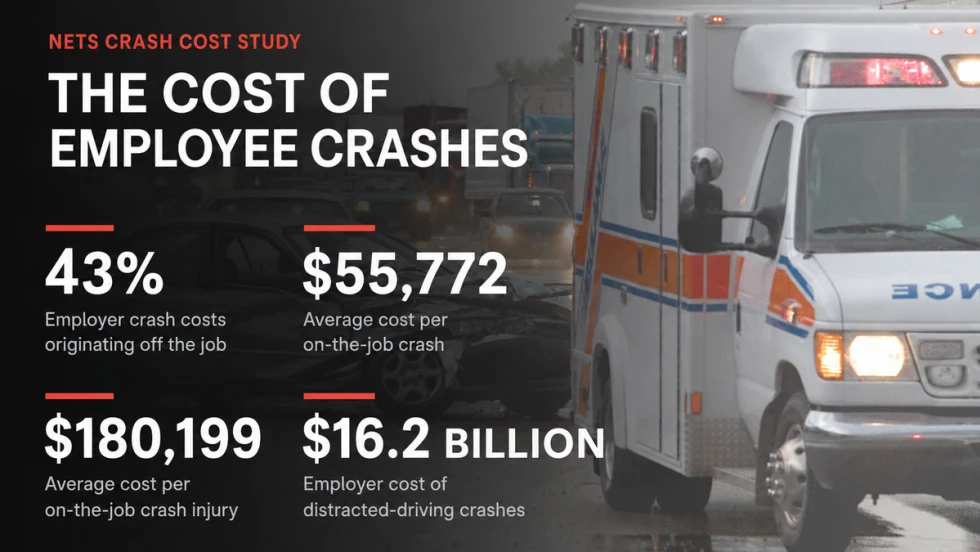
Off-the-Job Crashes Account for 43% of Employers’ $61.7 Billion Crash Burden
NETS quantifies costs dispersed across fleet, risk, HR, and other departments while providing new per-crash benchmarks for employers.
Read More →
Ram Recalls More Than 1.27 Million 1500 Pickups for Seat Belt Anchor Issue
The recall affects certain 2019-2026 Ram 1500 pickups that may have improperly attached second-row seat belt buckle anchors.
Read More →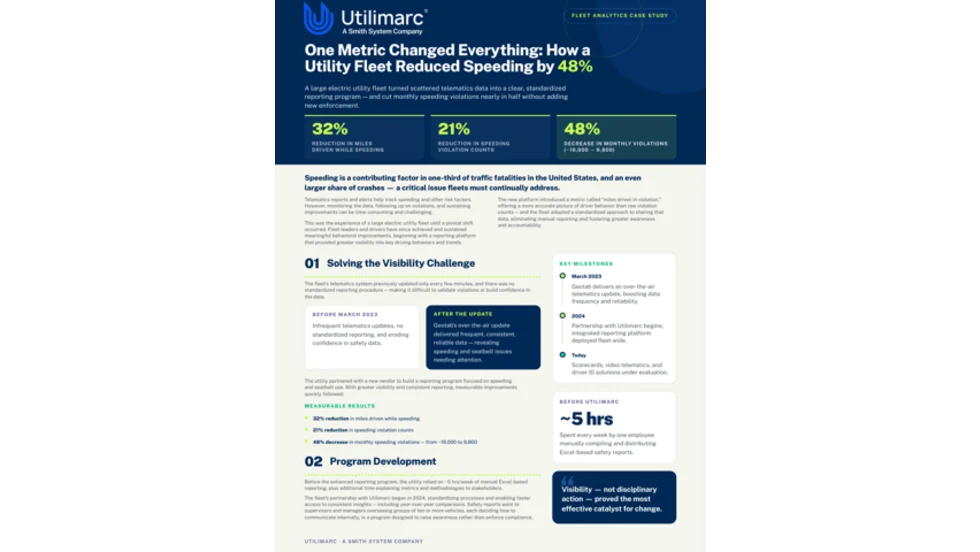
How Better Visibility Cut Speeding Violations by 48%
Fleet leaders don't need more data, they need clearer visibility into what the data is saying. This case study explores how one utility replaced speeding-event counts with a single metric — miles driven in violation — to strengthen safety and significantly reduce speeding violations.
Read More →