




Ford Adopts ‘One Manufacturing’ System to Reduce Production Costs, Improve Flexibility
TRAVERSE CITY, MI – Ford Motor Co. announced it implemented a new manufacturing operating system, called “One Manufacturing,” that will help the company improve efficiency, increase manufacturing capacity utilization, and reduce overall production costs.
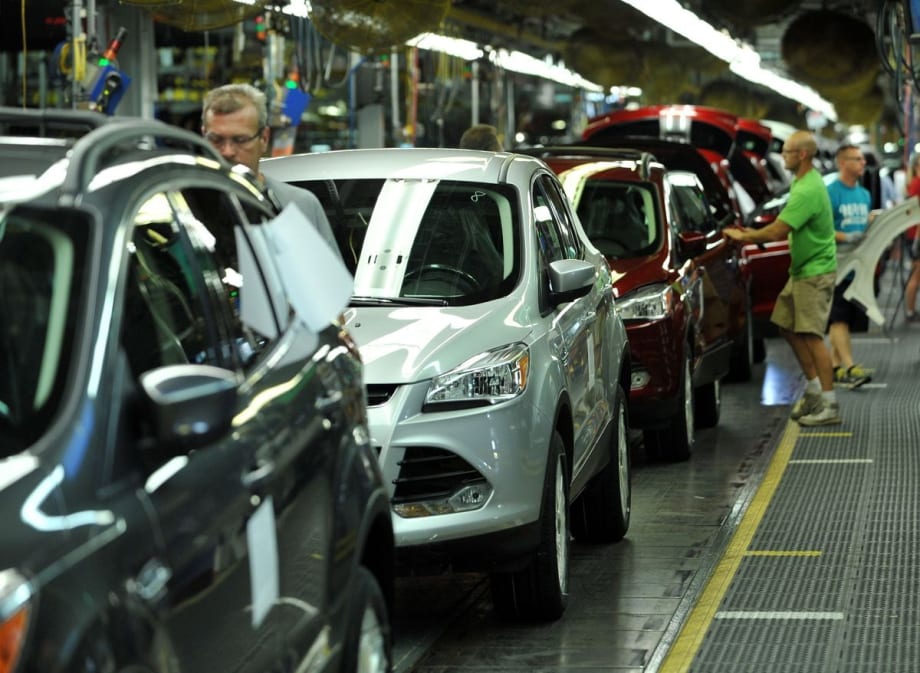
Workers at Ford's Louisville Assembly Plant assemble the all-new Escape after an employee celebration to mark the $600 million transformation of the facility. Ford added 1,800 jobs for a second shift at the plant earlier this year, and will be adding another 1,300 to a third shift starting in the third quarter. Photo by: Sam VarnHagen/Ford Motor Co.

Workers at Ford's Louisville Assembly Plant assemble the all-new Escape after an employee celebration to mark the $600 million transformation of the facility. Ford added 1,800 jobs for a second shift at the plant earlier this year, and will be adding another 1,300 to a third shift starting in the third quarter. Photo by: Sam VarnHagen/Ford Motor Co.
TRAVERSE CITY, MI – Ford Motor Co. announced it implemented a new manufacturing operating system, called “One Manufacturing,” that will help the company improve efficiency, increase manufacturing capacity utilization, and reduce overall production costs.
This new manufacturing system largely involves the use of common manufacturing processes and standard systems for tracking material, delivery, maintenance, and environmental costs. It also involves more use of virtual tools that allow Ford to reduce the cost of new plants and improve model changeover efficiencies.
Ford reported that last year, 55% of its operations had flexible body shops. This figure will increase to 65% in 2012, and that as the automaker opens new plants, each one will have a flexible body shop. By 2015, Ford will be able to produce 25% more derivatives of existing vehicles per plant than in 2011.
Next, these process improvements will allow Ford to take advantage of global economies of scale and improve its capacity utilization. By 2016, Ford’s global capacity utilization on a two-shift basis will increase 27% when compared with 2011.
Virtual tools allow Ford to simulate how vehicles can be assembled in order to design assembly lines that reduce the potential for injuries and accidents while improving quality. Since 2006, the automaker reported it has reduced the number of manufacturing build issues when it first produces a vehicle by more than 90%. In addition, virtual tools have reduced the investment required to assemble a vehicle by more than 20% since 2009, and the company has reduced the investment to produce a vehicle derivative by 60%. Ford said that greater use of virtual tools and standard processes will reduce total vehicle investment costs by 8% per year going forward.
The company noted it is expanding in its Asia Pacific Africa (APA) region, adding nine new plants in countries in that region. Ford stated this will increase APA’s capacity to produce 2.9 million vehicles a year. All of these changes are in line with the company's "One Ford" plan to streamline production leverage the company's global manufacturing capabilities.
“It is critical that all of our assembly operations, wherever they are located, speak the same language when it comes to producing high-quality vehicles in a safe and efficient way,” said John Fleming, Ford executive vice president, Global Manufacturing.
More Operations

How Fleets Can Recruit and Train Veterans for Technician Roles
Here's how the technician shortage has affected uptime for fleets, and what to do about it.
Read More →
Avis Budget Group Deploys Neology Toll Management Technology Across Major Brands
Neology’s neoFleet platform will manage toll transactions and toll-authority operations for vehicles across Avis, Budget, Payless, Budget Truck and Zipcar.
Read More →
Fleet Personal-Use Charges Edge Higher in 2026
Nearly eight in 10 surveyed fleets allow personal use of company vehicles, while just over half of respondents report charging employees for the privilege.
Read More →
The Future of Fleet + What’s Changing Right Now | AF News Recap
Could developments overseas offer a preview of what’s coming for U.S. fleets? This week, we’re looking at the future of AI, autonomy, and electrification, plus Ford Pro’s new certified pre-owned program, smarter vehicle offboarding, and a new way for fleets to manage toll expenses.
Read More →
How to Handle Vehicle Offboarding
What do fleet managers need to do when a driver leaves?
Read More →
Fleet Manager’s Ultimate Playbook: Navigating the New Standard in OEM Connectivity
Rising operating costs, driver safety concerns, and unplanned downtime are putting unprecedented pressure on modern fleets. Discover how fleet managers use embedded OEM connectivity and real-time vehicle data to cut TCO, prevent downtime, and protect drivers without aftermarket telematics hardware.
Read More →
U.S. Bank Adds Verra Mobility Toll Management to Voyager Fleet Platform
The integration allows U.S. Bank Voyager fleet customers to manage toll payments and violations alongside fuel, EV charging and maintenance expenses.
Read More →
ADAS Prevents Crashes. But Repairs Cost More | AF News Recap
ADAS-equipped vehicles may crash less often, but they can cost more when they do. This week, we’re breaking down what that tradeoff means for fleets, plus Subaru’s first Forester Wilderness Hybrid, Nissan’s new e-POWER Rogue, and why Calstart has become Catalyst Mobility.
Read More →
Moventum Fleet Management Names Mark Iorillo Head of Sales
Iorillo brings nearly 20 years of fleet management and sales experience to the role, including previous positions at Element Fleet Management, CEI, Donlen and Ryder.
Read More →
Fleet Has a Talent Pipeline Problem. What Comes Next? | AF News Recap
Where will fleet’s next generation of leaders come from? This week, we’re looking at the industry’s talent pipeline, what certification can add to a fleet career, how to build an award-worthy track record, and the return of Automotive Fleet’s Personal Use Survey.
Read More →