




HLDI Report Says Autonomous Braking and Adaptive Headlights Reduce Collision Claims & Injuries
ARLINGTON, VA – The Highway Loss Data Institute (HLDI) conducted a study of new advanced crash avoidance technologies and found that forward collision avoidance systems have the greatest impact on reducing crash incidents.
ARLINGTON, VA – The Highway Loss Data Institute (HLDI) conducted a study of new advanced crash avoidance technologies and found that forward collision avoidance systems have the greatest impact on reducing crash incidents. Two technologies in particular, autonomous braking and adaptive headlights, showed the most significant crash reduction results.
"As more automakers offer advanced technologies on their vehicles, insurance data provide an early glimpse of how these features perform in the real world," said Matt Moore, vice president of HLDI, an affiliate of the Insurance Institute for Highway Safety (IIHS). "So far, forward collision technology is reducing claims, particularly for damage to other vehicles, and adaptive headlights are having an even bigger impact than we had anticipated."
According to the Insurance Institute for Highway Safety (IIHS), of which the HLDI is a research organization that supports the IIHS’ efforts, HLDI analysts looked at how new safety features affected claim frequency under a range of different insurance coverage types for damage and injuries. In this study, HLDI said all of the features it evaluated were optional equipment rather than standard. Also, HLDI controlled for factors that could influence claim rates (driver age, gender, garaging state, and collision deductible).
The organization measured frequency as the number of claims relative to the number of years the vehicle has been insured. HLDI said it found “clear patterns” under property damage liability (PDL) insurance, which covers damage caused by the insured vehicle to another vehicle, and collision insurance, which covers damage to the insured vehicle itself.
To start, HLDI said it evaluated the forward collision systems on Acura, Mercedes-Benz, and Volvo vehicles. Forward collision systems alert a driver if the vehicle is moving too fast and is likely to collide with a vehicle ahead. The PDL frequencies for the Acura and Mercedes models were 14% lower when compared with the same models without the optional forward collision systems. The organization said Volvo’s autonomous braking system also reduced crashes by 10% but noted that in this case the finding wasn’t statistically significant. HLDI also noted that Volvo includes lane departure warning and fatigue warning as part of the overall safety system, so the result could be affected by the overall safety system rather than just forward collision.
When studying adaptive headlights on Acura, Mazda, Mercedes, and Volvo models, HLDI found PDL claims fell by up to 10% in models equipped with this technology. Adaptive headlights adjust the horizontal aim of the headlights depending on steering input, vehicle speed, among other factors. HLDI said this result surprised its analysts since roughly 7% of crashes reported to police occur between 9 p.m. and 6 a.m., and that an even smaller percentage of collisions involve multiple vehicles at night on a curve in a road. HLDI said brightness or range may be factors that help reduce collisions, but it didn’t find consistent differences among the vehicles analyzed.
HLDI researchers only found a small reduction in single-vehicle crashes when looking at collision coverage due to adaptive headlight use, but saw a substantial drop in injury claims for vehicle occupants in the insured vehicle, and to others on the road, when using this headlight technology (save for one make).
One interesting finding, though not statistically significant, was a mixed result for lane departure warning systems. HLDI found increased claim rates, and injuries to occupants of insured vehicles, in Buick and Mercedes models with lane departure warning systems but reduced claim frequencies for Volvo models (compared with those without the feature). HLDI noted that the Volvo model claim frequencies evaluated were for models that bundled forward collision warning with automatic braking. One reason for the lack of a significant effect in crash reduction for lane departure warning systems is that few crashes overall result from drifting off a road.
"Lane departure warning may end up saving lives down the road, but so far these particular versions aren't preventing insurance claims," Moore said. "It may be that drivers are getting too many false alarms, which could make them tune out the warnings or turn them off completely. Of course, that doesn't explain why the systems seem to increase claim rates, but we need to gather more data to see if that's truly happening."
HLDI hasn’t evaluated lane departure prevention systems yet (systems that take control of the vehicle if it drifts), only warning systems.
More Safety
The Safest Fleets Aren’t the Ones with the Most Technology
You’ve made the telematics investment. Here’s how to capture the other half of its value and build the safest fleet on the road.
Read More →
Hidden in Plain Sight: Fleet Compliance Risks
Fleet compliance isn't just about having policies — it's about consistently enforcing them. This practical guide reveals six hidden compliance risks common in public sector and shared fleet operations and outlines proven strategies to improve visibility, accountability, and audit readiness
Read More →
NETS Sets 2026 Fleet Safety Benchmark Conference for Indianapolis
The Sept. 15–17 program will feature fleet benchmarking data, case studies, emerging technologies, and implementation strategies while running alongside the NSC Safety Congress & Expo.
Read More →
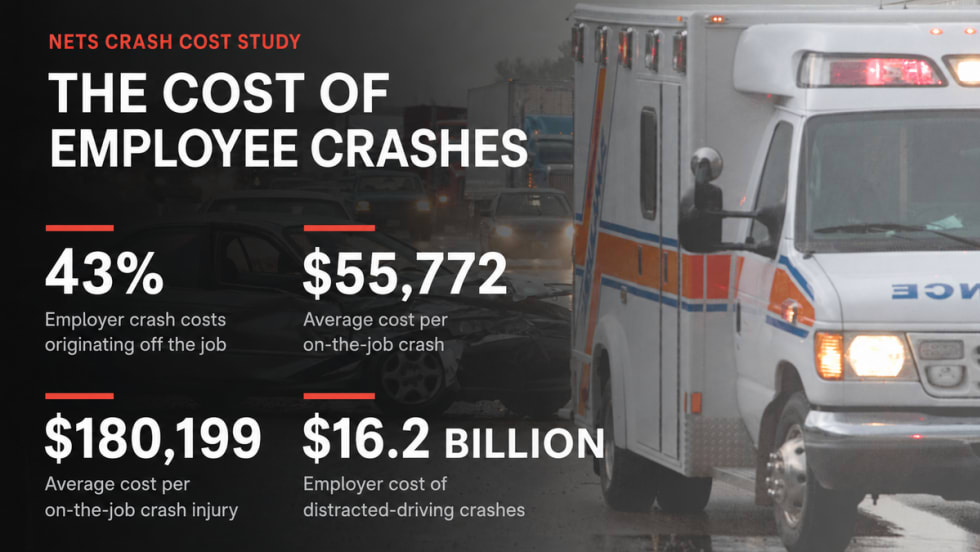
Off-the-Job Crashes Account for 43% of Employers’ $61.7 Billion Crash Burden
NETS quantifies costs dispersed across fleet, risk, HR, and other departments while providing new per-crash benchmarks for employers.
Read More →
Ram Recalls More Than 1.27 Million 1500 Pickups for Seat Belt Anchor Issue
The recall affects certain 2019-2026 Ram 1500 pickups that may have improperly attached second-row seat belt buckle anchors.
Read More →
How Better Visibility Cut Speeding Violations by 48%
Fleet leaders don't need more data, they need clearer visibility into what the data is saying. This case study explores how one utility replaced speeding-event counts with a single metric — miles driven in violation — to strengthen safety and significantly reduce speeding violations.
Read More →
Operation Safe Driver Week: Why the Industry's Oldest Safety Campaign Still Matters to Fleets
A look at how a 2007 enforcement initiative became one of the most consequential weeks on the fleet safety calendar, and what it means for your drivers in 2026.
Read More →
Nexar-Nauto Merger Aims to Give Fleets Better Safety Intelligence Through Larger Driving Dataset
Stefan Heck tells Automotive Fleet that combining more than 10 billion miles of driving history with Nexar's AI models will give fleets deeper insights into driver risk and roadway conditions than either company could provide independently.
Read More →
From Silos to Solutions: Relationship Management for Safer Fleets
From telematics adoption and driver accountability to policy consistency and risk mitigation, this episode breaks down what it really takes to build a safer fleet culture without slowing business down.
Read More →
IIHS Launches First Commercial Vehicle Safety Evaluations
The Insurance Institute for Highway Safety has begun evaluating heavy-duty pickups and cargo vans for driver protection. Which models earned top marks?
Read More →