




Fleet Sales Decline in January Across the Board
Sales of fleet vehicles to commercial, daily rental, and government buyers slipped lower in January, despite year-over-year growth in sales of trucks, vans, and SUVs, according to the automakers and Automotive Fleet data.

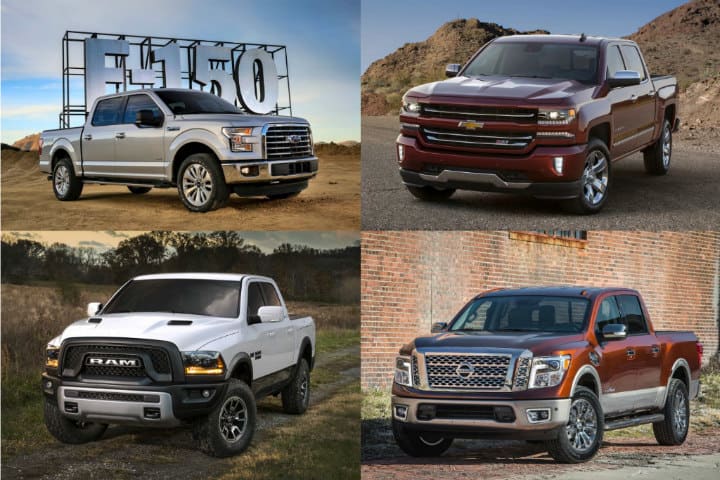
(clockwise from upper l.) 2017 F-150, Silverado 1500, Titan, and Ram 1500
(clockwise from upper l.) 2017 F-150, Silverado 1500, Titan, and Ram 1500
Sales of fleet vehicles to commercial, daily rental, and government buyers slipped lower in January, despite year-over-year growth in sales of trucks, vans, and SUVs, according to the automakers and Automotive Fleet data.
Eight manufacturers sold 44,876 vehicles to commercial fleets in January, which was 4.5% fewer that those sold in January of 2016. Deliveries to rental fleets fell 6.6% to 139,888, while sales to government agencies fell 5.6% to 19,056, according to Automotive Fleet data.
Of the commercial deliveries, sales of trucks, vans, and SUVs fell 2.5% to 38,683 while sales of passenger cars fell 15.3% to 6,193 units. Truck deliveries to daily rental increased 3.3% to 75,847, while passenger cars to rental fell 16.2% to 64,041. Government fleet buyers added 2.1% more truck-based vehicles (15,107) and 32.3% fewer cars (2,885).
General Motors reported a 3.8% decline to 195,909 units in total sales from a year ago, but said GM Fleet saw a significant increase in deliveries to government fleet purchasers. The Chevrolet Silverado and Suburban were among the strongest sellers to fleets. GM sold 40,899 vehicles to commercial users.
"Inside of those numbers, GM Fleet had very solid results," said Ed Peper, U.S. vice president of General Motors Fleet. "We saw a 12% increase in government deliveries, a 4% increase in small business deliveries, a 1% increase in commercial sales and a 1% decrease in daily rental deliveries. Among the standout products were our full-size Chevrolet and GMC vans, which were up 18%."
Ford's overall sales fell 6% to 120,400, while combined fleet sales declined 13% to 52,212 vehicles from a year ago, while overall sales fell 1%. Fleet sales made up 30.2% of total sales for the month. The decline in fleet sales "reflects a strong year-ago comparison, with fleet customer orders front-loaded at the beginning of 2016," according to the company.
Ford sold 57,995 F-Series trucks in January (a 13% increase), which was supported mostly by retail buyers of the F-150 and 2017 Super Duty, according to Ford.
"The new year brought strong consumer demand for F-Series, Lincoln and record SUV sales, especially high-end models,” said Mark LaNeve, Ford's vice president of U.S. marketing, sales and service. "This drove near-record company average transaction prices for Ford, up $2,500 versus a year ago and far outpacing the overall January industry increase of $550."
Fiat Chrysler sold 152,218 units for an 11% decline compared to January of 2016. Fleet sales fell 31% to 42,868 units, and now represent 28% of overall sales. Sales of Ram Truck pickups and vans increased 5%, and pickup truck sales increased 4%, the company announced.
FCA's Ram ProMaster full-size van posted a strong month with a 43% sales gain to 3,351 units. Sales of the ProMaster City compact van fell 20% to 925 units.
More Operations

How Fleets Can Recruit and Train Veterans for Technician Roles
Here's how the technician shortage has affected uptime for fleets, and what to do about it.
Read More →
Avis Budget Group Deploys Neology Toll Management Technology Across Major Brands
Neology’s neoFleet platform will manage toll transactions and toll-authority operations for vehicles across Avis, Budget, Payless, Budget Truck and Zipcar.
Read More →
Fleet Personal-Use Charges Edge Higher in 2026
Nearly eight in 10 surveyed fleets allow personal use of company vehicles, while just over half of respondents report charging employees for the privilege.
Read More →
The Future of Fleet + What’s Changing Right Now | AF News Recap
Could developments overseas offer a preview of what’s coming for U.S. fleets? This week, we’re looking at the future of AI, autonomy, and electrification, plus Ford Pro’s new certified pre-owned program, smarter vehicle offboarding, and a new way for fleets to manage toll expenses.
Read More →
How to Handle Vehicle Offboarding
What do fleet managers need to do when a driver leaves?
Read More →
Fleet Manager’s Ultimate Playbook: Navigating the New Standard in OEM Connectivity
Rising operating costs, driver safety concerns, and unplanned downtime are putting unprecedented pressure on modern fleets. Discover how fleet managers use embedded OEM connectivity and real-time vehicle data to cut TCO, prevent downtime, and protect drivers without aftermarket telematics hardware.
Read More →
U.S. Bank Adds Verra Mobility Toll Management to Voyager Fleet Platform
The integration allows U.S. Bank Voyager fleet customers to manage toll payments and violations alongside fuel, EV charging and maintenance expenses.
Read More →
ADAS Prevents Crashes. But Repairs Cost More | AF News Recap
ADAS-equipped vehicles may crash less often, but they can cost more when they do. This week, we’re breaking down what that tradeoff means for fleets, plus Subaru’s first Forester Wilderness Hybrid, Nissan’s new e-POWER Rogue, and why Calstart has become Catalyst Mobility.
Read More →
Moventum Fleet Management Names Mark Iorillo Head of Sales
Iorillo brings nearly 20 years of fleet management and sales experience to the role, including previous positions at Element Fleet Management, CEI, Donlen and Ryder.
Read More →
Fleet Has a Talent Pipeline Problem. What Comes Next? | AF News Recap
Where will fleet’s next generation of leaders come from? This week, we’re looking at the industry’s talent pipeline, what certification can add to a fleet career, how to build an award-worthy track record, and the return of Automotive Fleet’s Personal Use Survey.
Read More →