





Related: Updated F-150 3.5L, New 10-Speed Improves Fuel Economy
Have Pickup Sales Peaked?
Ford's decision to idle production of its F-150 pickup this week has followed several months of slowing demand in retail and fleet channels and may point to a larger trend in pickup sales.
October 20, 2016
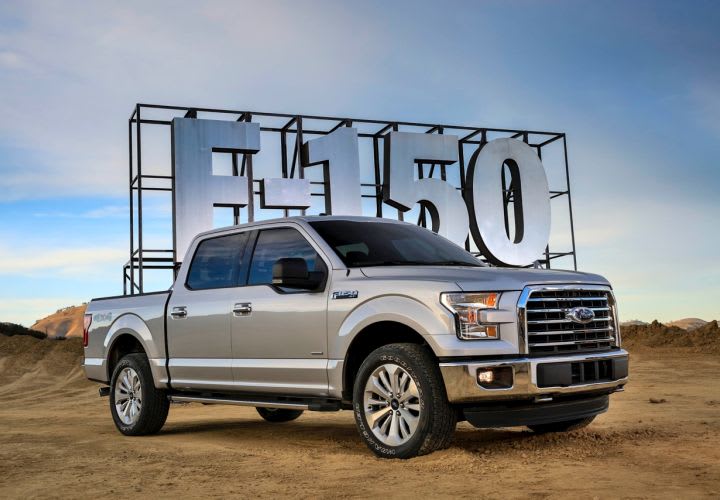
Photo of 2017 F-150 courtesy of Ford.
4 min to read
Photo of 2017 F-150 courtesy of Ford.
Ford's decision to idle production of its F-150 pickup this week has followed several months of slowing demand in retail and fleet channels and may point to a larger trend in pickup sales.
Pickup sales are expected to remain at near record levels and reach 2.19 million in 2016, which would be an increase from the 2.16 million pickups sold in 2015, according to LMC Automotive, J.D. Powers' market research unit. The forecaster expects pickup sales to return to 2.16 million by 2018.
"Topline sales forecast is basically flat from 2015 to 2018, so growth is in the rearview mirror for now," said Jeff Schuster, senior vice president of forecasting at LMC Automotive. "Risk is mounting as interest rates are expected to rise, credit could tighten and a large number of off-lease vehicles creates more used car substitutes for new car sales."
Schuster described the outlook as "relatively stable" in the near term.
"Much of this is due to low fuel prices, an improving economy and housing market as well as the topline holding," he said. "Large pickup share is expected to remain in the 12.4% to 12.6% range, with 2016 at 12.6% and 2018 expected at 12.4%. We do expect competitive pressure to remain high and incentives to be used to drive some volume and share in the truck segment."
Strong pickup sales have been driven by a healthy housing market, said Brian Turmail, a spokesman for the Associated General Contractors of America.
"There is no doubt that as construction spending continues to remain robust, many construction firms will continue to invest in new trucks," Turmail said. "With construction employment at an eight-year high, construction workers, who make more than the average worker, are in a good position to invest in new personal vehicles too. And if my visits to most construction sites are representative, many of those vehicles will be pickup trucks. They are convenient for work and for weekends hauling the kinds of toys careers in construction afford."
Sales of F-Series trucks reached 73,884 in March and crossed the 70,000-unit mark again in April and June. Sales fell to 65,657 in July and reached 67,809 in September. Despite the recent slide, F-Series sales have increased 6% to 595,656 through September, which is the best year-to-date performance since 2006.
Ford will idle F-Series production at its Kansas City Assembly Plant the week of Oct. 24 to reduce supply at dealer lots. F-Series production remains unchanged at the Dearborn Truck Plant.
"We continue matching production with demand to ensure we are at our targeted inventories by year end," said Kelli Felker, Ford's manufacturing and labor communications manager.
Meanwhile, the Chevrolet Silverado has been building momentum in 2016 with sales of more than 50,000 units in July (54,116) and August (52,408). That's after sales started the year near the 40,000-unit level. Sales slid to 45,380 in September.
General Motors has been increasing supply of its Silverado and GMC Sierra in recent months, said Jim Cain, a GM spokesman.
"We're entering the strongest season of the year for pickup sales," Cain said. "The pickup market is stronger today than it was a year ago. We're carefully managing our inventories. We've had very lean stocks for most of the year. We're finally getting into a much more comfortable range."
Fiat Chrysler Automobiles' Ram Truck brand boosted sales in September, in part, by increasing retail incentives for older models. Ram sold 47,792 pickups, an 18.8% increase of 7,590 units from the August level of 40,202. Ram increased year-over-year pickup sales by 29%.
Incentive spending has been increasing across the board. In September, average retail incentive spend per unit reached $5,459, an increase from the $4,987 level in September of 2015, according to J.D. Power PIN data.
Average incentive per transaction price for Ram, GM, and Ford trucks reached 18.1%, 13%, and 11.8% in September, respectively.
Ram Truck views its sales increase as a result of vehicle quality, said Dave Elshoff, a Ram Truck spokesman.
"The 29% year-over-year increase in our September pickup truck sales are a good illustration of how the Ram Truck brand is drawing customers with great product," Elshoff said. "Our pickup-truck customers are attracted to Ram’s quality, reliability and durability."
Sales of trucks to commercial fleets have slipped in recent months, according to Automotive Fleet data. Truck-based sales fell 20.2% to 33,849 in September and remained flat in August at 42,193. This data combines trucks with SUV and van sales.
More Operations

How Fleets Can Recruit and Train Veterans for Technician Roles
Here's how the technician shortage has affected uptime for fleets, and what to do about it.
Read More →
Avis Budget Group Deploys Neology Toll Management Technology Across Major Brands
Neology’s neoFleet platform will manage toll transactions and toll-authority operations for vehicles across Avis, Budget, Payless, Budget Truck and Zipcar.
Read More →
Fleet Personal-Use Charges Edge Higher in 2026
Nearly eight in 10 surveyed fleets allow personal use of company vehicles, while just over half of respondents report charging employees for the privilege.
Read More →
The Future of Fleet + What’s Changing Right Now | AF News Recap
Could developments overseas offer a preview of what’s coming for U.S. fleets? This week, we’re looking at the future of AI, autonomy, and electrification, plus Ford Pro’s new certified pre-owned program, smarter vehicle offboarding, and a new way for fleets to manage toll expenses.
Read More →
How to Handle Vehicle Offboarding
What do fleet managers need to do when a driver leaves?
Read More →
Sponsored•October 1, 2026
Fleet Manager’s Ultimate Playbook: Navigating the New Standard in OEM Connectivity
Rising operating costs, driver safety concerns, and unplanned downtime are putting unprecedented pressure on modern fleets. Discover how fleet managers use embedded OEM connectivity and real-time vehicle data to cut TCO, prevent downtime, and protect drivers without aftermarket telematics hardware.
Read More →
U.S. Bank Adds Verra Mobility Toll Management to Voyager Fleet Platform
The integration allows U.S. Bank Voyager fleet customers to manage toll payments and violations alongside fuel, EV charging and maintenance expenses.
Read More →
ADAS Prevents Crashes. But Repairs Cost More | AF News Recap
ADAS-equipped vehicles may crash less often, but they can cost more when they do. This week, we’re breaking down what that tradeoff means for fleets, plus Subaru’s first Forester Wilderness Hybrid, Nissan’s new e-POWER Rogue, and why Calstart has become Catalyst Mobility.
Read More →
Moventum Fleet Management Names Mark Iorillo Head of Sales
Iorillo brings nearly 20 years of fleet management and sales experience to the role, including previous positions at Element Fleet Management, CEI, Donlen and Ryder.
Read More →
Fleet Has a Talent Pipeline Problem. What Comes Next? | AF News Recap
Where will fleet’s next generation of leaders come from? This week, we’re looking at the industry’s talent pipeline, what certification can add to a fleet career, how to build an award-worthy track record, and the return of Automotive Fleet’s Personal Use Survey.
Read More →