




90% of Ford Vehicles Share Front Seat Architecture
Nearly 90% of Ford vehicles sold in North America share a common front seat architecture that allows Ford to more easily implement features such as mutli-adjusting, massage, and heating/cooling that enhance vehicle comfort, according to a release.
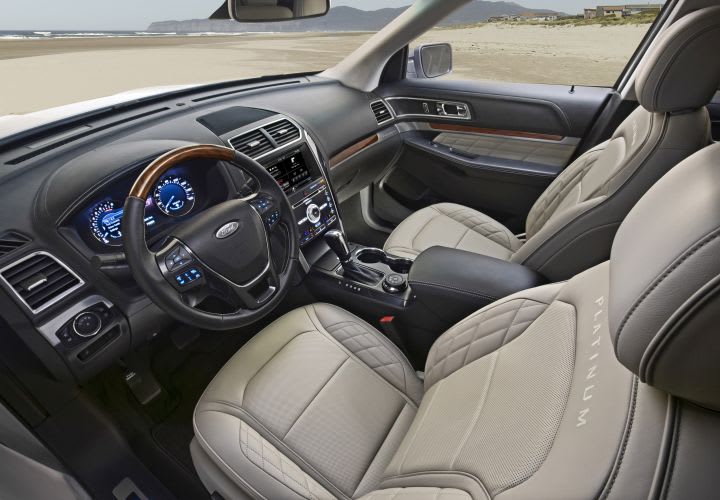
Photo of 2016 Explorer cabin courtesy of Ford.
Photo of 2016 Explorer cabin courtesy of Ford.
Nearly 90% of Ford vehicles sold in North America share a common front seat architecture that allows Ford to more easily implement features such as mutli-adjusting, massage, and heating/cooling that enhance vehicle comfort, according to a release.
Ford introduced its seat architecture in the 2013 model year on the Escape compact SUV and Fusion mid-size car. These two vehicles were among the top five most added to fleets in the 2013 calendar year, according to Automotive Fleet data. The seat design was later migrated throughout Ford's lineup.
The seats employ a design that makes them multi-adjustable with features such as thigh extensions and lumbar support. The seats can help reduce muscle fatigue and promote blood flow on longer journeys, and can provide a subtle massage for thighs and lower back, according to Ford.
During the design and engineering phase, the seat team focused on items such as H-points and hip-to-heel dimensions. These ratios represent the science that goes into creating in-vehicle comfort. Seats are designed to better cradle passengers at the hip and to prevent sliding while driving. Side bolsters and seat cushions allow more freedom of movement so drivers feel less confined.
The Ford seat team refers to the surfaces passengers touch and feel as "top hats" — leather or cloth seat covers atop foam padding. Beneath each top hat is a seat skeleton that serves as the basis for Ford's steadily climbing rankings for comfort.
Taking cues from the office furniture and first-class air travel industries, the Ford front seat architecture is ergonomically designed to ensure each seat cradles an occupant comfortably, snug in certain places with freedom to move in others, according to Dan Ferretti, Ford's global seats senior technical leader.
The seats have been added to Ford's 2016 Explorer mid-size SUV. The Platinum edition features 10-way adjustable seats.
More Operations

Here's When You Should Make an Exception to Fleet Policy
Fleet policies are designed to create consistency, but not every driver or situation fits neatly within standard rules.
Read More →
AI-Native or AI-Acquired: What Should Fleet Managers Look for in an AI Platform?
Six questions can help fleet managers look beyond AI marketing claims to evaluate integration, data access, and real-world operational performance.
Read More →
A buyer's guide to fleet management software in 2027
Buying fleet management software in 2027 means looking beyond features and price. As fleet operations, technology and expectations evolve, this guide explores what today’s fleet professionals should consider when choosing a system that can deliver value now and adapt to what comes next.
Read More →

What Will Shape the Next Era of Fleet Management?
EVs, AI, and autonomous vehicles are reshaping fleet management. Discover what’s ahead—and how fleet leaders can prepare for the next era.
Read More →
How Fleets Can Recruit and Train Veterans for Technician Roles
Here's how the technician shortage has affected uptime for fleets, and what to do about it.
Read More →
Avis Budget Group Deploys Neology Toll Management Technology Across Major Brands
Neology’s neoFleet platform will manage toll transactions and toll-authority operations for vehicles across Avis, Budget, Payless, Budget Truck and Zipcar.
Read More →
Fleet Personal-Use Charges Edge Higher in 2026
Nearly eight in 10 surveyed fleets allow personal use of company vehicles, while just over half of respondents report charging employees for the privilege.
Read More →
The Future of Fleet + What’s Changing Right Now | AF News Recap
Could developments overseas offer a preview of what’s coming for U.S. fleets? This week, we’re looking at the future of AI, autonomy, and electrification, plus Ford Pro’s new certified pre-owned program, smarter vehicle offboarding, and a new way for fleets to manage toll expenses.
Read More →
How to Handle Vehicle Offboarding
What do fleet managers need to do when a driver leaves?
Read More →
Fleet Manager’s Ultimate Playbook: Navigating the New Standard in OEM Connectivity
Rising operating costs, driver safety concerns, and unplanned downtime are putting unprecedented pressure on modern fleets. Discover how fleet managers use embedded OEM connectivity and real-time vehicle data to cut TCO, prevent downtime, and protect drivers without aftermarket telematics hardware.
Read More →