




Cadillac's XT5 Kicks Off 4 Luxury SUVs
Cadillac's 2017 Crossover Touring 5 (XT5), the automaker's entry into a new series of luxury crossovers.

Photo of the 2017 XT5 luxury crossover courtesy of Cadillac.
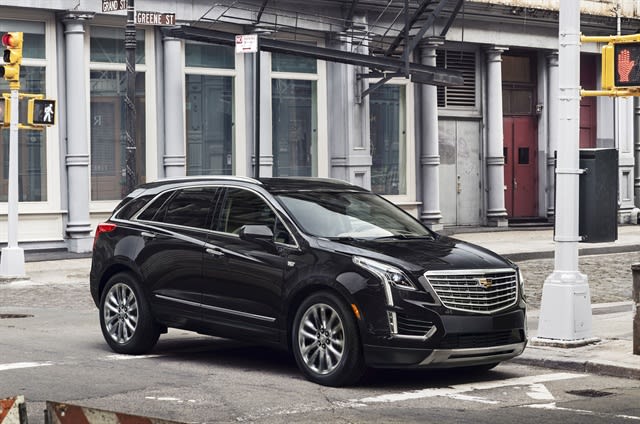
Photo of the 2017 XT5 luxury crossover courtesy of Cadillac.
Cadillac will uinveil its 2017 Crossover Touring 5 (XT5) SUV at the Los Angeles Auto Show, as the first of four new SUVs from General Motors' luxury unit to replace the outgoing SRX, Cadillac has announced.
The XT5 will joins Cadillac’s lineup immediately following the new range-topping CT6 sedan.
The luxury SUV will be powered by the new 3.6L V-6 engine fond in the brand’s ATS, CTS, and CT6. The engine has been redesigned and features cylinder deactivation technology that allows the engine to switch to a fuel-saving four-cylinder mode under low or moderate loads.
With an estimated peak output of 310-hp and 270 lb.-ft. of torque, the new V-6 uses variable valve timing. Cadillac’s new stop-start technology will automatically stop and start the engine when the vehicle is at rest at traffic stops to save fuel and reduce emissions.
The XT5 will include a new 8-speed automatic transmission that debuts Electronic Precision Shift – the first electronically controlled transmission shifter for a Cadillac. Electronic Precision Shift reduces noise and vibration, and allows further use of the cabin space with a storage space beneath the center console.
Cadillac’s new rear camera mirror system debuts on the XT5 and CT6 sedan. The system enhances the driver’s rear vision by 300% by using a video display applied over the conventional inside rearview mirror. A high dynamic range camera records wider images behind the car, streams the image to video processing software that “removes” obstacles such as the roof, rear pillars and rear seat passengers, projecting an unobstructed view to a liquid crystal display.
The XT5 will debut at the Los Angeles Auto Show this month, and will begin production in the U.S. and China in spring 2016.
More Operations
Here's When You Should Make an Exception to Fleet Policy
Fleet policies are designed to create consistency, but not every driver or situation fits neatly within standard rules.
Read More →
AI-Native or AI-Acquired: What Should Fleet Managers Look for in an AI Platform?
Six questions can help fleet managers look beyond AI marketing claims to evaluate integration, data access, and real-world operational performance.
Read More →
A buyer's guide to fleet management software in 2027
Buying fleet management software in 2027 means looking beyond features and price. As fleet operations, technology and expectations evolve, this guide explores what today’s fleet professionals should consider when choosing a system that can deliver value now and adapt to what comes next.
Read More →

What Will Shape the Next Era of Fleet Management?
EVs, AI, and autonomous vehicles are reshaping fleet management. Discover what’s ahead—and how fleet leaders can prepare for the next era.
Read More →
How Fleets Can Recruit and Train Veterans for Technician Roles
Here's how the technician shortage has affected uptime for fleets, and what to do about it.
Read More →
Avis Budget Group Deploys Neology Toll Management Technology Across Major Brands
Neology’s neoFleet platform will manage toll transactions and toll-authority operations for vehicles across Avis, Budget, Payless, Budget Truck and Zipcar.
Read More →
Fleet Personal-Use Charges Edge Higher in 2026
Nearly eight in 10 surveyed fleets allow personal use of company vehicles, while just over half of respondents report charging employees for the privilege.
Read More →
The Future of Fleet + What’s Changing Right Now | AF News Recap
Could developments overseas offer a preview of what’s coming for U.S. fleets? This week, we’re looking at the future of AI, autonomy, and electrification, plus Ford Pro’s new certified pre-owned program, smarter vehicle offboarding, and a new way for fleets to manage toll expenses.
Read More →
How to Handle Vehicle Offboarding
What do fleet managers need to do when a driver leaves?
Read More →
Fleet Manager’s Ultimate Playbook: Navigating the New Standard in OEM Connectivity
Rising operating costs, driver safety concerns, and unplanned downtime are putting unprecedented pressure on modern fleets. Discover how fleet managers use embedded OEM connectivity and real-time vehicle data to cut TCO, prevent downtime, and protect drivers without aftermarket telematics hardware.
Read More →