




2015 Silverado Offers Trio of EcoTec3 Engines
The 2015 Chevrolet Silverado offers three EcoTec3 engines with advanced fuel-saving technologies that enable fleets to choose the performance and fuel efficiency that best meets their needs.
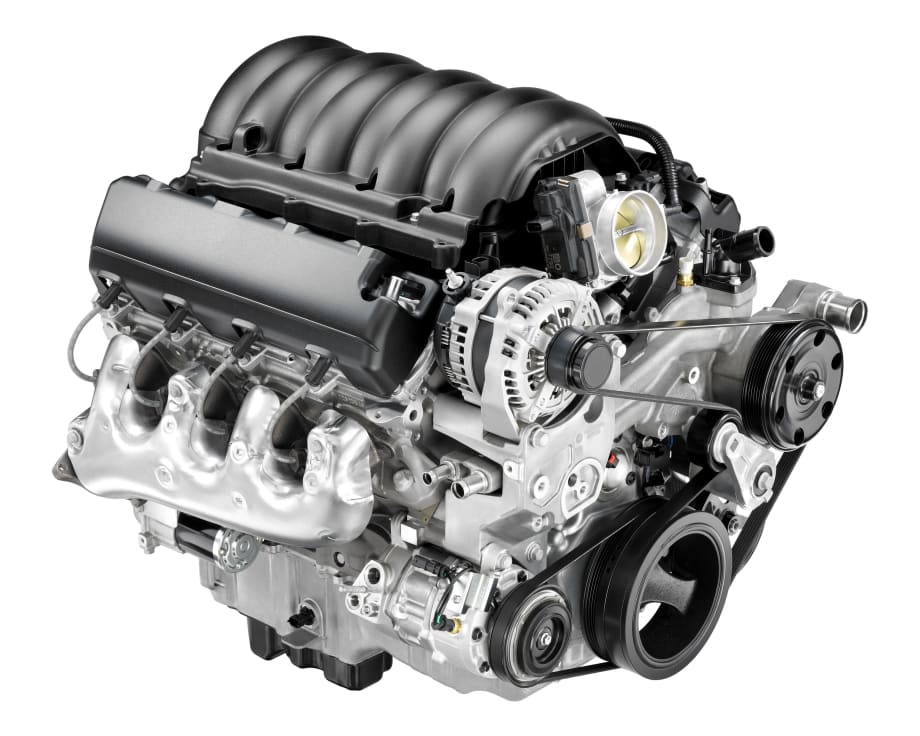
2014 5.3L V-8 EcoTec3 AFM VVT DI (L83) for Chevrolet Silverado and GMC Sierra. (PHOTO: General Motors)
2014 5.3L V-8 EcoTec3 AFM VVT DI (L83) for Chevrolet Silverado and GMC Sierra. (PHOTO: General Motors)
The 2015 Chevrolet Silverado offers three EcoTec3 engines with advanced fuel-saving technologies that enable fleets to choose the performance and fuel efficiency that best meets their needs, according to General Motors, and are:
4.3L V-6; 285 horsepower; 305 lb.-ft. of torque; up to 24 mpg EPA highway
5.3L V-8; 355 horsepower; 383 lb.-ft. of torque; up to 23 mpg EPA highway
6.2L V-8; 420 horsepower; 460 lb.-ft. of torque; up to 21 mpg EPA highway
Every EcoTec3 engine features advanced technologies such as direct fuel injection, continuously variable valve timing, and Active Fuel Management (cylinder deactivation) to provide power, torque, and efficiency across a broad range of operating conditions, according to the automaker.
“The latest Small Block engines are ideally suited to Silverado and to the tough jobs that pickup customers do every day,” said Jordan Lee, global chief engineer and program manager for Small Block engines at General Motors. “We give customers the power and torque of a full-size truck engine when they need it, then use Active Fuel Management and other advanced technologies to seamlessly shift to four-cylinder operation when the truck is under light loads, making the most of fuel efficiency.”
Silverado’s EcoTec3 engines are direct descendants of the original Small Block Chevy V-8, and benefit from more than 60 years – and more than 100 million engines’ worth – of continuous improvement.
The latest Gen 5 Small Block engine has endured tough testing, including a grueling performance durability procedure, where it was subjected to a high-speed/high-load torture session that simulated full-throttle blasts from the equivalent of 0 to 120 mph. With simulated transmission shift points inserted during the high-load test, the engine cycles non-stop between peak torque and peak horsepower for hundreds of hours – the equivalent of thousands of miles.
Testing on the Gen 5 Small Block engines include:
Severe thermal cycle testing, which quickly cycles the engine between extreme cold and hot coolant temperatures to validate the durability of engine components such as the head gaskets, exhaust manifolds and more.
The “hot scuff” test, in which a brand-new engine – or “green” engine to the engineers – is run at wide-open throttle with no break-in period, helping test critical engine parts such as bearings, piston ring sealing and bore scuffing.
Active Fuel Management (AFM) validation, which cycled the engine in and out of the cylinder-deactivating feature hundreds of thousands of times at a variety of engine speeds to ensure the performance and durability of its unique valve lifters.
Additionally, 2015 marks the 10th anniversary of AFM, the cylinder deactivation technology that improves fuel economy in trucks by seamlessly switching to four-cylinder mode to help save fuel during light-load driving. Introduced in 2005, it is currently available on the 2015 Chevrolet Silverado, Tahoe, Suburban, Camaro and Corvette.
More Operations

Company Vehicle or Reimbursement? How Fleets Are Rethinking Assignments
As fleet costs and insurance pressures rise, fleet managers are taking a closer look at which employees need company-provided vehicles and when a reimbursement program may make more sense.

Fleetio, ASE Launch Scholarship Program for Automotive Technicians
The second annual program will award 15 scholarships totaling $35,000 to support ASE certification, testing fees, and equipment costs.

Reading the Global Signals: What AI and the Energy Transition Mean for Fleets Now
In this opening keynote of the 2026 Fleet Forward Conference, John Rossant, founder of CoMotion, How can fleet managers navigate a never-ending, changing industry landscape?

90% Use Telematics. Are Fleets Getting Safer? | AF News Recap
This week, we're breaking down which industries have the highest rates, how Jamie McKay manages 2,400 vehicles, what's happening with the 2027 fleet awards, and why software-defined vehicles could introduce new costs.

What's Best Handled by an FMC, and What's Better Done Directly?
Fleet managers continue to rely on FMCs for essential services but are taking a closer look at where working directly with suppliers can improve efficiency and responsiveness.

Fleet Meets: Erin Gilchrist
Meet Erin Gilchrist, the inaugural Mike Antich Spirit of Fleet Award winner, as she shares insights on leadership, mentorship, the power of industry connections, and why people remain at the heart of fleet's future.

How 2026 Fleet Visionary Jamie McKay Manages 2,400 Vehicles Across 37 States
How do you keep 2,400 vehicles running across 37 states? Fleet Visionary Award winner Jamie McKay shares how collaboration, flexibility, and a few simple strategies help her tackle fleet management challenges at Aptive Pest Control.

Managing Fleet Costs in an Era of Permanent Volatility
Fleet operating costs have risen more than 20% since 2020, raising a key question: When does extending a vehicle's service life stop making financial sense?

The Next Evolution of Fleet Management: Autonomous Operations
This opening keynote session at the Fleet Forward Conference highlights the future of autonomous driving for fleets.

How to Reduce the Total Cost of Risk From Catalytic Converter Theft
A stolen catalytic converter can cost fleets far more in downtime and lost productivity than in repairs. A total-cost-of-risk approach can help fleet managers quantify their exposure and prioritize theft prevention.