




Nissan Says All-new 2013-MY Pathfinder to Get 22 MPG Combined
NEW YORK and DETROIT – Nissan introduced its all-new 2013-MY Pathfinder SUV, which features a complete redesign, from the exterior to the powertrain.
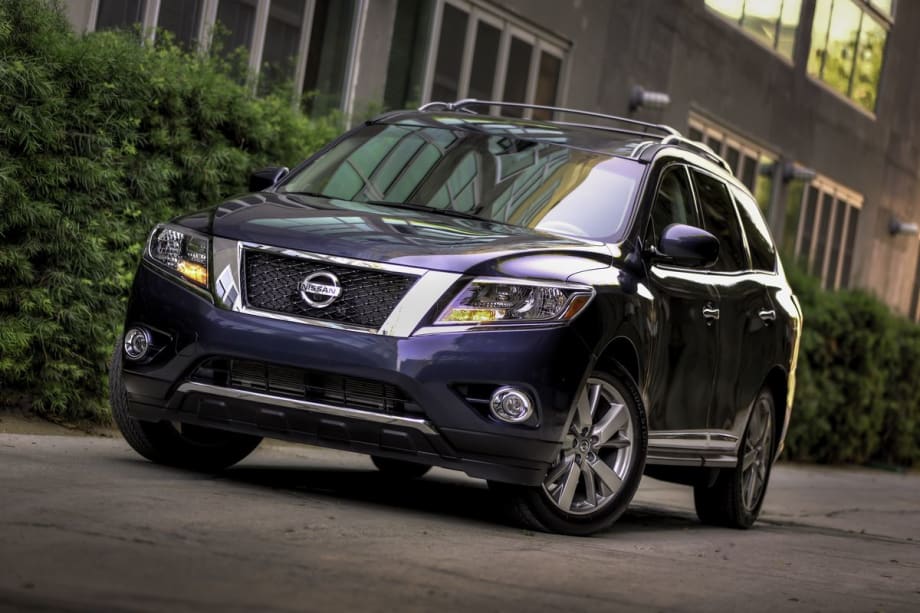
The 2013-MY Nissan Pathfinder.
The 2013-MY Nissan Pathfinder.
NEW YORK and DETROIT – Nissan introduced its all-new 2013-MY Pathfinder SUV, which features a complete redesign, from the exterior to the powertrain. Some of the big changes to the Pathfinder include a 30% improvement in fuel economy over the previous model, achieved via range of methods by Nissan.
The automaker assembles the all-new Pathfinder at the company’s assembly plant in Smyrna, Tenn. The SUV’s engine is assembled at the company's Decherd, Tenn. powertrain plant.
You can view a gallery of the 2013-MY Nissan Pathfinder here.
Performance
Under the hood, the all-new 2013-MY Pathfinder has a new engine, a 3.5L 260 hp. DOHC V-6 that’s matched with a next-generation Xtronic continuously variable transmission (CVT). The SUV features driver selectable 2WD, Auto, or 4WD modes or the All-Mode 4x4-i system. According to Nissan, the 2013 Pathfinder will come in 4x4 and 4x2 drive configurations and four different models, the S, SV, SL, and Platinum.
Beyond the new powertrain, Nissan said it reduced the vehicle’s weight by 500 lbs., compared to the outgoing model. The company achieved this by building the vehicle on a unibody frame rather than a truck frame. Nissan also used aerodynamic exterior styling to improve the SUV’s fuel economy.
So what kind of mpg will the different Pathfinder models achieve? According to Nissan, fuel economy numbers are 20 mpg city, 26 mpg highway, and 22 mpg combined for the FWD version and 19 city, 25 highway, and 21 combined mpg for the 4WD version.
Exterior
For the exterior, Nissan said the upper body of the vehicle features an open cabin with a low beltline and thin A- and D-pillars. The design features front and rear spoilers, rear tire deflectors and rear suspension fairings in order to achieve improved aerodynamic performance. Other exterior details on the Pathfinder include large aerodynamic headlights, a wide chrome grille, large rear combination lights, recessed front windshield wipers, and chrome door handles. The vehicle also features a panoramic dual-panel moonroof with a sliding opening front panel and a fixed rear glass panel that extends over the second and third seating rows.
The unibody chassis also gives the all-new Pathfinder greater structural rigidity, improving ride and handling and reducing noise, vibration and harshness. It also gives the Pathfinder a standard towing capacity of 5,000 lbs., according to the automaker.
Interior
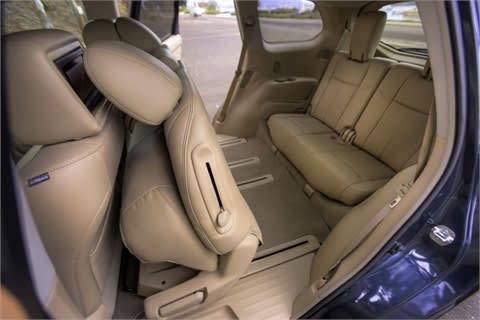
The third-row seat can recline, and the vehicle also features Nissan’s EZ Flex Seating System with Latch and Glide.
Inside, the unibody design allowed Nissan’s engineers to offer more interior space than in the outgoing model. The all-new interior can seat seven passengers and provides a third row seat recline feature.
The 2013-MY Pathfinder’s instrument panel features Nissan’s new Advanced Drive-Assist display, which is located in the center of the instrument display between the tachometer and speedometer. It features a customizable 4-inch color display. A separate touchscreen monitor in the middle of the instrument panel gives front seat occupants access to the available navigation system and other vehicle settings.
The all-new Pathfinder also features Nissan’s EZ Flex Seating System with Latch and Glide. This feature is an industry first second row tip-up seat that’s built for use with a child safety seat. This feature alsoo provides access to the third row while keeping the child seat securely fastened, according to Nissan. The second row also features a 60/40 split-fold seating with 5.5 inches of seat travel.
Other Features
Amenities on the all-new Pathfinder include leather-appointed seating, heated steering wheel, heated and cooled front seats, programmable Nissan Intelligent Key, the Nissan Navigation System, a Bluetooth hands-free phone system, a 13-speaker Bose premium audio system, Satellite Radio (SiriusXM subscription required, sold separately), dual-zone climate control, a rear view monitor, remote engine start, and a tri-zone entertainment system. Other class-exclusive features include Nissan’s new Easy Fill Tire Alert and the segment-first availability of an “Around View” monitor.
More Operations

Fleet Has a Talent Pipeline Problem. What Comes Next? | AF News Recap
Where will fleet’s next generation of leaders come from? This week, we’re looking at the industry’s talent pipeline, what certification can add to a fleet career, how to build an award-worthy track record, and the return of Automotive Fleet’s Personal Use Survey.
Read More →
Smith System Launches Driver Risk Management Program
Fleets have more driver data than ever, but identifying risky behavior doesn't necessarily correct it. Smith System's new Driver Risk Management program combines monitoring, training, and follow-up coaching to help fleets connect risk signals with driver intervention.
Read More →
Automotive Fleet Opens 2026 Personal Use Survey for Commercial Fleet Managers
Less than two weeks left! Commercial and corporate fleet managers are invited to share how their organizations handle company vehicle personal-use policies, charges, and driver eligibility.
Read More →
From AI Prompts to AI-Generated Safety Songs | AF News Recap
Can better prompts make AI more useful for fleet managers? This week, we’re breaking down smarter fleet analysis, an AI-assisted experiment that turned safety training into music, and what happened to fuel prices in August.
Read More →
How to Write Better AI Prompts for Fleet Analysis
Include these six elements in your fleet prompts to generate more relevant analysis and accurate answers.
Read More →
Fleet Meets: Eric Kilgore
This edition of the Fleet Meets series features one of the industry's best leaders driving multi-market and national operations.
Read More →
Why Reactive Fleet Management Is Becoming Too Expensive to Sustain
Research highlights a growing need for proactive management strategies to address rising costs in fleet operations effectively.
Read More →
What Your Fleet KPIs Aren’t Telling You
Tracking fleet metrics is only useful when the data leads to better decisions. This guide helps fleet leaders assess cost, utilization, and downtime more accurately, identify performance gaps, and prioritize the actions that can improve operational results.
Read More →
Hidden in Plain Sight: Fleet Compliance Risks
Fleet compliance isn't just about having policies — it's about consistently enforcing them. This practical guide reveals six hidden compliance risks common in public sector and shared fleet operations and outlines proven strategies to improve visibility, accountability, and audit readiness
Read More →
Turning Fleet Payment Data into Executive Insights
Does data alone drive results in operations?
Read More →