




Toyota Launches 5-Year Safety Research Effort
Toyota’s Collaborative Safety Research Center embarks on a $35 million program facilitating a safe transition to autonomous and connected vehicle technologies.
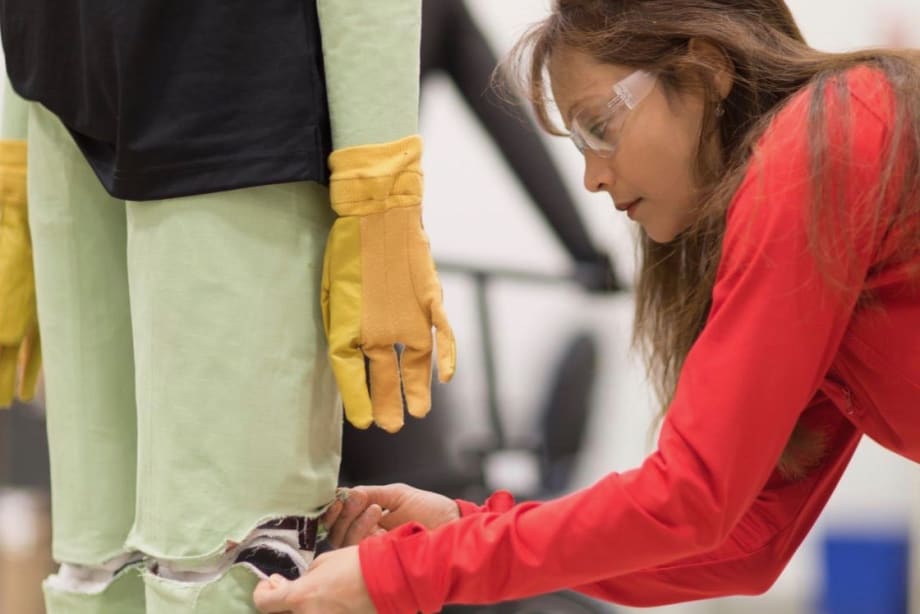
Since its launch in 2011, CSRC has collaborated with leading North American universities, hospitals and research institutions on projects aimed at reducing traffic casualties. Photo courtesy of Toyota.
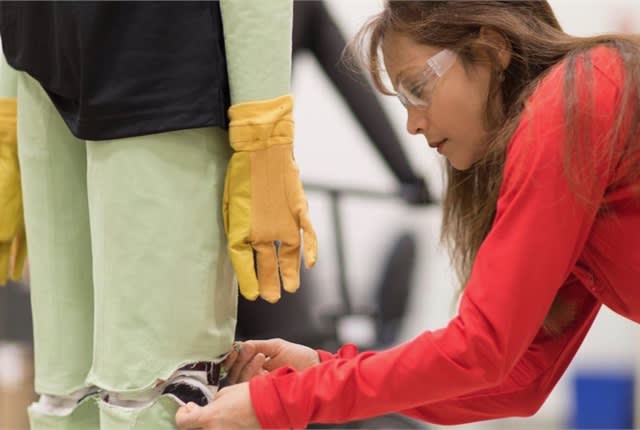
Since its launch in 2011, CSRC has collaborated with leading North American universities, hospitals and research institutions on projects aimed at reducing traffic casualties. Photo courtesy of Toyota.
Toyota’s Collaborative Safety Research Center (CSRC) has launched the next phase of its research mission, which will focus on autonomous and connected vehicle technologies over the next decade, Toyota said.
This new phase, dubbed CSRC Next, will direct $35 million toward future mobility research through 2021. Projects will follow four research tracks:
The potential integration of active and passive safety systems, using advanced pre-crash sensors to improve and personalize crash protection
Building advanced-technology models for vehicle user experience to improve usability and strengthen the driver-vehicle relationship
Studying driver state detection, working to improve mobility using metrics for physiology and health
Applying big data and safety analytics techniques to develop algorithms and tools to study naturalistic driving data.
“The launch of CSRC Next reflects Toyota’s understanding of the importance of human interaction with emerging and advanced vehicle technologies,” said Chuck Gulash, director of CSRC. “These highly advanced systems are radically reshaping the transportation landscape, building a relationship between drivers, occupants and vehicles as teammates working together safely and conveniently.”
At launch, CSRC Next’s research portfolio includes eight projects in partnership with six schools. Examples include work with the Massachusetts Institute of Technology (MIT) AgeLab to develop new systems for autonomous vehicles to perceive and identify objects in their environment and to understand social interactions in traffic. Also included is a research study with Virginia Tech to identify issues that may arise after integrated safety systems are deployed in the future.
Michigan-based CSRC is also working with the Toyota Research Institute (TRI) and Toyota Connected (TC). CSRC research is helping to accelerate autonomous driving technology development and explore the complex relationship between future mobility and broader social trends.
The beginning of CSRC Next also marks the conclusion of the center’s first five years of automotive safety research. Since its launch in 2011, CSRC has collaborated with leading North American universities, hospitals and research institutions on projects aimed at reducing traffic casualties.
One of the key beneficiaries of CSRC research has been emergency medicine. A project with the University of Michigan studied a computational technique for detection and prediction of severe cardiac events inside a vehicle. As part of CSRC Next, the data collected from in-hospital and in-vehicle subjects will be trained with machine learning models to detect and predict the in-vehicle occurrence of heart attacks.
Another study, in collaboration with the University of Nebraska Medical Center, deployed real-time glucose monitoring systems in drivers with insulin-dependent diabetes. The project’s goal was to investigate the feasibility of combining physiologic and driving sensor data to determine the levels and patterns of glucose control that might produce changes in driver behavior and safety in individuals with diabetes.
Other key projects in the CSRC’s first five years included programs to develop test platforms for collision avoidance systems. Among these efforts was a project with Indiana University –Purdue University at Indianapolis (IUPUI) and The Ohio State University that created advanced test targets for pedestrian pre-collision systems. Another project, in collaboration with MIT, modeled in-vehicle voice command systems and driver behavior.
More Safety

What’s Next for Fleet? Safety, AI & Industry Recognition | AF News Recap
Could your company's culture be encouraging distracted driving? This week, we're exploring how workplace expectations affect driver safety, what AI, EVs, and autonomous vehicles could mean for the future of fleet management, and how fleet professionals can strengthen their award nominations.
Read More →
Does Your Fleet's Culture Encourage Distracted Driving?
What happens when the people responsible for enforcing safety rules are the ones setting the wrong example? The answer may reveal why some of the biggest risks to fleet drivers have little to do with what's written in the employee handbook.
Read More →
Fleet Manager’s Ultimate Playbook: Navigating the New Standard in OEM Connectivity
Rising operating costs, driver safety concerns, and unplanned downtime are putting unprecedented pressure on modern fleets. Discover how fleet managers use embedded OEM connectivity and real-time vehicle data to cut TCO, prevent downtime, and protect drivers without aftermarket telematics hardware.
Read More →
From Driver Well-Being to EV Charging | AF News Recap
Mental health belongs in the fleet safety conversation. This week, we’re looking at five ways fleets can support employee well-being before a crisis, plus Holman’s expansion in Mexico, new one-day Fleet Forward passes, and why EV charging demand is outpacing infrastructure growth.
Read More →
Nexar-Nauto Merger Aims to Give Fleets Better Safety Intelligence Through Larger Driving Dataset
Stefan Heck tells Automotive Fleet that combining more than 10 billion miles of driving history with Nexar's AI models will give fleets deeper insights into driver risk and roadway conditions than either company could provide independently.
Read More →
Don't Wait for a Crisis: 5 Ways to Build Mental Health Into Your Fleet Safety Program
For Suicide Prevention Month, fleet and safety leaders have an opportunity to put mental health where it belongs: at the center of workplace safety.
Read More →
How Camera Data Can Strengthen a Fleet’s Insurance Renewal
Insights from a commercial insurance carrier and a broker show how fleets can turn video telematic data, driver coaching, and improved claims results into a stronger case at insurance renewal.
Read More →
The Safest Fleets Aren’t the Ones with the Most Technology
You’ve made the telematics investment. Here’s how to capture the other half of its value and build the safest fleet on the road.
Read More →
Hidden in Plain Sight: Fleet Compliance Risks
Fleet compliance isn't just about having policies — it's about consistently enforcing them. This practical guide reveals six hidden compliance risks common in public sector and shared fleet operations and outlines proven strategies to improve visibility, accountability, and audit readiness
Read More →
NETS Sets 2026 Fleet Safety Benchmark Conference for Indianapolis
The Sept. 15–17 program will feature fleet benchmarking data, case studies, emerging technologies, and implementation strategies while running alongside the NSC Safety Congress & Expo.
Read More →