




Safety Tips: Follow the 4 Principles of Safe Driving
Safety Tip: Managing Driving Space
Here are some safety tips from AAA on how to manage your driving space to avoid collisions. You may want to pass along the advice to fleet drivers.
by Staff
August 3, 2015
About 30% of crashes involve rear-end collisions. Stay alert!
Photo: Government Fleet
2 min to read
Here are some AAA tips on how to manage your driving space. You may want to pass this advice along to fleet drivers as a friendly reminder.
Pay attention. The primary attribute necessary for safer driving is alertness. This allows you to see, recognize and avoid the unexpected hazards lurking on the road.
Allow enough space ahead. About 30% of crashes involve rear-end collisions. Many of these could be avoided by following at a safe distance. Allow at least three seconds between your vehicle and the car ahead of you. At highway speeds, lengthen the gap to four seconds or more. (The 2-3 second rule of decades past has been updated to the 3-4 second rule.) If you’re driving in the rain or poor weather conditions, lengthen that gap to six or more seconds. Also, you may need to adjust for vehicle weight, a major factor in how long the vehicle takes to stop. The heavier the vehicle, the longer it takes to stop.
Look ahead. Scan the road and surrounding area at least 20 to 30 seconds ahead for potential road hazards, conditions and information that can help you plan a clear path to travel. Look around and keep your eyes open for approaching vehicles, pedestrians or animals that might enter your path.
Have an escape route. The best way to avoid potential dangers is to position your vehicle where you have the best chance of seeing and being seen. Check your mirrors every few seconds to see what is beside you and what is behind you. You need to have an alternate path of travel, taking into consideration the position of the vehicles around you and the road ahead. That’s crucial for deciding where you can maneuver safely to avoid a crash. If the road is narrow and lacking a shoulder, increase your following distance.
All tips provided from “Managing Space and Time for Safe Driving,” a video produced by the AAA Foundation for Traffic Safety.
More Safety

Does Your Fleet's Culture Encourage Distracted Driving?
What happens when the people responsible for enforcing safety rules are the ones setting the wrong example? The answer may reveal why some of the biggest risks to fleet drivers have little to do with what's written in the employee handbook.
Read More →
Sponsored•October 1, 2026
Fleet Manager’s Ultimate Playbook: Navigating the New Standard in OEM Connectivity
Rising operating costs, driver safety concerns, and unplanned downtime are putting unprecedented pressure on modern fleets. Discover how fleet managers use embedded OEM connectivity and real-time vehicle data to cut TCO, prevent downtime, and protect drivers without aftermarket telematics hardware.
Read More →
From Driver Well-Being to EV Charging | AF News Recap
Mental health belongs in the fleet safety conversation. This week, we’re looking at five ways fleets can support employee well-being before a crisis, plus Holman’s expansion in Mexico, new one-day Fleet Forward passes, and why EV charging demand is outpacing infrastructure growth.
Read More →
Nexar-Nauto Merger Aims to Give Fleets Better Safety Intelligence Through Larger Driving Dataset
Stefan Heck tells Automotive Fleet that combining more than 10 billion miles of driving history with Nexar's AI models will give fleets deeper insights into driver risk and roadway conditions than either company could provide independently.
Read More →
Don't Wait for a Crisis: 5 Ways to Build Mental Health Into Your Fleet Safety Program
For Suicide Prevention Month, fleet and safety leaders have an opportunity to put mental health where it belongs: at the center of workplace safety.
Read More →
How Camera Data Can Strengthen a Fleet’s Insurance Renewal
Insights from a commercial insurance carrier and a broker show how fleets can turn video telematic data, driver coaching, and improved claims results into a stronger case at insurance renewal.
Read More →
The Safest Fleets Aren’t the Ones with the Most Technology
You’ve made the telematics investment. Here’s how to capture the other half of its value and build the safest fleet on the road.
Read More →
Sponsored•August 7, 2026
Hidden in Plain Sight: Fleet Compliance Risks
Fleet compliance isn't just about having policies — it's about consistently enforcing them. This practical guide reveals six hidden compliance risks common in public sector and shared fleet operations and outlines proven strategies to improve visibility, accountability, and audit readiness
Read More →
NETS Sets 2026 Fleet Safety Benchmark Conference for Indianapolis
The Sept. 15–17 program will feature fleet benchmarking data, case studies, emerging technologies, and implementation strategies while running alongside the NSC Safety Congress & Expo.
Read More →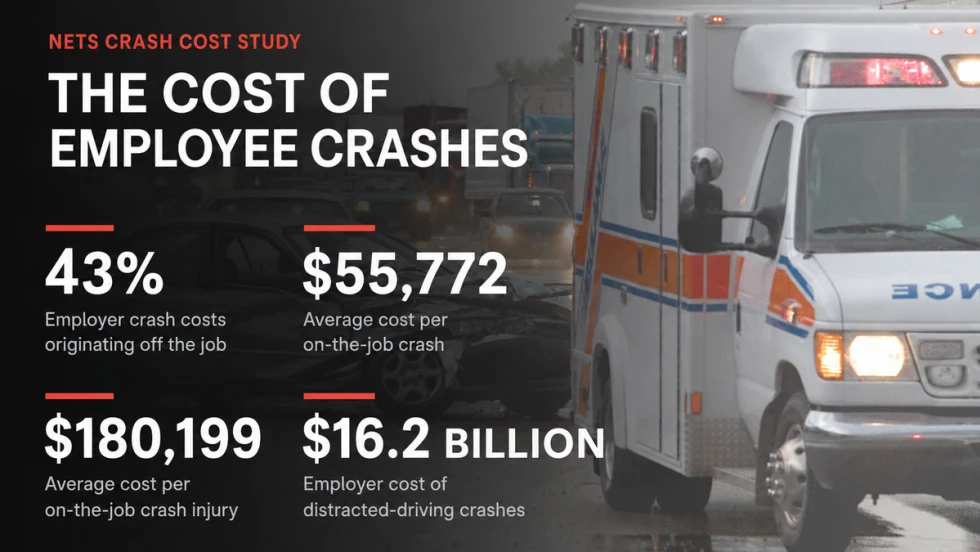
Off-the-Job Crashes Account for 43% of Employers’ $61.7 Billion Crash Burden
NETS quantifies costs dispersed across fleet, risk, HR, and other departments while providing new per-crash benchmarks for employers.
Read More →