




Senators Press for Takata to Recall All Its Air Bags
In response to new reports of an air bag explosion in a 2015 Volkswagen Tiguan, senators Richard Blumenthal and Edward Markey urge a recall of all Takata air bags.

MARKEY
MARKEY
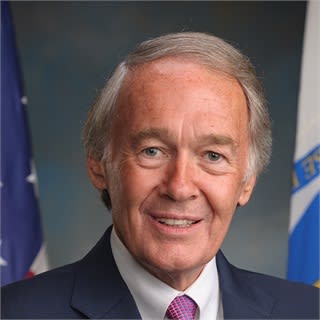
Two U.S. senators are calling for Takata Corp. to voluntarily recall all of its air bags and to publicly release all company air bag test results so that independent experts can review them.
The senators, Richard Blumenthal (D-Conn.) and Edward J. Markey (D-Mass.), publicly released an Aug. 20 letter they sent to Takata. The letter expresses concerns arising from new reports of a June 7 explosion of a Takata side air bag in a 2015 Volkswagen Tiguan near St. Louis, Mo.
This incident “directly undercuts Takata’s continued insistence – despite growing evidence to the contrary – that the flaws in its airbag inflators are limited to prior designs in older model cars and only present when the airbags have prolonged exposure to extremely humid conditions,” the letter states.
The two senators are members of the Senate committee on commerce, science and transportation, which has held hearings on the Takata air bag recalls.
The National Highway Traffic Safety Administration is currently investigating the June 17 incident.
“As new reports surface of explosions in the latest models of Takata airbags, we write to express our deep concern over the obfuscation and delay that your company has engaged in while searching for a root cause of these defects,” the letter says. “Takata’s defective airbags have already caused at least eight deaths and more than one-hundred injuries in the United States – numbers that may increase as further cases come to light – and it is essential for your company to do all it can to identify and address the cause of this problem.”
The letter points out that the 2015 Volkswagen Tiguan wasn’t included in previous Takata air bag recalls, and also questions why Takata has continued to use ammonium nitrate mixtures in some of its new inflator designs.
In the letter, the senators express dismay at “Takata’s unwillingness to acknowledge the strong association between ammonium nitrate and the safety defect that has led to the rupturing of so many inflators.”
Blumenthal and Markey also criticize Takata for failing to establish a victim’s compensation fund. The letter is addressed to Kevin Kennedy, TK Holdings executive vice president for North America. TK Holdings, based in Michigan, operates as a subsidiary of Takata Corp. in Japan.
To ensure Takata’s replacement air bags are truly safe, the company needs to disclose all relevant test results involving new and previous inflator designs, the senators argue. The letter sets a Sept. 3 deadline for a Takata response. The company has thus far declined multiple media requests for comment on the letter.
To download a copy of the letter, click here.
More Safety

Fleet Manager’s Ultimate Playbook: Navigating the New Standard in OEM Connectivity
Rising operating costs, driver safety concerns, and unplanned downtime are putting unprecedented pressure on modern fleets. Discover how fleet managers use embedded OEM connectivity and real-time vehicle data to cut TCO, prevent downtime, and protect drivers without aftermarket telematics hardware.
Read More →
From Driver Well-Being to EV Charging | AF News Recap
Mental health belongs in the fleet safety conversation. This week, we’re looking at five ways fleets can support employee well-being before a crisis, plus Holman’s expansion in Mexico, new one-day Fleet Forward passes, and why EV charging demand is outpacing infrastructure growth.
Read More →
Nexar-Nauto Merger Aims to Give Fleets Better Safety Intelligence Through Larger Driving Dataset
Stefan Heck tells Automotive Fleet that combining more than 10 billion miles of driving history with Nexar's AI models will give fleets deeper insights into driver risk and roadway conditions than either company could provide independently.
Read More →
Don't Wait for a Crisis: 5 Ways to Build Mental Health Into Your Fleet Safety Program
For Suicide Prevention Month, fleet and safety leaders have an opportunity to put mental health where it belongs: at the center of workplace safety.
Read More →
How Camera Data Can Strengthen a Fleet’s Insurance Renewal
Insights from a commercial insurance carrier and a broker show how fleets can turn video telematic data, driver coaching, and improved claims results into a stronger case at insurance renewal.
Read More →
The Safest Fleets Aren’t the Ones with the Most Technology
You’ve made the telematics investment. Here’s how to capture the other half of its value and build the safest fleet on the road.
Read More →
Hidden in Plain Sight: Fleet Compliance Risks
Fleet compliance isn't just about having policies — it's about consistently enforcing them. This practical guide reveals six hidden compliance risks common in public sector and shared fleet operations and outlines proven strategies to improve visibility, accountability, and audit readiness
Read More →
NETS Sets 2026 Fleet Safety Benchmark Conference for Indianapolis
The Sept. 15–17 program will feature fleet benchmarking data, case studies, emerging technologies, and implementation strategies while running alongside the NSC Safety Congress & Expo.
Read More →
Off-the-Job Crashes Account for 43% of Employers’ $61.7 Billion Crash Burden
NETS quantifies costs dispersed across fleet, risk, HR, and other departments while providing new per-crash benchmarks for employers.
Read More →
Ram Recalls More Than 1.27 Million 1500 Pickups for Seat Belt Anchor Issue
The recall affects certain 2019-2026 Ram 1500 pickups that may have improperly attached second-row seat belt buckle anchors.
Read More →