




Illinois Bans Hand-Held Cell Phone Use While Driving
The state also increased penalties on drivers whose behind-the-wheel use of an electronic device leads to collisions.
Illinois Gov. Pat Quinn on Aug. 16 signed into law two bills aimed at combating distracted driving: one prohibits the use of all hand-held mobile phones while driving on Illinois roads, and the other increases penalties on drivers whose behind-the-wheel use of an electronic device leads to an accident.
Under the new law, which takes effect Jan. 1, 2014, fines for a first offense are $75. Penalties increase by $25 for subsequent offenses to a maximum of $150.
Calls made to report an emergency situation are exempt from the law.
“Too many Illinois families have suffered because of accidents that could have been prevented," Quinn said. "Anyone driving a car should be careful, responsive and alert behind the wheel. These new laws will save lives.”
House Bill 1247, sponsored by State Representative John D’Amico (D-Chicago) and State Senator John Mulroe (D-Chicago), prohibits the operation of a motor vehicle on any road in Illinois while using a mobile phone or other electronic communication device. The bill makes exceptions for hands-free devices, including those with headsets that can initiate a call using a single button or a voice command.
The new law strengthens Illinois' 2009 law that banned sending or reading text messages while driving.
According to the U.S. Department of Transportation, drivers using hand-held devices are four times more likely to get into an accident causing injuries, and distracted driving caused 387,000 injuries and more than 3,000 fatalities across the country in 2011.
Illinois joins 11 other states and the District of Columbia in banning the use of hand-held devices while driving.
“When people get behind the wheel, they have a responsibility to themselves and to others to drive safely,” D’Amico said. “When motorists are on the phone, they are not giving their full attention to the most important task they have. This law will help reduce traffic accidents and make Illinois roads safer.”
House Bill 2585, sponsored by State Representative Natalie Manley (D-Joliet) and State Senator Martin Sandoval (D-Chicago), increases the penalties that can be imposed on drivers whose use of an electronic device while driving causes an accident. If the accident causes great bodily harm, the driver can be sentenced to up to one year in prison, and a fatal accident can result in a prison sentence of one to three years. Current law only allows these drivers to be charged with traffic violations. The new law takes effect Jan. 1, 2014.
“After passing legislation to ban the use of cell phones in work and school zones, I felt that we needed to enhance the penalties for causing an accident while talking on a cell phone,” Sandoval said. “This measure will increase roadway safety throughout the state and bring additional attention to the dangers of being on a cell phone while behind the wheel.”
More Safety

From Driver Well-Being to EV Charging | AF News Recap
Mental health belongs in the fleet safety conversation. This week, we’re looking at five ways fleets can support employee well-being before a crisis, plus Holman’s expansion in Mexico, new one-day Fleet Forward passes, and why EV charging demand is outpacing infrastructure growth.
Read More →
Nexar-Nauto Merger Aims to Give Fleets Better Safety Intelligence Through Larger Driving Dataset
Stefan Heck tells Automotive Fleet that combining more than 10 billion miles of driving history with Nexar's AI models will give fleets deeper insights into driver risk and roadway conditions than either company could provide independently.
Read More →
Don't Wait for a Crisis: 5 Ways to Build Mental Health Into Your Fleet Safety Program
For Suicide Prevention Month, fleet and safety leaders have an opportunity to put mental health where it belongs: at the center of workplace safety.
Read More →
How Camera Data Can Strengthen a Fleet’s Insurance Renewal
Insights from a commercial insurance carrier and a broker show how fleets can turn video telematic data, driver coaching, and improved claims results into a stronger case at insurance renewal.
Read More →
The Safest Fleets Aren’t the Ones with the Most Technology
You’ve made the telematics investment. Here’s how to capture the other half of its value and build the safest fleet on the road.
Read More →
Hidden in Plain Sight: Fleet Compliance Risks
Fleet compliance isn't just about having policies — it's about consistently enforcing them. This practical guide reveals six hidden compliance risks common in public sector and shared fleet operations and outlines proven strategies to improve visibility, accountability, and audit readiness
Read More →
NETS Sets 2026 Fleet Safety Benchmark Conference for Indianapolis
The Sept. 15–17 program will feature fleet benchmarking data, case studies, emerging technologies, and implementation strategies while running alongside the NSC Safety Congress & Expo.
Read More →
Off-the-Job Crashes Account for 43% of Employers’ $61.7 Billion Crash Burden
NETS quantifies costs dispersed across fleet, risk, HR, and other departments while providing new per-crash benchmarks for employers.
Read More →
Ram Recalls More Than 1.27 Million 1500 Pickups for Seat Belt Anchor Issue
The recall affects certain 2019-2026 Ram 1500 pickups that may have improperly attached second-row seat belt buckle anchors.
Read More →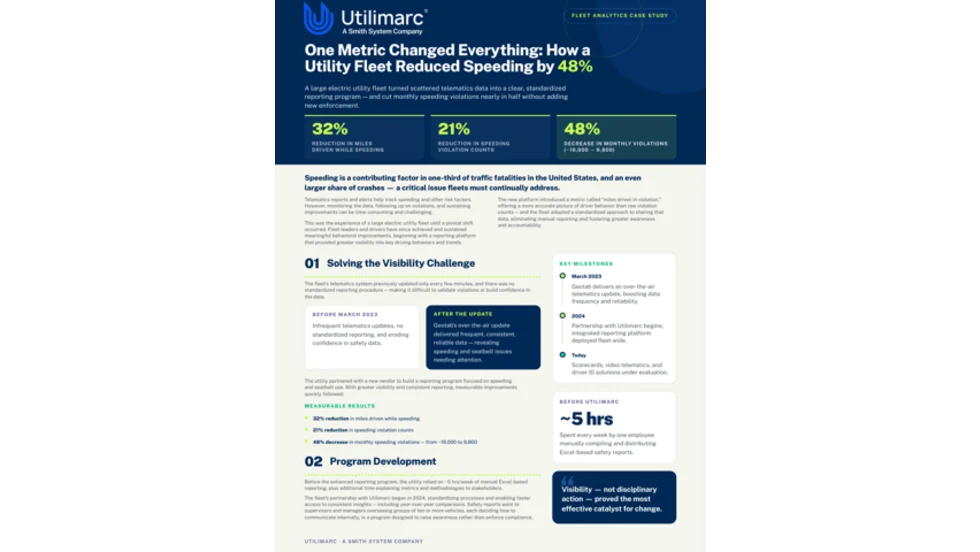
How Better Visibility Cut Speeding Violations by 48%
Fleet leaders don't need more data, they need clearer visibility into what the data is saying. This case study explores how one utility replaced speeding-event counts with a single metric — miles driven in violation — to strengthen safety and significantly reduce speeding violations.
Read More →