




Study Shows States With Most Uninsured Motorists
MALVERN, PA - Across the United States, chances are roughly one in seven that a driver is uninsured, according to new estimates from the Insurance Research Council (IRC).
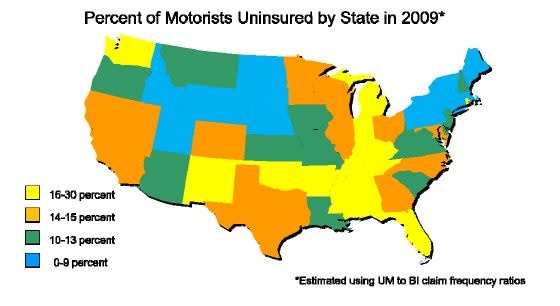
MALVERN, PA - Across the United States, chances are roughly one in seven that a driver is uninsured, according to new estimates from the Insurance Research Council (IRC).
The estimated percentage of uninsured motorists declined four straight years before rising to 14.3 percent in 2008 and dropping to 13.8 percent in 2009. The economic downturn is thought to be a major factor in the brief increase.
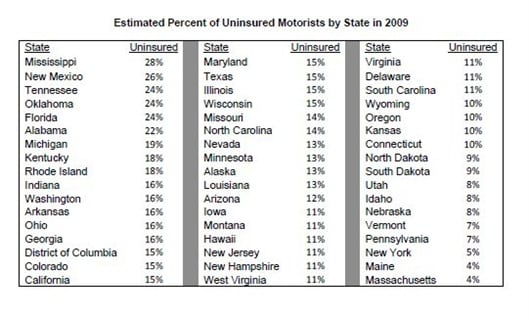
In 2009, the five states with the highest uninsured driver estimates were Mississippi (28 percent), New Mexico (26 percent), Tennessee (24 percent), Oklahoma (24 percent), and Florida (24 percent). The five states with the lowest uninsured driver estimates were Massachusetts (4.5 percent), Maine (4.5 percent), New York (5 percent), Pennsylvania (7 percent), and Vermont (7 percent).
“The leveling trend in the percentage of uninsured motorists is an unfortunate consequence of the economic downturn and illustrates how virtually everyone is affected by recent economic developments," said Elizabeth A. Sprinkel, senior vice president of the IRC. “Despite laws in many states requiring drivers to maintain insurance, about one in seven motorists remain uninsured. This forces responsible drivers who carry insurance to bear the burden of paying for injuries caused by drivers who carry no insurance at all.”
In a new study, Uninsured Motorists, 2011 Edition, IRC estimates the percentage of uninsured drivers countrywide and in individual states for 2008 and 2009. The IRC estimates are based on the ratio of uninsured motorist (UM) insurance claim frequency to bodily injury (BI) claim frequency. UM claims are made by individuals who are injured in accidents caused by uninsured drivers. BI claims are made by individuals injured in accidents caused by insured drivers. The magnitude of the uninsured motorist problem varies from state to state.
In a previous report, the IRC anticipated a trend reversal in the countrywide estimate of the percentage of uninsured motorists, citing a strong historical relationship between the national unemployment rate and the national UM to BI ratio. The strength of the historical relationship appears to have diminished slightly with the inclusion of more recent data. Several possible reasons for this are discussed in the report.
The IRC study examines data collected from nine insurers, representing approximately 50 percent of the private passenger auto insurance market in the U.S.
More Safety

How Camera Data Can Strengthen a Fleet’s Insurance Renewal
Insights from a commercial insurance carrier and a broker show how fleets can turn video telematic data, driver coaching, and improved claims results into a stronger case at insurance renewal.
Read More →
The Safest Fleets Aren’t the Ones with the Most Technology
You’ve made the telematics investment. Here’s how to capture the other half of its value and build the safest fleet on the road.
Read More →
Hidden in Plain Sight: Fleet Compliance Risks
Fleet compliance isn't just about having policies — it's about consistently enforcing them. This practical guide reveals six hidden compliance risks common in public sector and shared fleet operations and outlines proven strategies to improve visibility, accountability, and audit readiness
Read More →

NETS Sets 2026 Fleet Safety Benchmark Conference for Indianapolis
The Sept. 15–17 program will feature fleet benchmarking data, case studies, emerging technologies, and implementation strategies while running alongside the NSC Safety Congress & Expo.
Read More →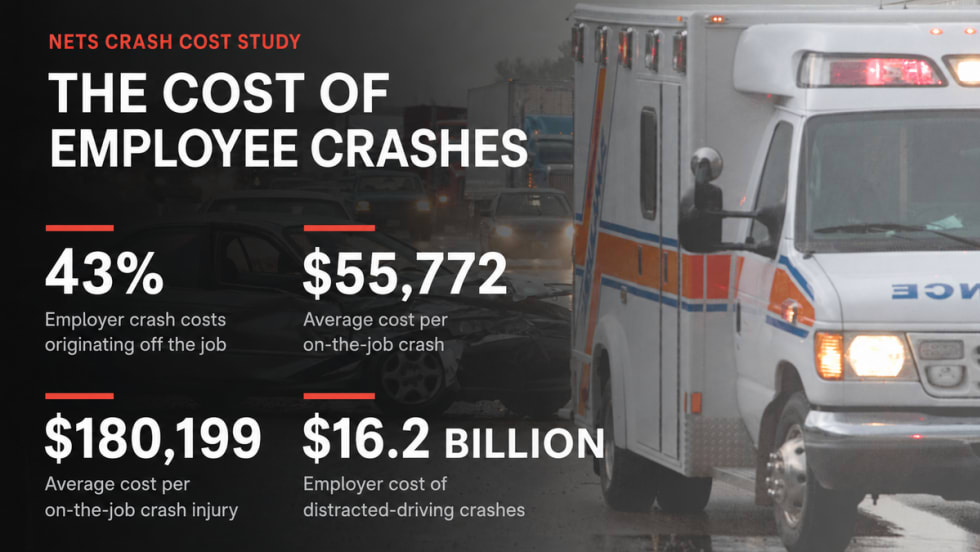
Off-the-Job Crashes Account for 43% of Employers’ $61.7 Billion Crash Burden
NETS quantifies costs dispersed across fleet, risk, HR, and other departments while providing new per-crash benchmarks for employers.
Read More →
Ram Recalls More Than 1.27 Million 1500 Pickups for Seat Belt Anchor Issue
The recall affects certain 2019-2026 Ram 1500 pickups that may have improperly attached second-row seat belt buckle anchors.
Read More →
How Better Visibility Cut Speeding Violations by 48%
Fleet leaders don't need more data, they need clearer visibility into what the data is saying. This case study explores how one utility replaced speeding-event counts with a single metric — miles driven in violation — to strengthen safety and significantly reduce speeding violations.
Read More →
Operation Safe Driver Week: Why the Industry's Oldest Safety Campaign Still Matters to Fleets
A look at how a 2007 enforcement initiative became one of the most consequential weeks on the fleet safety calendar, and what it means for your drivers in 2026.
Read More →
Nexar-Nauto Merger Aims to Give Fleets Better Safety Intelligence Through Larger Driving Dataset
Stefan Heck tells Automotive Fleet that combining more than 10 billion miles of driving history with Nexar's AI models will give fleets deeper insights into driver risk and roadway conditions than either company could provide independently.
Read More →
From Silos to Solutions: Relationship Management for Safer Fleets
From telematics adoption and driver accountability to policy consistency and risk mitigation, this episode breaks down what it really takes to build a safer fleet culture without slowing business down.
Read More →