




Telematics Helps Reduce Collisions and Claims
Fleet managers are using telematics to provide driver-specific training, minimize the frequency and severity of collisions and claims, and improve their overall safety scores.

Photo courtesy of GettyImages.com/Visual_Capture.
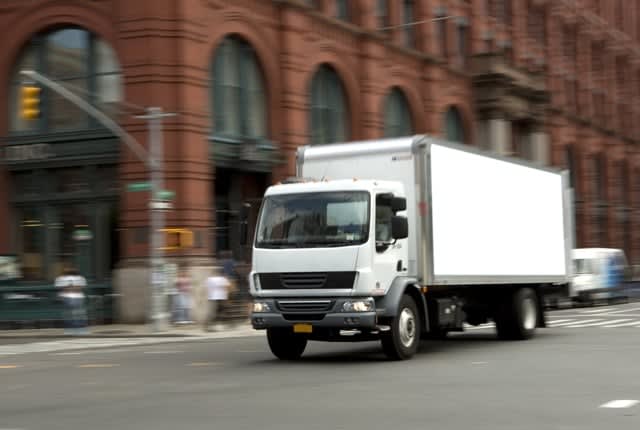
Photo courtesy of GettyImages.com/Visual_Capture.
When telematics was first introduced, it was primarily used for vehicle tracking and route optimization. As location tracking became more precise, the technology gained the ability to identify unsafe driving behaviors, including harsh acceleration, braking, and cornering. Connecting with vehicle sensors added even more functionality, including the ability to track idling and even seatbelt use.
Safer drivers make for safer fleets. According to the National Highway Traffic Safety Administration (NHTSA), 94% of all collisions are caused by driver error. The widespread use of mobile devices is causing accident rates to rise after decades of decline. In fact, the Centers for Disease Control and Prevention (CDC) calculates that, every single day, approximately nine people are killed and 1,000 more are injured in collisions caused by distracted driving.
To limit the number and severity of collisions, fleet managers are leveraging the power of telematics to produce individual scorecards, create driver-specific training curricula, and recognize and reward their safest drivers.
Bad Behavior
The No. 1 indicator of distracted driving over time is harsh braking. Occasional sudden stops are par for the course. A higher number could indicate the driver is following other vehicles too closely. Frequent harsh braking incidents could very likely point to a driver who is habitually texting or eating while on the road. The chances they will cause a collision — and resulting insurance claim — are heightened dramatically.
In addition to consistent, regular coaching, fleet managers may choose to be alerted by their telematics system whenever an incident occurs or when a driver exceeds a certain number of hard stops in a day or week. Automation can help take the guesswork out of safety and allow fleet managers to focus on the results rather than the numbers.
Once you know which bad behaviors individual drivers are engaging in, you have the opportunity to correct it. Rather than force every driver into a general training session, consider using telematics data to tailor your safety training to the individual.
The Power of Gamification
If you truly want driver buy-in and improvements to safety across the entire fleet, consider using telematics data to set up a program that rewards your safest drivers, teams, or branches.
For example, you can assign points values to specific behaviors, with drivers earning points for safe driving, and losing them when they engage in distracted or unsafe driving habits. At the end of each month, quarter, or year, update the scores, and reward the drivers who do best.
Consider giving rewards to the driver with the overall best safety rating or one for the most improved driver. Creating teams of drivers or pitting one branch against another can help create a spirit of friendly competition.
You may find that recognition from managers and their peers for good behavior will be far more effective than merely disciplining drivers for bad behavior. By using gamification methods — backed by telematics data, which takes the objectivity out of the equation — drivers are encouraged to make better decisions over the long term, which in time become good habits they will take with them every time they get behind the wheel.
Share the Good News
As you see improvements to your fleet safety record over time, don’t be afraid to shout it from the rooftops. Sharing that data with customers can give them the peace of mind that comes from knowing they are doing business with a company that takes fleet and driver safety seriously. It helps to promote your fleet’s reputation as a reliable partner your customers can count on whenever they need you.
Sharing this information can be as simple as an automated update that goes out monthly, for example, informing all customers who want to opt in of how the overall fleet performed that month on matters of safety. It is a great way to share the information without needing to designate a fleet manager’s time to regularly pull that data together and send it out.
If you want to go more in-depth, depending on your business, you may even create a mobile app that ties into your telematics system. Doing this gives you the ability to, for example, provide customers with real-time updates as to where their driver is, and when to expect them to arrive. This could also be a way to push regular updates about safety statistics and other information about both the fleet and the company, creating a powerful customer relationship tool that just happens to be built on the back of telematics data.
And don’t just limit your thinking to customer-facing apps, either. There are options out there that provide drivers with apps that allow them to tap into their own data. These types of solutions allow them to see the telematics data collected on their own driving habits, and see — in real time — how they compare to their colleagues.
When drivers can open an app, see their updated score, and get an idea of where they rank in the fleet, it will be another added layer of incentive for them to engage in the safe driving behaviors they know will get them closer to recognition and rewards. People like to do a good job, and they like to know their efforts are paying off. The ability to access some of the same telematics data the fleet manager sees can be a powerful motivational tool.
Unexpected Safety Gains
This is a key point when it comes to safety since, while it’s true most collisions are a result of driver error, some can be attributed to vehicle malfunction. A part failing at a critical time — say when a driver is on the highway, going the full speed limit — could result in an incident that was in no way that driver’s fault. But with telematics, those types of situations can be mostly, if not completely, eliminated.
Modern vehicles have a wide range of sensors that monitor their mechanical and electrical systems and generate diagnostic trouble codes (DTCs) when something goes awry. Some telematics systems allow fleet managers to receive alerts whenever a DTC appears on any equipped vehicle, giving you the opportunity to make a decision in real time: Keep going, take it to the nearest service center, or pull over immediately.
Think Outside the Fleet
Using telematics to improve safety goes beyond just your walls, or even just your vehicles. Because the systems are tracking a wide range of data points, they can be used to identify unsafe routes and intersections, for example. You may also be able to monitor traffic patterns and plan routes that take advantage of slower time periods or find less-congested streets. These types of changes aren’t tied to any one vehicle or driver. Over time, they can help improve the safety of the entire fleet.
No fleet manager wants their drivers to come to harm on the road, but safety also makes good business sense. Creating a culture of safety can only have positive impacts on the bottom line. Decreased maintenance costs, reduced insurance claims, and a reduction in the costs associated with fines and repairs in the event of a collision can all add up to major savings.
Another unexpected benefit you might not have considered is that a safer fleet reduces the company’s liability in the event a collision occurs. The ability to prove your company did everything possible to ensure your drivers were well-trained and your vehicles were well-maintained in the weeks and days leading up to an incident could prove valuable in a legal dispute.
Finally, having a safer fleet can also help bolster your company’s reputation and improve timeliness. This should lead to more customers, more sales, and a healthier bottom line. Conversely, if your drivers are engaging in unsafe driving practices while driving a vehicle with your company’s logo on the side, others on the road will take note, and they will be less likely to think favorably of you, whether or not they are a customer.
When it comes to the safety of the fleet, and that of individual drivers, there is no denying that telematics is one of the fleet manager’s best tools. As the saying goes, you can’t fix what you don’t track, and telematics provides the raw data that allows every fleet, no matter how large or small, to make the changes that result in a safer, stronger, more reliable fleet.
More Safety

From Driver Well-Being to EV Charging | AF News Recap
Mental health belongs in the fleet safety conversation. This week, we’re looking at five ways fleets can support employee well-being before a crisis, plus Holman’s expansion in Mexico, new one-day Fleet Forward passes, and why EV charging demand is outpacing infrastructure growth.
Read More →
Nexar-Nauto Merger Aims to Give Fleets Better Safety Intelligence Through Larger Driving Dataset
Stefan Heck tells Automotive Fleet that combining more than 10 billion miles of driving history with Nexar's AI models will give fleets deeper insights into driver risk and roadway conditions than either company could provide independently.
Read More →
Don't Wait for a Crisis: 5 Ways to Build Mental Health Into Your Fleet Safety Program
For Suicide Prevention Month, fleet and safety leaders have an opportunity to put mental health where it belongs: at the center of workplace safety.
Read More →
How Camera Data Can Strengthen a Fleet’s Insurance Renewal
Insights from a commercial insurance carrier and a broker show how fleets can turn video telematic data, driver coaching, and improved claims results into a stronger case at insurance renewal.
Read More →
The Safest Fleets Aren’t the Ones with the Most Technology
You’ve made the telematics investment. Here’s how to capture the other half of its value and build the safest fleet on the road.
Read More →
Hidden in Plain Sight: Fleet Compliance Risks
Fleet compliance isn't just about having policies — it's about consistently enforcing them. This practical guide reveals six hidden compliance risks common in public sector and shared fleet operations and outlines proven strategies to improve visibility, accountability, and audit readiness
Read More →
NETS Sets 2026 Fleet Safety Benchmark Conference for Indianapolis
The Sept. 15–17 program will feature fleet benchmarking data, case studies, emerging technologies, and implementation strategies while running alongside the NSC Safety Congress & Expo.
Read More →
Off-the-Job Crashes Account for 43% of Employers’ $61.7 Billion Crash Burden
NETS quantifies costs dispersed across fleet, risk, HR, and other departments while providing new per-crash benchmarks for employers.
Read More →
Ram Recalls More Than 1.27 Million 1500 Pickups for Seat Belt Anchor Issue
The recall affects certain 2019-2026 Ram 1500 pickups that may have improperly attached second-row seat belt buckle anchors.
Read More →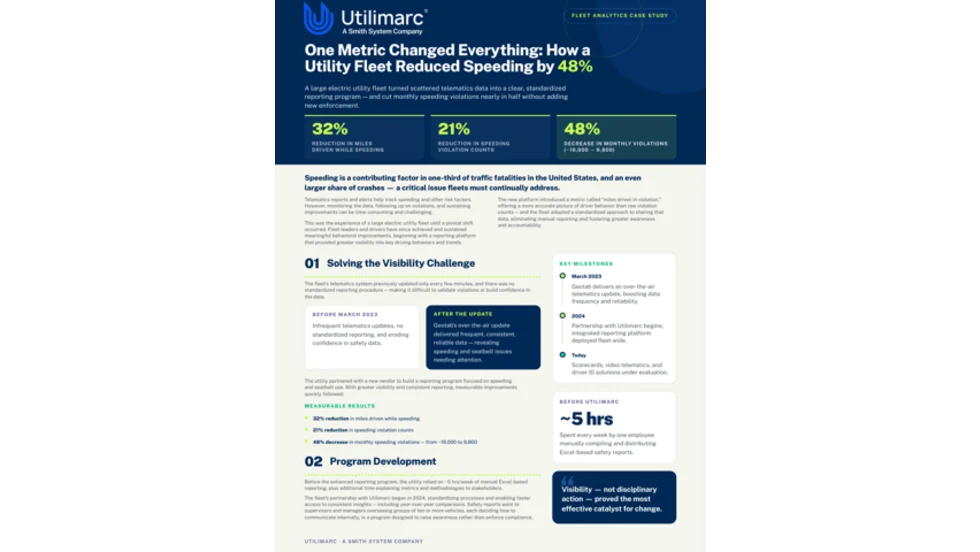
How Better Visibility Cut Speeding Violations by 48%
Fleet leaders don't need more data, they need clearer visibility into what the data is saying. This case study explores how one utility replaced speeding-event counts with a single metric — miles driven in violation — to strengthen safety and significantly reduce speeding violations.
Read More →