





Related: Fleet Safety Conference to Provide Practical Tools for Fleets
How Two Fleets Approach Driver Safety
There’s little argument that safety has become top of mind for most fleet managers. Fleets share their strategies for running safe operations.
June 20, 2016

Photo courtesy of DHL Express.
5 min to read

Photo courtesy of DHL Express.
Fleet management and fleet safety companies have helped fleets set the safety bar high by offering guiding principles and advice gleaned from decades of experience.
How fleets have implemented these strategies reflect both their universality and flexibility, as the following fleets shared with Automotive Fleet.
Creating a Comprehensive Program
The Valspar Corporation’s employee drivers are involved in the fleet safety program from the moment they begin the interview process. They go through a motor vehicle record (MVR) review evaluated according to the company’s Driver Performance Program prior to being hired or joining the fleet.
“The program provides an objective and consistent method to identify driver risk and address behind-the-wheel behaviors that could lead to accidents and other safety issues,” explained Laura Hulback, fleet services manager for Valspar. “The Driver Performance Program operates on a points system to identify Valspar employees who need to focus more on safety, while driving a vehicle provided by Valspar. Points are assessed for MVR violations and automobile crashes incurred by our fleet drivers. As points accumulate, the driver’s risk profile increases, and Valspar has implemented measures to address these driving issues.”
MVRs are checked annually for low-risk drivers, and twice yearly for high-risk drivers.
“Results are sent to the drivers so they are aware of where their risk level is at that point in time,” Hulback said.
When an employee driver is hired or a current employee joins the fleet, he or she goes through a training program that includes completing the National Safety Council’s defensive driving course.
The Minneapolis, Minn.-headquartered company, which has a fleet of about 800 vehicles, also keeps safety top of mind by running one to two quarterly training modules. Driver participation is compulsory.
“The modules are chosen by reviewing our most common crash types the previous quarter to see where we could use some additional training or a ‘refresher,’” said Hulback.
Valspar’s policy requires hands-free devices while driving. The company also has a policy of not eating while driving to eliminate the potential for distraction.
Hulback said that the fleet produces a monthly newsletter that contains the current crash ratio and the number of crashes by business group with a year-over-year comparison along with safety topics and tips.
“We also highlight one driver per month, acknowledging how many years they have been crash free, approximately how many miles they have driven during their tenure with Valspar, and what business unit they work with,” she said.
The program sets clear expectations and incentives for drivers whether they’re driving on or off the job.
The Driver Performance Program has the full backing of senior management and was developed by representatives from HR, legal, fleet, and drivers.
The program has had some strong gains since being implemented in 2010. For the financial year 2015, Valspar has reduced its preventable crash rate and a 29% improvement in the number of drivers with points.
Making Safety Fun & Productive
The U.S.-based arm of DHL Express has a behavior-based safety program designed to improve individual performance, according to Mike Wagner, DHL Express’ director of safety for the U.S.
“This is an educational thing, not a ‘gotcha,’ this is not the way we want to use it. That’s counterproductive,” he said. “It’s in everyone’s best interest to promote fleet safety and workplace safety in general. We take it very seriously, and, at the same time, we’re trying to have some fun with it and make it part of everyday life in our business and have people really enjoy working safely.”
The company uses both traditional behind-the-wheel training and observation — which is called “gemba” rides after the Japanese concept of continuous improvement — outside safety training programs (the Smith System), and telematics.
Telematics has helped DHL’s U.S. safety program go to the next level.
“Telematics started out as a fleet project to monitor our engine performance, fuel consumption, idling, that sort of thing,” Wagner said. “We recognized that there was a great safety component as well. In particular, we use it to measure five elements: harsh braking, harsh cornering, speeding, backup on leave, and harsh acceleration.”
The company created a dashboard that’s being used across the fleet to monitor driving behavior and create a spirit of friendly competition, and recently it launched a national program involving more than 180 of its drivers.
Starting in April, the company’s first Safe Driving Rodeo competition began running. For 112 workdays, ending on September 30, DHL’s drivers will engage in friendly head-to-head safety competition.
The participating drivers will be tested on how well they care for their company vehicles, their defensive driving skills based on the Smith System, their behind-the-wheel skills. Participants will also be given a 50-question written test that measures their safety knowledge, knowledge of the Smith System, and DHL’s safety culture.
“The Safe-Driving Rodeo Competition is another way that DHL is moving the needle from safe to safest,” said Wagner. “The company with the safest drivers on the road is a winner every day, and we’re working every day to make that company DHL.”
The DHL Express U.S. drivers in each of the company’s four operational regions who come closest to receiving a the maximum score of 1,000 will be named the safest driver for that area. The four area winners will then compete for the national prize.
DHL operates a fleet of approximately 3,100 vehicles. The vehicles that will be used in the competition are specially configured full-size, high-roof vans, such as the Ford Transit, Ram ProMaster, and Mercedes-Benz Sprinters.
The rodeo is not an end-all. It is a public expression of the company’s deep-rooted safety mission.
“We’re putting our drivers through Smith training again this year. The whole idea is frankly to make this innate so they’re not harshly accelerating, they’re not harshly cornering, harshly braking. It becomes more innate over time and that’s the culture we hope to have, not just for our own drivers, but the public at large,” Wagner said. “We don’t want to damage our equipment, but we also don’t want to hurt anybody.”
Editor's note: This article is part of a two-part package dealing with fleet safety programs. Read the related article that addresses the four pillars of a fleet safety program here.
Subscribe to Our Newsletter
More Safety

Nexar-Nauto Merger Aims to Give Fleets Better Safety Intelligence Through Larger Driving Dataset
Stefan Heck tells Automotive Fleet that combining more than 10 billion miles of driving history with Nexar's AI models will give fleets deeper insights into driver risk and roadway conditions than either company could provide independently.
Read More →
Don't Wait for a Crisis: 5 Ways to Build Mental Health Into Your Fleet Safety Program
For Suicide Prevention Month, fleet and safety leaders have an opportunity to put mental health where it belongs: at the center of workplace safety.
Read More →
How Camera Data Can Strengthen a Fleet’s Insurance Renewal
Insights from a commercial insurance carrier and a broker show how fleets can turn video telematic data, driver coaching, and improved claims results into a stronger case at insurance renewal.
Read More →
The Safest Fleets Aren’t the Ones with the Most Technology
You’ve made the telematics investment. Here’s how to capture the other half of its value and build the safest fleet on the road.
Read More →
Sponsored•August 7, 2026
Hidden in Plain Sight: Fleet Compliance Risks
Fleet compliance isn't just about having policies — it's about consistently enforcing them. This practical guide reveals six hidden compliance risks common in public sector and shared fleet operations and outlines proven strategies to improve visibility, accountability, and audit readiness
Read More →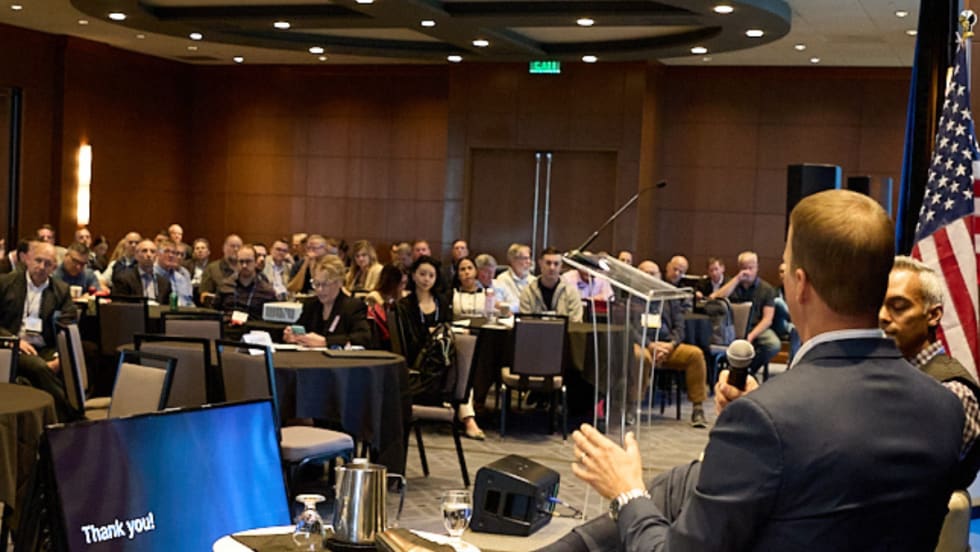
NETS Sets 2026 Fleet Safety Benchmark Conference for Indianapolis
The Sept. 15–17 program will feature fleet benchmarking data, case studies, emerging technologies, and implementation strategies while running alongside the NSC Safety Congress & Expo.
Read More →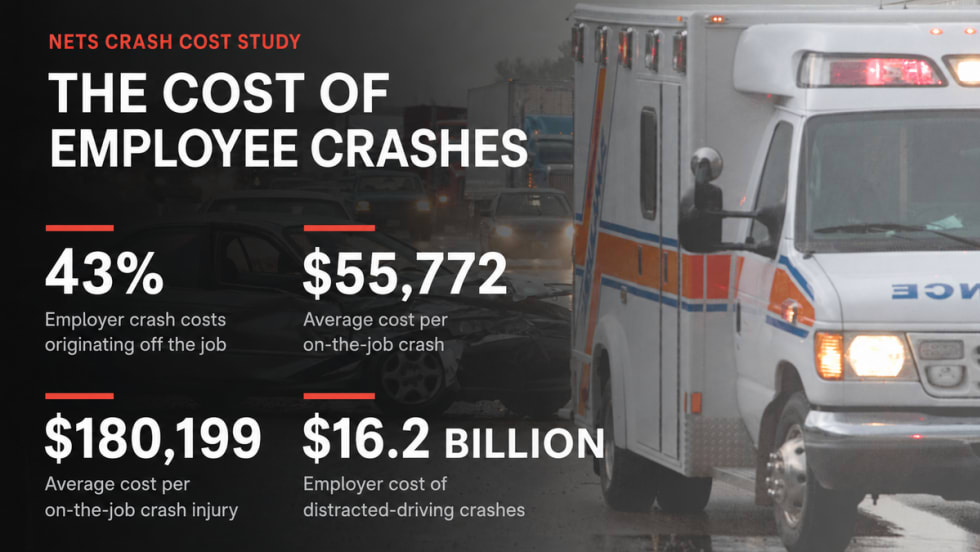
Off-the-Job Crashes Account for 43% of Employers’ $61.7 Billion Crash Burden
NETS quantifies costs dispersed across fleet, risk, HR, and other departments while providing new per-crash benchmarks for employers.
Read More →
Ram Recalls More Than 1.27 Million 1500 Pickups for Seat Belt Anchor Issue
The recall affects certain 2019-2026 Ram 1500 pickups that may have improperly attached second-row seat belt buckle anchors.
Read More →
Sponsored•July 17, 2026
How Better Visibility Cut Speeding Violations by 48%
Fleet leaders don't need more data, they need clearer visibility into what the data is saying. This case study explores how one utility replaced speeding-event counts with a single metric — miles driven in violation — to strengthen safety and significantly reduce speeding violations.
Read More →
Operation Safe Driver Week: Why the Industry's Oldest Safety Campaign Still Matters to Fleets
A look at how a 2007 enforcement initiative became one of the most consequential weeks on the fleet safety calendar, and what it means for your drivers in 2026.
Read More →