




How to Share the Road with Motorcycles
Here are some safety tips fleet managers can pass along to their drivers as they navigate the road alongside motorcyclists.


Photo courtesy of iStockPhoto.com.

Photo courtesy of iStockPhoto.com.
Even before factoring in the specific challenges faced by fleet drivers (such as additional miles traveled and work-related distractions), road accidents involving motorcycles can be even more physically and emotionally devastating than those involving automobiles — and the statistics reflect this.
On a per-vehicle-mile basis, motorcyclists are more than 26 times more likely to be killed in a crash than occupants of cars and five times more likely to be injured, according to the National Highway Traffic Safety Administration (NHTSA). And, motorcyclists accounted for 15 percent of total traffic fatalities in 2012 (the most recent data available), even though motorcycles make up only 3 percent of all registered vehicles in the U.S., according to the National Safety Council.
However, there are a number of tips fleet managers can pass along to their drivers regarding how to share the road more safely with motorcyclists.
Being on the Look-Out
One strategy fleet managers should recommend to their drivers to more safely share the road with motorcyclists is to check their mirrors and blind spots twice — first for traffic, then for motorcyclists — before entering a road or changing lanes, according to Phil Moser, vice president of Advanced Driver Training Services (ADTS).
“Check your mirrors, and watch for motorcyclists riding in your blind spots. You have to be especially diligent when looking for motorcycles in your blind spots. Develop the habit of making a conscious effort to look for motorcycles, and make it a part of your daily driving,” Moser said.
In addition, fleet managers should advise their drivers to increase their following distance when behind motorcycles due to their quicker stopping ability, as well as give motorcyclists a lot of buffer room, according to Moser.
“Give motorcyclists a lot of space, and don’t start passing them until you make sure you have a clear shot that you can get by them because they will swerve when necessary. You have to give them a wide berth, basically,” Moser said.
And, if you’re in a vehicle with compromised visibility (such as a large truck or van), let the motorcyclist pass, Moser added.
“If motorcyclists are out in front of you, then they’re not going to run into the back of you, and you can keep an eye on them and gauge your distance from them,” Moser said.
Getting Reacclimated
One difficulty for fleet managers based in cold areas is that their drivers may go months without encountering motorcyclists on the road, so, when the weather gets warmer and motorcyclists once again become a more common sight, drivers may need a reminder about how to drive around them, Moser recommended.
“It’s like if it doesn’t rain for a long time, and, when it finally does rain, there are crashes all over the place because the road is wet and oil mixes in with the water. For drivers who haven’t driven around motorcycles in a while, you have to re-educate them about how to drive around those vehicles,” Moser said.
Above all, though, Moser emphasized that fleet managers pass along to their drivers a message that’s always crucial, whether or not there are motorcyclists on the road: focus on driving, and avoid distractions.
“Fleet drivers need to be especially diligent because they’re working and they’re focused on other things, but, when they get behind the wheel, they need to say to themselves, ‘OK, now I have to drive,’ and be focused on their driving — and not be on their phone. It’s true for driving in general, but it’s especially true when driving around motorcycles because crashes involving a motorcycle and car are absolutely devastating,” Moser said.
More Safety

Fleet Manager’s Ultimate Playbook: Navigating the New Standard in OEM Connectivity
Rising operating costs, driver safety concerns, and unplanned downtime are putting unprecedented pressure on modern fleets. Discover how fleet managers use embedded OEM connectivity and real-time vehicle data to cut TCO, prevent downtime, and protect drivers without aftermarket telematics hardware.
Read More →
From Driver Well-Being to EV Charging | AF News Recap
Mental health belongs in the fleet safety conversation. This week, we’re looking at five ways fleets can support employee well-being before a crisis, plus Holman’s expansion in Mexico, new one-day Fleet Forward passes, and why EV charging demand is outpacing infrastructure growth.
Read More →
Nexar-Nauto Merger Aims to Give Fleets Better Safety Intelligence Through Larger Driving Dataset
Stefan Heck tells Automotive Fleet that combining more than 10 billion miles of driving history with Nexar's AI models will give fleets deeper insights into driver risk and roadway conditions than either company could provide independently.
Read More →
Don't Wait for a Crisis: 5 Ways to Build Mental Health Into Your Fleet Safety Program
For Suicide Prevention Month, fleet and safety leaders have an opportunity to put mental health where it belongs: at the center of workplace safety.
Read More →
How Camera Data Can Strengthen a Fleet’s Insurance Renewal
Insights from a commercial insurance carrier and a broker show how fleets can turn video telematic data, driver coaching, and improved claims results into a stronger case at insurance renewal.
Read More →
The Safest Fleets Aren’t the Ones with the Most Technology
You’ve made the telematics investment. Here’s how to capture the other half of its value and build the safest fleet on the road.
Read More →
Hidden in Plain Sight: Fleet Compliance Risks
Fleet compliance isn't just about having policies — it's about consistently enforcing them. This practical guide reveals six hidden compliance risks common in public sector and shared fleet operations and outlines proven strategies to improve visibility, accountability, and audit readiness
Read More →
NETS Sets 2026 Fleet Safety Benchmark Conference for Indianapolis
The Sept. 15–17 program will feature fleet benchmarking data, case studies, emerging technologies, and implementation strategies while running alongside the NSC Safety Congress & Expo.
Read More →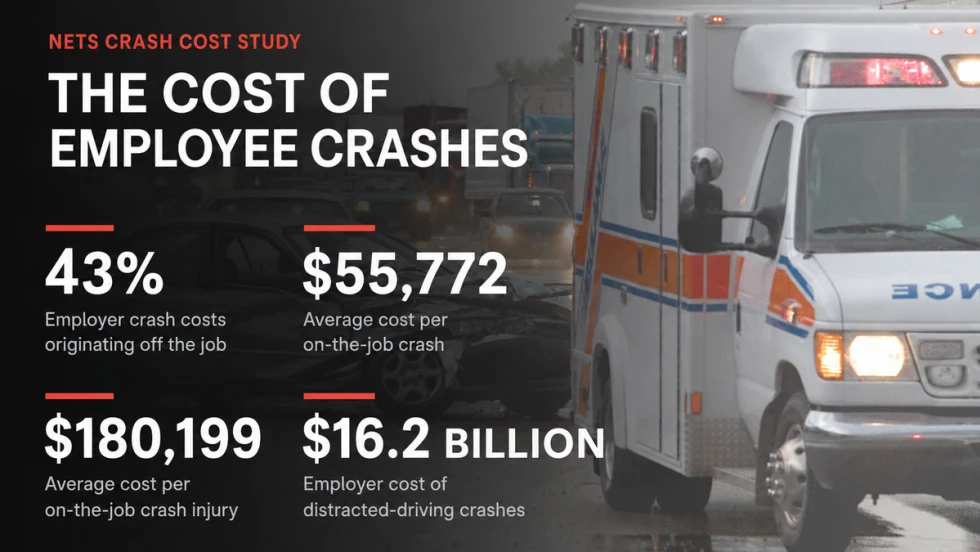
Off-the-Job Crashes Account for 43% of Employers’ $61.7 Billion Crash Burden
NETS quantifies costs dispersed across fleet, risk, HR, and other departments while providing new per-crash benchmarks for employers.
Read More →
Ram Recalls More Than 1.27 Million 1500 Pickups for Seat Belt Anchor Issue
The recall affects certain 2019-2026 Ram 1500 pickups that may have improperly attached second-row seat belt buckle anchors.
Read More →