




5 Forgotten Driver Distractions to 'Wreck'-ognize
Distracted driving policies should include the less thought about, but still prevalent, distractions that substantially increase crash risks.
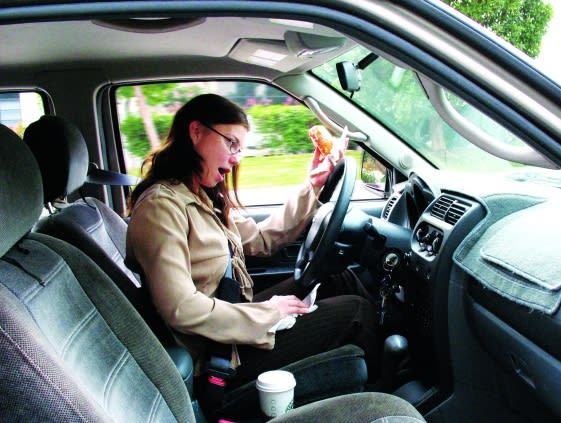
Eating, drinking, using a handheld device, or operating vehicle electronics while driving are distractions that cause drivers to lose focus on vehicle operation and increase crash risk.
While banning the use of handheld devices while driving, especially texting while driving, has been at the forefront of company fleet safety policies, there are other less recognized cognitive and physical distractions that continue to impact the safe operation of fleet vehicles.
In 2008, the National Highway Traffic Safety Administration (NHTSA) reported that all drivers engage in secondary tasks 30 percent of the time while their vehicles are in motion.
NHTSA and the Virginia Tech Transportation Institute showed that driver distractions were behind 65 percent of near-crashes and 80 percent of crashes. Research has shown that most crashes occurred within 3 seconds after the driver was distracted.
Cell-phone use and texting may be today’s biggest scourge in the transportation safety sector, but there are other common driver distractions that also substantially increase crash risks:
1. Eating Causes Driver Mistakes
Eating while driving is riskier than talking/listening to a handheld device, according to NHTSA. After reviewing a 2006 crash-risk analysis, NHTSA found that the extended glance length of eating while driving caused a 1.57:1 crash-risk ratio while talking/listening to a handheld device while driving caused a 1.29:1 crash-risk ratio.
The U.S. Court of Appeals for the District of Columbia Circuit recently ruled the hours-of-service regulations for drivers of property-carrying commercial motor vehicles (CMVs) will no longer be enforced as of July 1, 2013, meaning drivers with the ability to fold the passenger seat down, may be even more tempted to turn that workspace into a countertop for eating while driving.
2. Don’t Resist a Rest
Drowsy driving reduces response time, which increases the crash risk ratio 4.24:1, according to NHTSA. Drowsiness typically has more to do with time-of-day rather than time-on-task.
The Federal Motor Carrier Safety Administration (FMSCA) reported that drowsy driving is two times more likely to occur during the first hour of a work shift, because drivers are not fully refreshed and awake when they begin their day.
According to a 2011 assessment by FMCSA, drowsy driving is also more common among younger or less experienced CMV drivers. Fleet managers should inform their drivers of the statistics on drowsy driving during training.
3. Living in a Dream World
In 2013, Erie Insurance Company released its Fatality Analysis Reporting System, which reviewed nationwide crash data between 2010 and 2011. According to the data, police listed drivers as “lost in thought” 62 percent of the time as the cause of vehicle collisions.
Daydreaming while driving, as with other distracted driving habits, is voluntary, and if caught, drivers should be reprimanded for voluntarily endangering company property, and disregarding their job duties and personal safety, which may result in a lawsuit against the company.
4. Limit In-Car Entertainment
Controls, displays, and driver aids are standard driving tools today. After observing drivers who were instructed to perform radio tuning, NHTSA recorded that crash-risk increased after the driver’s eyes left the road for more than 2 seconds. Furthermore, NHTSA research noted that a task should not take longer than 12 seconds.
5. Put a Lid on Sightseeing
Drivers should constantly scan the road, but should not fixate on objects surrounding the road. According to the FMCSA, drivers who fixate on external objects — e.g., people, billboards, and landmarks — are likely to enter into a blind gaze where they are not paying attention to the road.
More Safety

Nexar-Nauto Merger Aims to Give Fleets Better Safety Intelligence Through Larger Driving Dataset
Stefan Heck tells Automotive Fleet that combining more than 10 billion miles of driving history with Nexar's AI models will give fleets deeper insights into driver risk and roadway conditions than either company could provide independently.
Read More →
Don't Wait for a Crisis: 5 Ways to Build Mental Health Into Your Fleet Safety Program
For Suicide Prevention Month, fleet and safety leaders have an opportunity to put mental health where it belongs: at the center of workplace safety.
Read More →
How Camera Data Can Strengthen a Fleet’s Insurance Renewal
Insights from a commercial insurance carrier and a broker show how fleets can turn video telematic data, driver coaching, and improved claims results into a stronger case at insurance renewal.
Read More →
The Safest Fleets Aren’t the Ones with the Most Technology
You’ve made the telematics investment. Here’s how to capture the other half of its value and build the safest fleet on the road.
Read More →
Hidden in Plain Sight: Fleet Compliance Risks
Fleet compliance isn't just about having policies — it's about consistently enforcing them. This practical guide reveals six hidden compliance risks common in public sector and shared fleet operations and outlines proven strategies to improve visibility, accountability, and audit readiness
Read More →
NETS Sets 2026 Fleet Safety Benchmark Conference for Indianapolis
The Sept. 15–17 program will feature fleet benchmarking data, case studies, emerging technologies, and implementation strategies while running alongside the NSC Safety Congress & Expo.
Read More →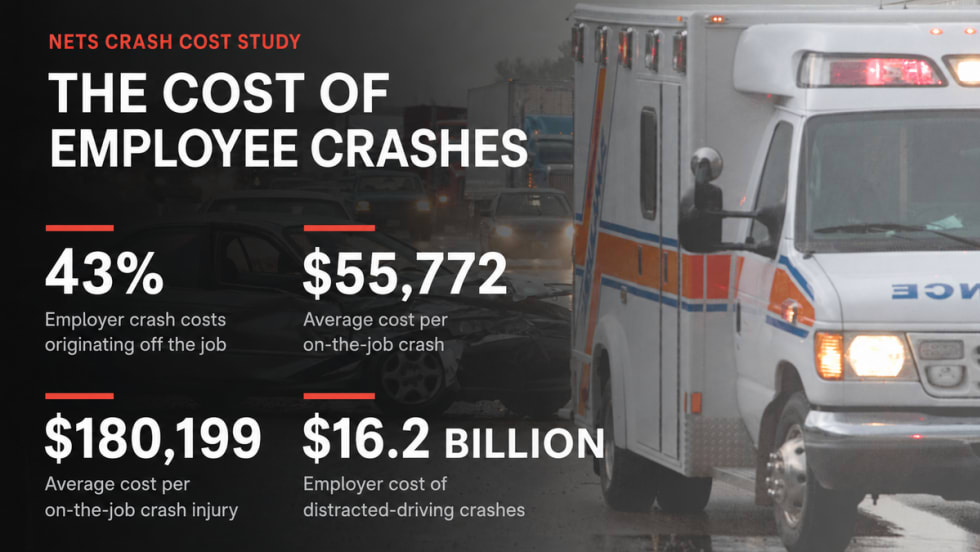
Off-the-Job Crashes Account for 43% of Employers’ $61.7 Billion Crash Burden
NETS quantifies costs dispersed across fleet, risk, HR, and other departments while providing new per-crash benchmarks for employers.
Read More →
Ram Recalls More Than 1.27 Million 1500 Pickups for Seat Belt Anchor Issue
The recall affects certain 2019-2026 Ram 1500 pickups that may have improperly attached second-row seat belt buckle anchors.
Read More →
How Better Visibility Cut Speeding Violations by 48%
Fleet leaders don't need more data, they need clearer visibility into what the data is saying. This case study explores how one utility replaced speeding-event counts with a single metric — miles driven in violation — to strengthen safety and significantly reduce speeding violations.
Read More →
Operation Safe Driver Week: Why the Industry's Oldest Safety Campaign Still Matters to Fleets
A look at how a 2007 enforcement initiative became one of the most consequential weeks on the fleet safety calendar, and what it means for your drivers in 2026.
Read More →