




UPS Tests Drone for Commercial Delivery
UPS has begun testing the use of drones to deliver packages to remote or difficult-to-access locations, working together with drone-maker CyPhy Works.
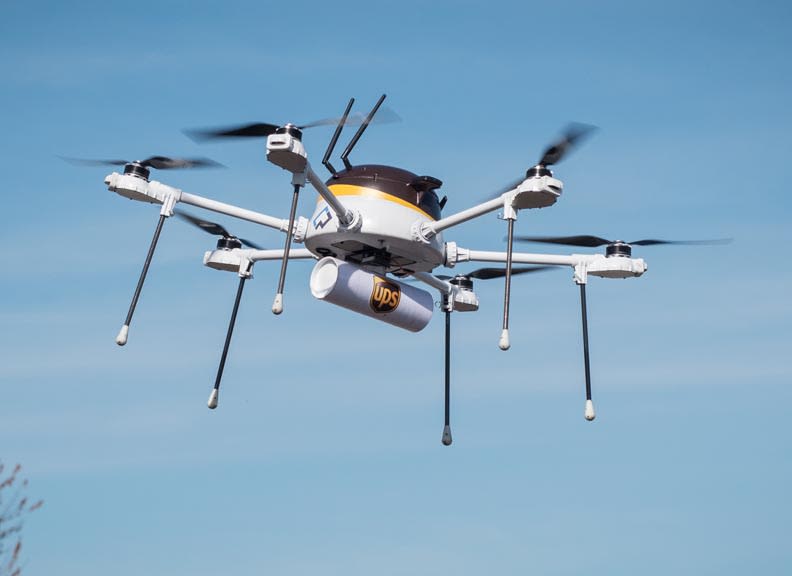
Photo courtesy of UPS.
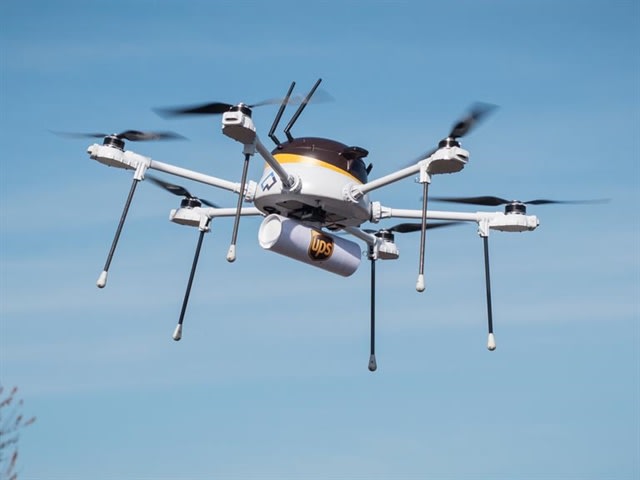
Photo courtesy of UPS.
UPS has begun testing the use of drones to deliver packages to remote or difficult-to-access locations.
Working together with drone-maker CyPhy Works, UPS began testing with a mock three-mile medicine delivery, according to UPS.
“Our focus is on real-world applications that benefit our customers,” said Mark Wallace, UPS senior vice president of global engineering and sustainability. “We think drones offer a great solution to deliver to hard-to-reach locations in urgent situations where other modes of transportation are not readily available.”
The U.S. Federal Aviation Administration (FAA) has issued new rules that expand the uses of drones in commercial applications. Operators must adhere to important safety regulations, according to UPS.
UPS said it has already been testing drones in warehouses to check high storage racks to confirm stock or available space. The company is also exploring the use of drones to deliver humanitarian aid in hard-to-reach parts of the world.
The CyPhy drone used in the test is a battery-powered drone that flies itself, and requires minimal user training, according to the company. In the mock scenario, the drone successfully carried an asthma inhaler to an island that is not accessible by automobile, according to the company.
The drone flight advances an investment made by The UPS Strategic Enterprise Fund in CyPhy to gather information about drone uses and capabilities, according to the company.
More Operations

Fleet Has a Talent Pipeline Problem. What Comes Next? | AF News Recap
Where will fleet’s next generation of leaders come from? This week, we’re looking at the industry’s talent pipeline, what certification can add to a fleet career, how to build an award-worthy track record, and the return of Automotive Fleet’s Personal Use Survey.
Read More →
Smith System Launches Driver Risk Management Program
Fleets have more driver data than ever, but identifying risky behavior doesn't necessarily correct it. Smith System's new Driver Risk Management program combines monitoring, training, and follow-up coaching to help fleets connect risk signals with driver intervention.
Read More →
Automotive Fleet Opens 2026 Personal Use Survey for Commercial Fleet Managers
Less than two weeks left! Commercial and corporate fleet managers are invited to share how their organizations handle company vehicle personal-use policies, charges, and driver eligibility.
Read More →
From AI Prompts to AI-Generated Safety Songs | AF News Recap
Can better prompts make AI more useful for fleet managers? This week, we’re breaking down smarter fleet analysis, an AI-assisted experiment that turned safety training into music, and what happened to fuel prices in August.
Read More →
How to Write Better AI Prompts for Fleet Analysis
Include these six elements in your fleet prompts to generate more relevant analysis and accurate answers.
Read More →
Fleet Meets: Eric Kilgore
This edition of the Fleet Meets series features one of the industry's best leaders driving multi-market and national operations.
Read More →
Why Reactive Fleet Management Is Becoming Too Expensive to Sustain
Research highlights a growing need for proactive management strategies to address rising costs in fleet operations effectively.
Read More →
What Your Fleet KPIs Aren’t Telling You
Tracking fleet metrics is only useful when the data leads to better decisions. This guide helps fleet leaders assess cost, utilization, and downtime more accurately, identify performance gaps, and prioritize the actions that can improve operational results.
Read More →
Hidden in Plain Sight: Fleet Compliance Risks
Fleet compliance isn't just about having policies — it's about consistently enforcing them. This practical guide reveals six hidden compliance risks common in public sector and shared fleet operations and outlines proven strategies to improve visibility, accountability, and audit readiness
Read More →
Turning Fleet Payment Data into Executive Insights
Does data alone drive results in operations?
Read More →