




Kia Adding Three Hybrids for 2017
Kia Motors introduced three 2017 model-year gasoline-electric hybrids, including the Optima Hybrid, Optima Plug-In Hybrid, and Niro Hybrid Utility Vehicle, at the Chicago Auto Show.
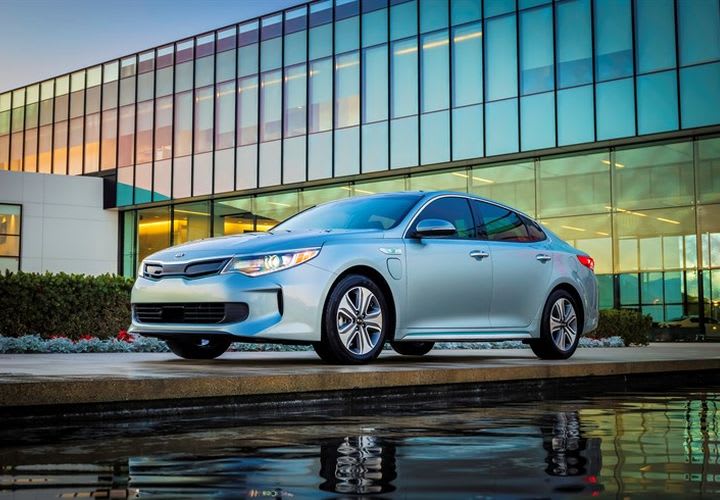
Photo of 2017 Optima PHEV courtesy of Kia.
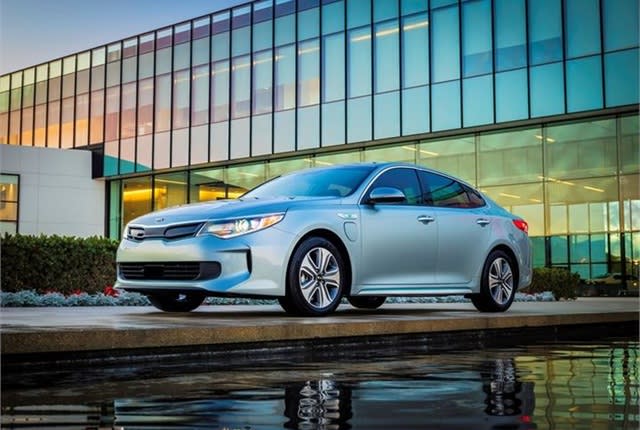
Photo of 2017 Optima PHEV courtesy of Kia.
Kia Motors introduced three 2017 model-year gasoline-electric hybrids, including the Optima Hybrid, Optima Plug-In Hybrid, and Niro Hybrid Utility Vehicle, at the Chicago Auto Show.
Kia is introducing the vehicles under its EcoDynamics sub-brand geared toward more environmentally friendly vehicles and includes the Soul EV. Kia hopes to increase fuel economy across its lineup by 25% by 2020.
The 2017 Niro Hybrid Utility Vehicle arrives as Kia's first hybrid utility that should slot between the Sportage and Sorento with a 171.5 inch length and 106.3-inch wheelbase. The hybrid utility is powered by a 1.6L direct-injected gasoline four-cylinder that makes 103 hp and a 43-hp electric tractive motor. The tractive motor is mounted to the transmission and works in tandem with the engine to produce 146 hp and 195 lb.-ft. of torque. A 1.56-kilowatt-per-hour lithium-ion polymer battery is located under the rear seat.
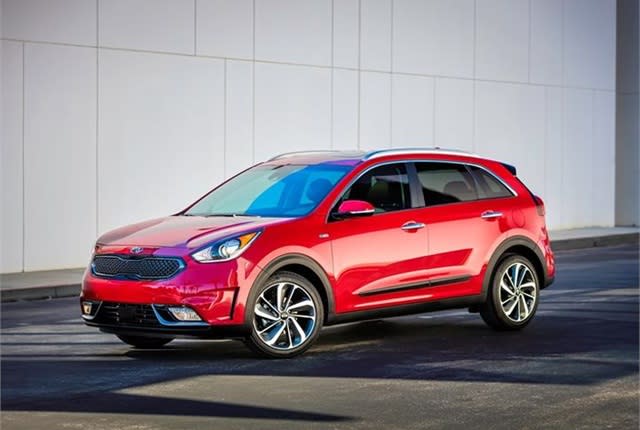
Photo of 2017 Niro Hybrid Utility Vehicle courtesy of Kia.
The 2017 Optima Hybrid replaces an existing model, while the plug-in version adds a new option to the lineup. The vehicles now mirror Hyundai's Sonata, which is offered as both a traditional hybrid and plug-in model.
The 2017 Optima Hybrid improves fuel economy by 10% over the outgoing model. A 2.0L direct-injected gasoline engine replaces the previous model's 2.4L engine. It's paired with a 38-kilowatt electric motor and lithium-polymer battery pack that increases capacity to 1.62 kilowatts per hour. Total output is estimated at 193 hp. Power is delivered through a 6-speed automatic transmission.
The 2017 Optima Plug-In Hybrid pairs a 2.0L Nu four-cylinder direct-injection engine that makes 154 hp at 6,000 rpm with a 50-kilowatt electric motor. A 9.8-kilowatt-per-hour battery pack powers the vehicle to 27 miles in EV mode. The Optima PHEV offers 600 miles of driving range. The vehicle is enabled for Level 1 or Level 2 charging and needs under nine hours or under three hours for a full charge.
More Green Fleet
EV Charging Use Is Outpacing Infrastructure Growth
ChargePoint’s 2026 Charging Forward Report points to rising charger use, higher-powered charging, commercial vehicle electrification, and energy-management technology. Here’s what fleets should know.
Read More →
Merchants Fleet Reports 290M EV Miles as Fleets Navigate Changing Electrification Market
From millions in operating savings to hundreds of millions of EV miles, Merchants Fleet’s latest report reveals what’s working and what’s changing in fleet electrification.
Read More →
The EV Breakdown Nobody's Talking About: Why Most Electric Vehicle Roadside Calls Aren't Mechanical Failures
Here's why EV breakdowns are widely misunderstood.
Read More →
ChargePoint Now Available in Energy Pass
ChargePoint and additional planned charging network integrations were added to GM's Energy Pass.
Read More →

First Look: Slate Auto's Electric Fleet Pickup
Could an affordable, modular EV pickup make electrification more practical for fleets?
Read More →
Slate Debuts Colorful, Unique EV Models
A recent media and client event, studded with electric vehicles dressed up on platforms, planted a new position for the manufacturer in the wider EV market. Fleets will find cost-saving advantages.
Read More →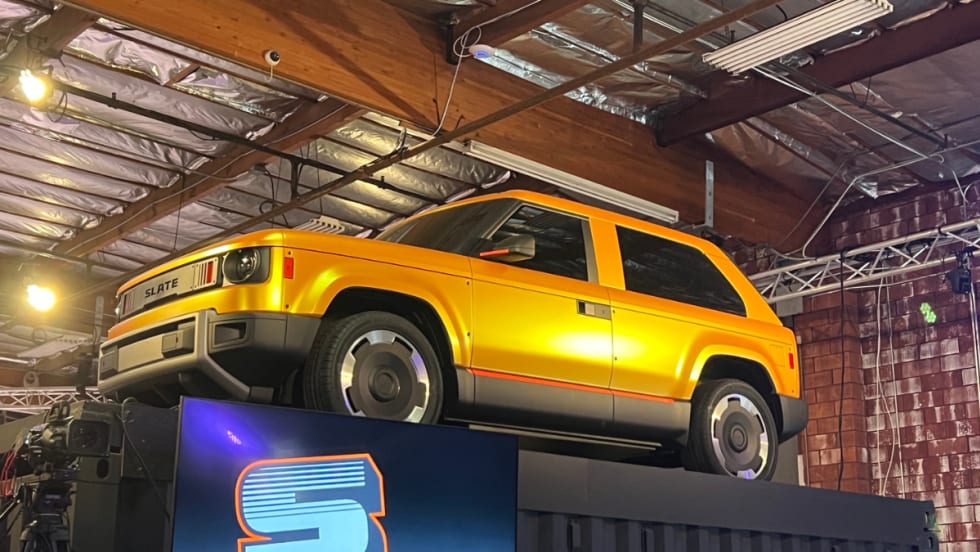
Slate Electric SUV, Pickup Switchable Model Aims For Light-Duty Fleets
Everything about this EV is counterintuitive and understated, making it stand out from the crowd.
Read More →
Inspiration Mobility Acquires Key Electrada Assets
Inspiration Mobility Group has acquired select assets of Electrada, adding the fleet electrification provider's team, technology, and charging infrastructure development capabilities to its energy management business.
Read More →
Turning Connected Vehicle Data Into Decisions That Matter
Fleet leaders have more data than ever, but turning that data into clear, actionable decisions remains a challenge. This white paper shows how leading organizations are using connected vehicle data to improve safety, reduce costs, and optimize fleet performance. Learn how to turn insight into action across your fleet.
Read More →