




Up Next: The Safest Fleets Aren’t the Ones with the Most Technology
5 Winter Driving Mistakes to Avoid
Winter weather can turn routine driving habits into serious safety risks. These five common mistakes can reduce a driver’s ability to react when snow, ice, and poor visibility make the road less forgiving.
by William Van Tassel
December 16, 2013
Winter conditions can quickly change how a vehicle responds. Slowing down, leaving additional space, and staying focused can give fleet drivers more time to react when traction and visibility are limited.
Credit:
Automotive Fleet
3 min to read
Whether you grew up in the blistering cold of Western New York winters or on the sunny coast of Southern California, driving in snow, sleet, and ice can be dangerous even for the most experienced fleet driver.
Automotive Fleet reached out to one of the experts at AAA, William Van Tassel, Ph.D., to find out the top five winter driving mistakes to keep in mind when traveling down the highways, byways, country roads, and city streets during this wintery season.
Mistake No. 1: Not Adjusting Speed to Conditions
The speed limit is just a starting point; drivers need to adjust their speed to match immediate driving conditions. Consider three factors: visibility, traffic, and traction.
Solution: If visibility is limited or the road is wet, snowy, or icy, slow down significantly. This gives you more time to respond to any incident and helps prevent a loss-of-traction situation.
Mistake No. 2: Doing More Than One Thing at a Time
Even in clear, dry conditions, it is easy to overload the one tire that does most of the work when a driver tries to do more than one thing at a time, such as steer and brake. In slick conditions, the risk of losing traction increases greatly when a driver tries to do two or more things at once.
Solution: Do one thing at a time — brake, then steer/turn, then accelerate. This helps prevent demanding too much of the tire that takes the brunt of traction requirements, reducing the chance of a loss-of-traction situation.
Mistake No. 3: Not Looking Far Enough Ahead
Too many drivers look only just ahead of their own vehicles, often missing something down the road they need to respond to, such as steering or adjusting speed.
Solution: Lift your eyes and look ahead. Work on looking further ahead, and also predicting what other drivers might do that could create trouble. Detecting potential problems ahead as early as possible can make the difference between a collision and a near miss.
Mistake No. 4: Not Maintaining Enough Space
Most drivers fail to maintain enough space between their vehicle and other vehicles. Frequently, drivers position themselves too closely to the vehicle ahead. But maintaining "open" space to the sides is also critical — you may need to move into that space quickly. Without that space, you'll have no effective option to prevent a crash.
Solution: Back off a bit and lift up on the accelerator to keep an open space to at least one side of the vehicle. Space is your best friend out on the road — to the front, sides, and rear. It's hard to collide with something if you have plenty of space around the vehicle.
Mistake No. 5: Not Giving the Road Your Full Attention
Driving in poor weather requires complete concentration so you can constantly adjust your speed and position and detect potential trouble as early as possible, such as your tires losing traction or another vehicle pulling out into your path. If you add other tasks to driving, such as using a cell phone, your risk increases dramatically.
Solution: Stay focused on driving. Get there, and then get busy with non-driving activities. Common-sense precautions include programming navigation systems and adjusting music selections before driving and, of course, powering down the cell phone.
About the Author: William Van Tassel, Ph.D., is manager of driver training operations at AAA. He is a member of the National Driver Education and Training Administrative Standards Core Development Team, the Association of National Stakeholders in Traffic Safety Education, and the Transportation Research Board Committee on Operator Education and Regulation. *This article was authored and edited according to Automotive Fleet editorial standards and style. Opinions expressed do not necessarily reflect those of AF or Bobit Business Media.
Editor’s note: This article was originally published in 2013 and was reviewed and updated in September 2026 to verify that the information and recommendations remain current.
Subscribe to Our Newsletter
More Safety

Nexar-Nauto Merger Aims to Give Fleets Better Safety Intelligence Through Larger Driving Dataset
Stefan Heck tells Automotive Fleet that combining more than 10 billion miles of driving history with Nexar's AI models will give fleets deeper insights into driver risk and roadway conditions than either company could provide independently.
Read More →
Don't Wait for a Crisis: 5 Ways to Build Mental Health Into Your Fleet Safety Program
For Suicide Prevention Month, fleet and safety leaders have an opportunity to put mental health where it belongs: at the center of workplace safety.
Read More →
How Camera Data Can Strengthen a Fleet’s Insurance Renewal
Insights from a commercial insurance carrier and a broker show how fleets can turn video telematic data, driver coaching, and improved claims results into a stronger case at insurance renewal.
Read More →
The Safest Fleets Aren’t the Ones with the Most Technology
You’ve made the telematics investment. Here’s how to capture the other half of its value and build the safest fleet on the road.
Read More →
Sponsored•August 7, 2026
Hidden in Plain Sight: Fleet Compliance Risks
Fleet compliance isn't just about having policies — it's about consistently enforcing them. This practical guide reveals six hidden compliance risks common in public sector and shared fleet operations and outlines proven strategies to improve visibility, accountability, and audit readiness
Read More →
NETS Sets 2026 Fleet Safety Benchmark Conference for Indianapolis
The Sept. 15–17 program will feature fleet benchmarking data, case studies, emerging technologies, and implementation strategies while running alongside the NSC Safety Congress & Expo.
Read More →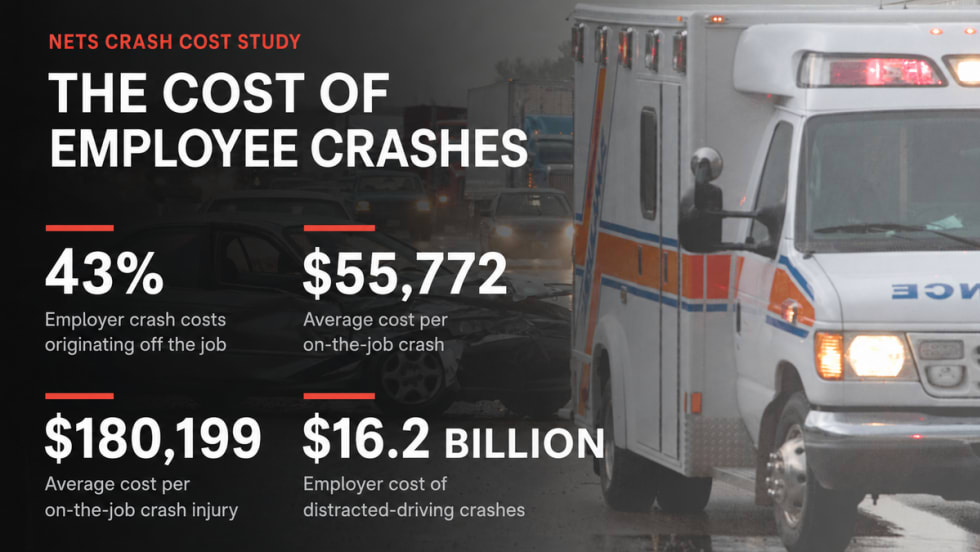
Off-the-Job Crashes Account for 43% of Employers’ $61.7 Billion Crash Burden
NETS quantifies costs dispersed across fleet, risk, HR, and other departments while providing new per-crash benchmarks for employers.
Read More →
Ram Recalls More Than 1.27 Million 1500 Pickups for Seat Belt Anchor Issue
The recall affects certain 2019-2026 Ram 1500 pickups that may have improperly attached second-row seat belt buckle anchors.
Read More →
Sponsored•July 17, 2026
How Better Visibility Cut Speeding Violations by 48%
Fleet leaders don't need more data, they need clearer visibility into what the data is saying. This case study explores how one utility replaced speeding-event counts with a single metric — miles driven in violation — to strengthen safety and significantly reduce speeding violations.
Read More →
Operation Safe Driver Week: Why the Industry's Oldest Safety Campaign Still Matters to Fleets
A look at how a 2007 enforcement initiative became one of the most consequential weeks on the fleet safety calendar, and what it means for your drivers in 2026.
Read More →